
Title
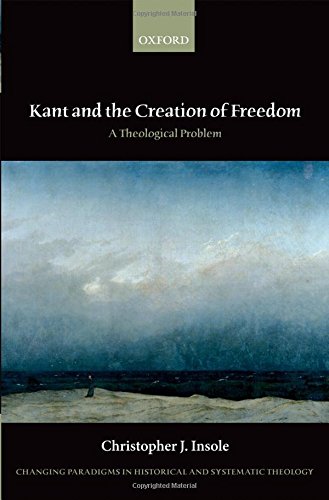
Kant and the Creation of Freedom: A Theological Problem (Changing Paradigms in Historical and Systematic Theology),Used
Sold by Ergodebooks, an authorized reseller.
Returns accepted within 30 days | support@ergodebooks.com
Shipping Information
- Free Standard Shipping — United States only
- Processing Time: 3–5 business days
- Estimated Delivery: 6–10 business days after dispatch
- Double-boxed, fully insured & discreetly packaged
- Tracking number sent via email once dispatched
Returns & Refund
Returns accepted within 30 days of delivery.
Damaged or Defective Item
Free return shipping + replacement or full refund
Wrong Item Received
Free return shipping + replacement or full refund
Change of Mind
Return shipping at customer's expense · 25% restocking fee applies
Payment Option

Kant actively struggles with the problem of how to conceive of God's creative action in relation to human freedom. He comes to the view that human freedom can only be protected if God withdraws in certain ways from the created world. The two pillars of Kant's mature philosophy transcendental idealism and freedom are in part shaped and motivated by Kant's need to provide a solution to his theological problem. The medieval and early modern theological tradition conceives of divine action as unlike the action of any created being. When the creature acts, God directly causes this action, but without reducing the creature's freedom. Kant explicitly discusses and rejects this account of divine and human concursus. This rejection has significant and surprising ramifications for Kant's wider philosophy, explaining otherwise incomprehensible claims in his critical philosophy.Christopher J. Insole presents a definitive study in the history of ideas, engaging with a wide range of Kant's texts from 1749 until the early 1800s. Many of these texts have received little or no attention in Kant studies to date. Insole places Kant's thought in relation to numerous historical and traditional positions and illuminates these positions by a close engagement with recent debates in analytical philosophy and systematic theology. Kant is unrelentingly honest when grappling with the difficulty of relating divine and human freedom. This study, of Kant's theological struggle and legacy, goes to the heart of the problem in the modern reception of what the Christian tradition has affirmed about human freedom. As such, the book throws light on one of the defining faultlines in modern theology and philosophy.
⚠️ WARNING (California Proposition 65):
This product may contain chemicals known to the State of California to cause cancer, birth defects, or other reproductive harm.
For more information, please visit www.P65Warnings.ca.gov.