
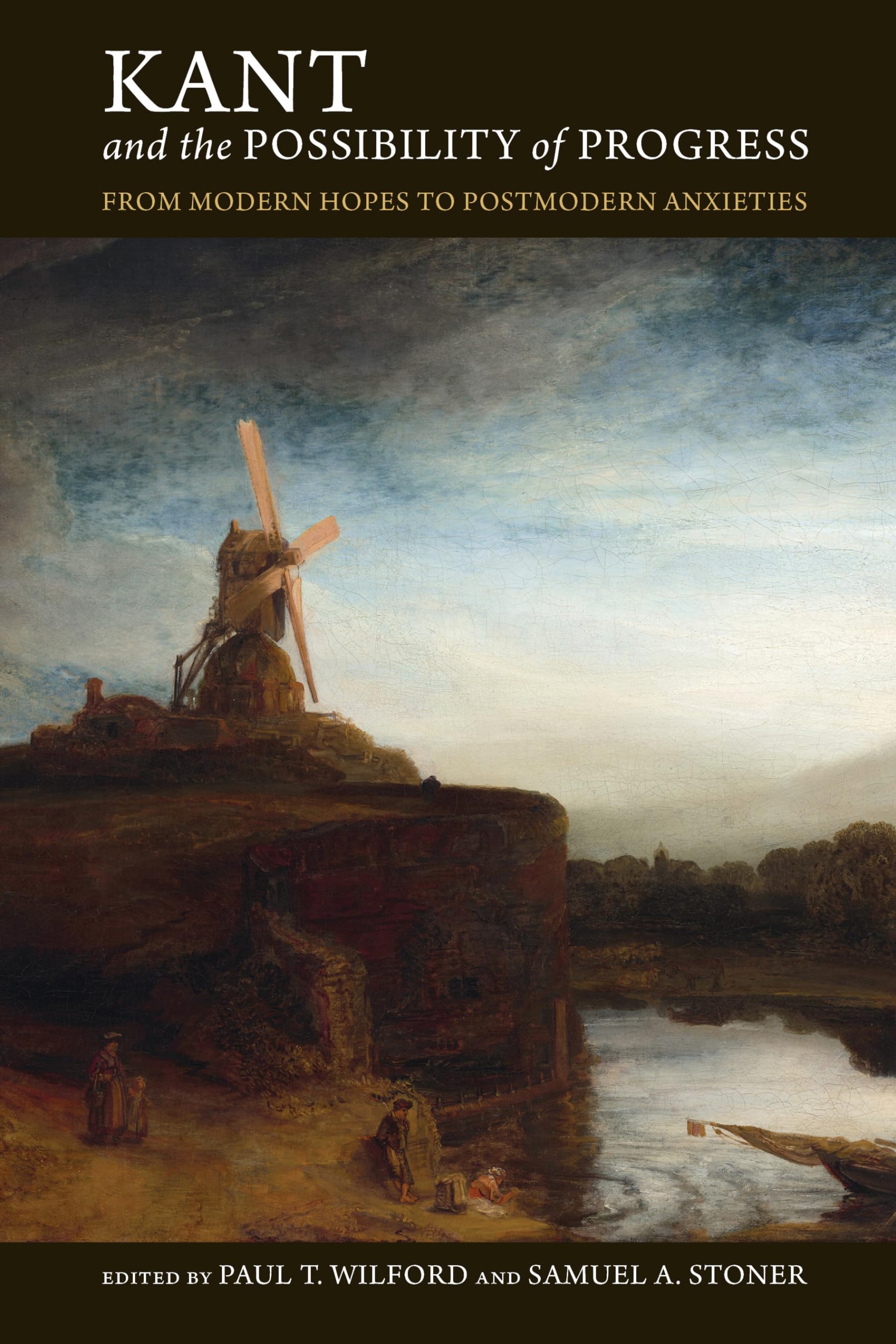
Title
Kant And The Possibility Of Progress: From Modern Hopes To Postmodern Anxieties,Used
Sold by Ergodebooks, an authorized reseller.
Returns accepted within 30 days | support@ergodebooks.com
Shipping Information
- Free Standard Shipping — United States only
- Processing Time: 3–5 business days
- Estimated Delivery: 6–10 business days after dispatch
- Double-boxed, fully insured & discreetly packaged
- Tracking number sent via email once dispatched
Returns & Refund
Returns accepted within 30 days of delivery.
Damaged or Defective Item
Free return shipping + replacement or full refund
Wrong Item Received
Free return shipping + replacement or full refund
Change of Mind
Return shipping at customer's expense · 25% restocking fee applies
Payment Option

Immanuel Kant (17241804) transformed the philosophical, cultural, and religious landscape of modern Europe. Emphasizing the priority of practical reason and moral autonomy, Kant's radically original account of human subjectivity announced new ethical imperatives and engendered new political hopes. This collection of essays investigates the centrality of progress to Kant's philosophical project and the contested legacy of Kant's faith in reason's capacity to advance not only our scientific comprehension and technological prowess, but also our moral, political, and religious lives. Accordingly, the first half of the volume explores the many facets of Kant's thinking about progress, while the remaining essays each focus on one or two thinkers who play a crucial role in postKantian German philosophy: J. G. Herder (17441803), J. G. Fichte (17621814), G. W. F. Hegel (17701831), Sren Kierkegaard (18131855), Friedrich Nietzsche (18441900), Walter Benjamin (18921940), and Martin Heidegger (18891976). This twopart structure reflects the central thesis of the volume that Kant inaugurates a distinctive theoretical tradition in which human historicity is central to political philosophy.By exploring the origins and metamorphoses of this tremendously influential tradition, the volume offers a timely perspective on fundamental questions in an age increasingly suspicious of the Enlightenment's promise of universal rational progress. It aims to help us face three sets of questions: (1) Do we still believe in the possibility of progress? If we do, on what grounds? If we do not, why have we lost the hope for a better future that animated previous generations? (2) Is the belief in progress necessary for the maintenance of today's liberal democratic order? Does a cosmopolitan vision of politics ultimately depend on a faith in humanity's gradual, asymptotic realization of that lofty aim? (3) And, if we no longer believe in progress, can we dispense with hope without succumbing to despair?
⚠️ WARNING (California Proposition 65):
This product may contain chemicals known to the State of California to cause cancer, birth defects, or other reproductive harm.
For more information, please visit www.P65Warnings.ca.gov.