If you have any questions, you are always welcome to contact us. We'll get back to you as soon as possible, withing 24 hours on weekdays.
Customer service
All questions about your order, return and delivery must be sent to our customer service team by e-mail at yourstore@yourdomain.com
Sale & Press
If you are interested in selling our products, need more information about our brand or wish to make a collaboration, please contact us at press@yourdomain.com
Help
If you have any questions, you are always welcome to contact us. We'll get back to you as soon as possible, withing 24 hours on weekdays.
Customer service
All questions about your order, return and delivery must be sent to our customer service team by e-mail at yourstore@yourdomain.com
Sale & Press
If you are interested in selling our products, need more information about our brand or wish to make a collaboration, please contact us at press@yourdomain.com
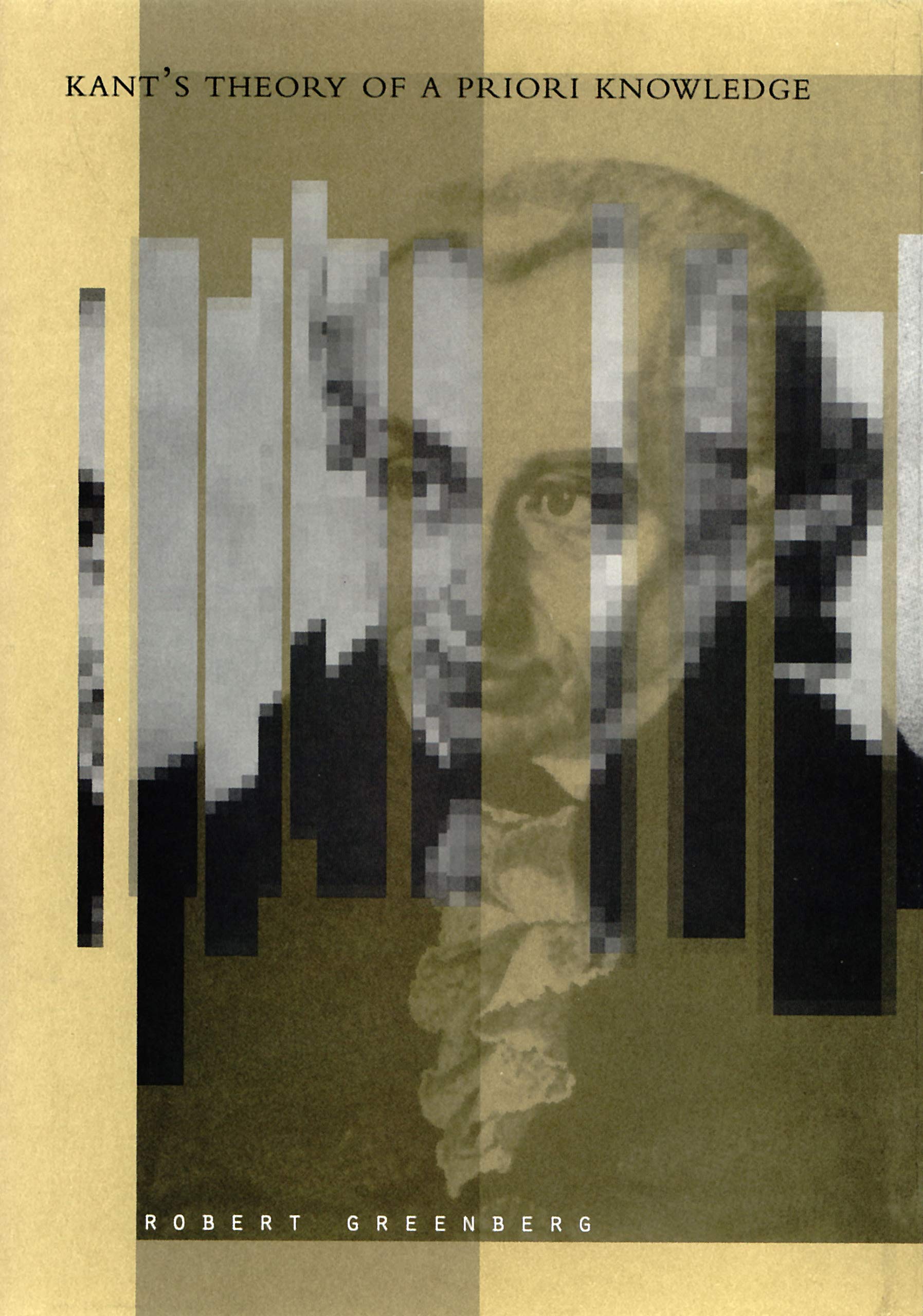
The prevailing interpretation of Kants First Critique in AngloAmerican philosophy views his theory of a priori knowledge as basically a theory about the possibility of empirical knowledge (or experience), or the a priori conditions for that possibility (the representations of space and time and the categories). Instead, Robert Greenberg argues that Kant is more fundamentally concerned with the possibility of a priori knowledgethe very possibility of the possibility of empirical knowledge in the first place.Greenberg advances four central theses:(1) the Critique is primarily concerned about the possibility, or relation to objects, of a priori, not empirical knowledge, and Kants theory of that possibility is defensible; (2) Kants transcendental ontology must be distinct from the conditions of the possibility of a priori knowledge; (3) the functions of judgment, in Kants discussion of the Table of Judgments, should be seen according to his transcendental logic as having content, not as being just logical forms of judgment making; (4) Kants distinction between and connection of ordering relations (Verhaltnisse) and reference relations (Beziehungen) have to be kept in mind to avoid misunderstanding the Critique.At every step of the way Greenberg contrasts his view with the major interpretations of Kant by commentators like Henry Allison, Jonathan Bennett, Paul Guyer, and Peter Strawson. Not only does this new approach to Kant present a strong challenge to these dominant interpretations, but by being more true to Kants own intent it holds promise for making better sense out of what have been seen as the First Critiques discordant themes.
⚠️ WARNING (California Proposition 65):
This product may contain chemicals known to the State of California to cause cancer,
birth defects, or other reproductive harm.
For MAP (Minimum Advertised Price) violations and Intellectual Property (IP) or Trademark concerns, please contact:
support@ergodebooks.com
⚠️ California Proposition 65 Warning: Some products sold on this website may expose you to chemicals known to the State of California to cause cancer, birth defects, or other reproductive harm. For more information, visit www.P65Warnings.ca.gov.