If you have any questions, you are always welcome to contact us. We'll get back to you as soon as possible, withing 24 hours on weekdays.
Customer service
All questions about your order, return and delivery must be sent to our customer service team by e-mail at yourstore@yourdomain.com
Sale & Press
If you are interested in selling our products, need more information about our brand or wish to make a collaboration, please contact us at press@yourdomain.com
Help
If you have any questions, you are always welcome to contact us. We'll get back to you as soon as possible, withing 24 hours on weekdays.
Customer service
All questions about your order, return and delivery must be sent to our customer service team by e-mail at yourstore@yourdomain.com
Sale & Press
If you are interested in selling our products, need more information about our brand or wish to make a collaboration, please contact us at press@yourdomain.com
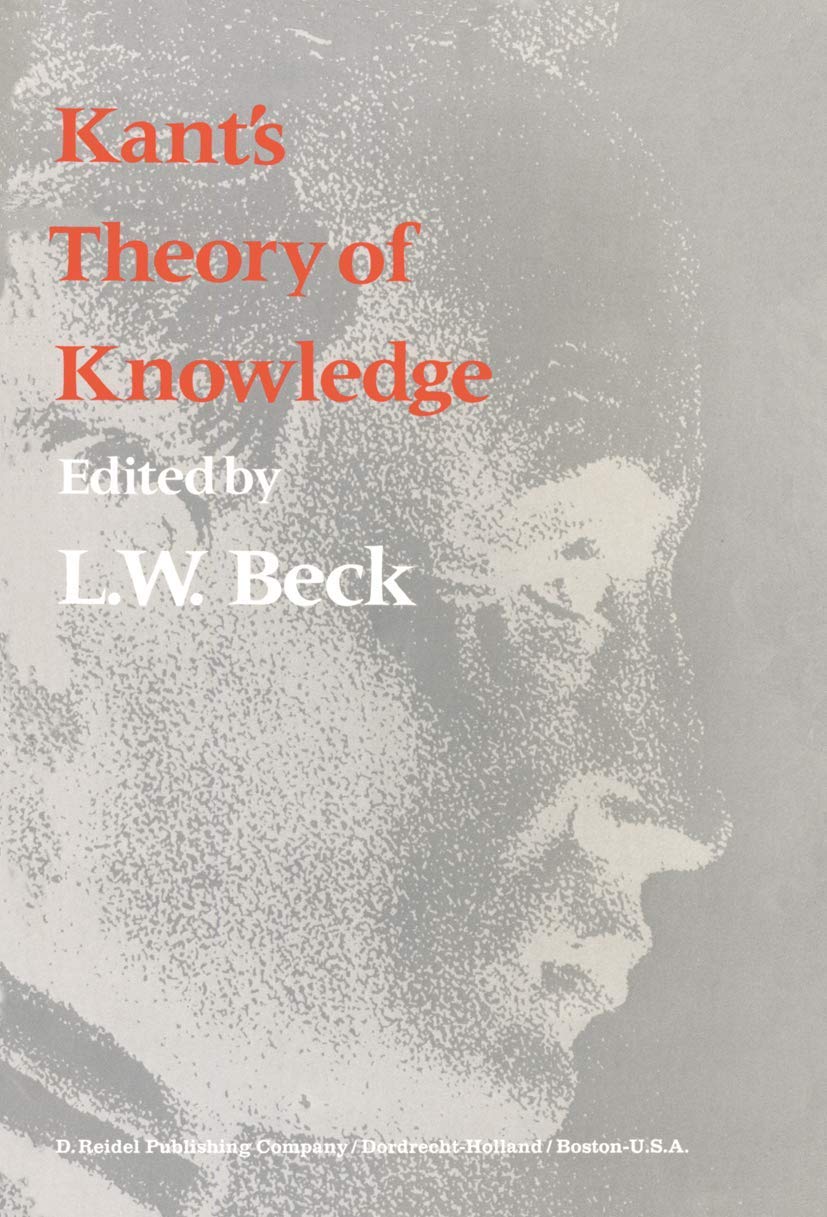
The Third International Kant Congress met in Rochester, New York, March 30 to April 4, 1970. The Proceedings, published by D. Reidel Publishing Company in 1972, contained 76 complete papers and 30 ab stracts in three languages. Since this large volume covered many phases of Kant's philosophy from a wide variety of standpoints, it is unlikely that the entire contents of it will be of interest to anyone philosopher. I have therefore selected from that volume the 20 papers that seem to me to be most likely to be of interest to Englishspeaking philosophers who are, to use a fairly vague description, in the 'analytical tradition'. The topics treated here are those which are most relevant to current philosoph ical debate in the theory of knowledge, philosophy of mind, and the philosophy of science. The division of papers under the seven principal topics, however, is in some respects a little arbitrary. I hope this little volume, published 250 years after Kant's birth, will show philosophers who are not already convinced that Kant is one of the most contemporary of the great philosophers of the past. I believe that the efforts of the authors of the papers will show that there can be genuine Kantian contributions towards the solution of problems that have fre quently been handled in opposition to, or obliviousness of, the eighteenth century philosopher who did more than anyone else to formulate the problems which still worry philosophers in the analytic tradition.
⚠️ WARNING (California Proposition 65):
This product may contain chemicals known to the State of California to cause cancer,
birth defects, or other reproductive harm.
For MAP (Minimum Advertised Price) violations and Intellectual Property (IP) or Trademark concerns, please contact:
support@ergodebooks.com
⚠️ California Proposition 65 Warning: Some products sold on this website may expose you to chemicals known to the State of California to cause cancer, birth defects, or other reproductive harm. For more information, visit www.P65Warnings.ca.gov.