
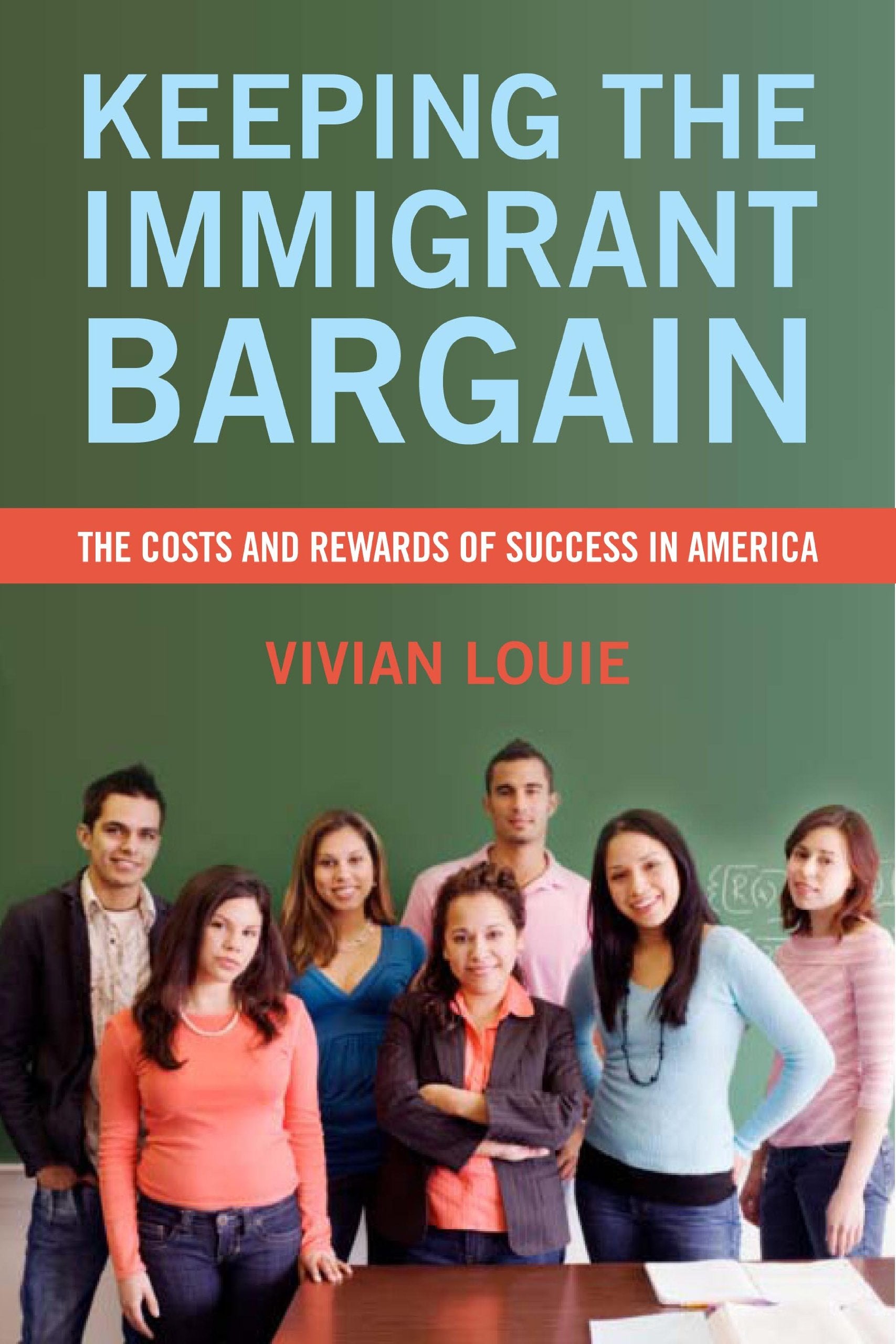
Title
Keeping The Immigrant Bargain: The Costs And Rewards Of Success In America,New
Sold by Ergodebooks, an authorized reseller.
Returns accepted within 30 days | support@ergodebooks.com
Shipping Information
- Free Standard Shipping — United States only
- Processing Time: 3–5 business days
- Estimated Delivery: 6–10 business days after dispatch
- Double-boxed, fully insured & discreetly packaged
- Tracking number sent via email once dispatched
Returns & Refund
Returns accepted within 30 days of delivery.
Damaged or Defective Item
Free return shipping + replacement or full refund
Wrong Item Received
Free return shipping + replacement or full refund
Change of Mind
Return shipping at customer's expense · 25% restocking fee applies
Payment Option

Most Nineteenth And Earlytwentiethcentury European Immigrants Arrived In The United States With Barely More Than The Clothes On Their Backs. They Performed Menial Jobs, Spoke Little English, And Often Faced A Hostile Reception. But Two Or More Generations Later, The Overwhelming Majority Of Their Descendants Had Successfully Integrated Into American Society. Today'S Immigrants Face Many Of The Same Challenges, But Some Experts Worry That Their Integration, Especially Among Latinos, Will Not Be As Successful As Their European Counterparts. Keeping The Immigrant Bargain Examines The Journey Of Dominican And Colombian Newcomers Whose Children Have Achieved Academic Success One Generation After The Arrival Of Their Parents. Sociologist Vivian Louie Provides A Muchneeded Comparison Of How Both Parents And Children Understand The Immigrant Journey Toward Education, Mobility, And Assimilation. Based On Louie'S Own Survey And Interview Study, Keeping The Immigrant Bargain Examines The Lives Of Thirtyseven Foreignborn Dominican And Colombian Parents And Their Seventysix Young Adult Offspringthe Majority Of Whom Were Enrolled In Or Had Graduated From College. The Book Shows How They Are Adapting To American Schools, Jobs, Neighborhoods, And Culture. Louie Discovers That Before Coming To The United States, Some Of These Parents Had Already Achieved Higher Levels Of Education Than The Average Foreignborn Dominican Or Colombian, And After Arrival Many Owned Their Own Homes. Significantly, Most Parents In Each Group Expressed Optimism About Their Potential To Succeed In The United States, While Also Expressing Pessimism About Whether They Would Ever Be Accepted As Americans. In Contrast To The Social Exclusion Experienced By Their Parents, Most Of The Young Adults Had Assimilated Linguistically And Believed Themselves To Be Full Participants In American Society. Keeping The Immigrant Bargain Shows That The Offspring Of These Largely Workingclass Immigrants Had Several Factors In Common That Aided Their Mobility. Their Parents Were Highly Engaged In Their Lives And Educational Progress, Although Not Always In Ways Expected By Schools Or Their Children, And The Children Possessed A Strong Degree Of Selfmotivation. Equally Important Was The Availability Of Key Institutional Networks Of Support, Including Teachers, Peers, Afterschool And Other Enrichment Programs, And Informal Mentors Outside Of The Classroom. These Institutional Networks Gave The Children The Guidance They Needed To Succeed In School, Offering Information The Parents Often Did Not Know Themselves. While Not All Immigrants Achieve Such Rapid Success, This Engrossing Study Shows How Powerful The Combination Of Selfmotivation, Engaged Families, And Strong Institutional Support Can Be. Keeping The Immigrant Bargain Makes The Case That Institutional Relationshipssuch As Teachers And Principals Who Are Trained To Accommodate Cultural Difference And Community Organizations That Help Parents And Children Learn How To Navigate The Systemcan Bear Significantly On Immigrant Educational Success.
⚠️ WARNING (California Proposition 65):
This product may contain chemicals known to the State of California to cause cancer, birth defects, or other reproductive harm.
For more information, please visit www.P65Warnings.ca.gov.
- Q: How many pages does the book have? A: This book has two hundred sixty pages. It offers a comprehensive look at the immigrant experience in America.
- Q: What is the binding type of this book? A: The binding type is paperback. This makes it lightweight and easy to carry.
- Q: Who is the author of 'Keeping the Immigrant Bargain'? A: The author is Vivian Louie. She is a sociologist who explores immigrant success stories.
- Q: What are the main themes of the book? A: The main themes include education, mobility, and assimilation of immigrants. It focuses on Dominican and Colombian families.
- Q: Is this book suitable for academic use? A: Yes, it is suitable for academic use. It provides valuable insights and data for studies on immigration and integration.
- Q: How can I use this book for research? A: You can use this book as a source for understanding immigrant experiences. It offers qualitative data and comparative analysis.
- Q: Is the book appropriate for young adults? A: Yes, the book is appropriate for young adults. It discusses relatable themes of education and cultural integration.
- Q: What is the reading level of this book? A: The reading level is suitable for high school and above. The content is academically rigorous yet accessible.
- Q: How should I store this book to keep it in good condition? A: Store the book in a cool, dry place. Keeping it upright on a shelf will help prevent damage.
- Q: Can I clean the book if it gets dirty? A: Yes, you can clean the book. Use a dry cloth to gently wipe the cover and pages.
- Q: What if the book arrives damaged? A: If the book arrives damaged, you should contact customer service for a return or exchange. They typically have policies in place for such issues.
- Q: Is there a return policy for this book? A: Yes, there is a return policy. Most retailers allow returns within a specified period if the book is in original condition.
- Q: How does this book compare to others on immigration? A: This book provides a unique perspective by focusing on specific immigrant groups. It contrasts with general studies on immigration.
- Q: Is this book more research-focused or narrative-driven? A: The book is research-focused. It combines sociological analysis with personal stories of immigrant families.
- Q: Who would benefit from reading this book? A: Students, educators, and anyone interested in immigration issues would benefit from reading this book. It offers valuable insights into the immigrant experience.
- Q: Does the author provide personal anecdotes in the book? A: Yes, the author includes personal anecdotes. These stories help illustrate the challenges and successes of immigrant families.