If you have any questions, you are always welcome to contact us. We'll get back to you as soon as possible, withing 24 hours on weekdays.
Customer service
All questions about your order, return and delivery must be sent to our customer service team by e-mail at yourstore@yourdomain.com
Sale & Press
If you are interested in selling our products, need more information about our brand or wish to make a collaboration, please contact us at press@yourdomain.com
Help
If you have any questions, you are always welcome to contact us. We'll get back to you as soon as possible, withing 24 hours on weekdays.
Customer service
All questions about your order, return and delivery must be sent to our customer service team by e-mail at yourstore@yourdomain.com
Sale & Press
If you are interested in selling our products, need more information about our brand or wish to make a collaboration, please contact us at press@yourdomain.com
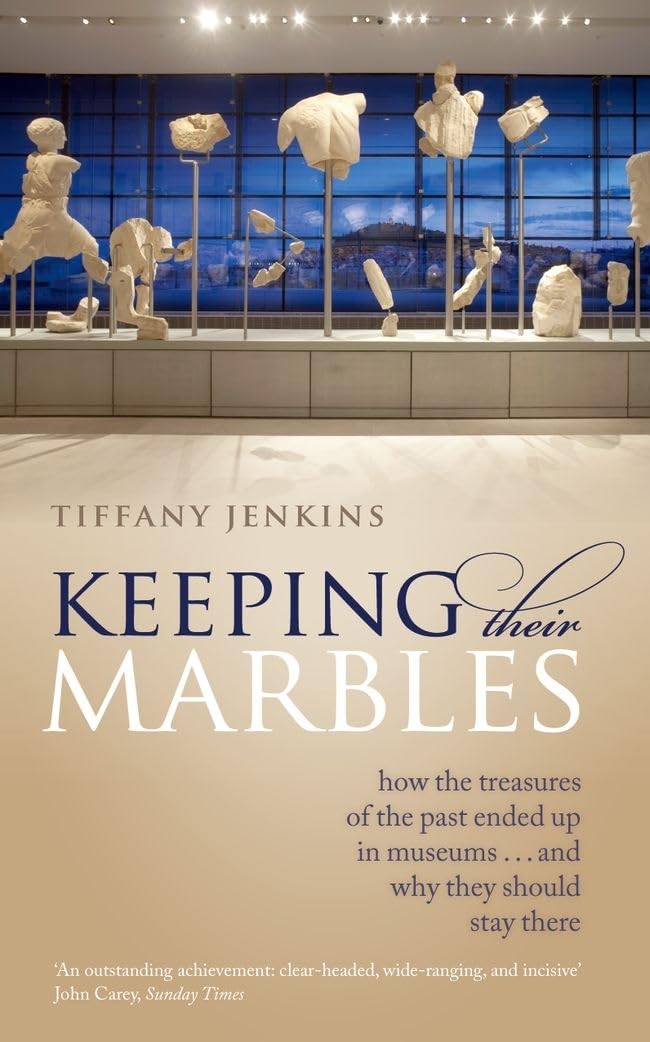
The fabulous collections housed in the world's most famous museums are trophies from an imperial age. Yet the huge crowds that each year visit the British Museum in London, the Louvre in Paris, or the Metropolitan in New York have little idea that many of the objects on display were acquired by coercion or theft.Now the countries from which these treasures came would like them back. The Greek demand for the return of the Elgin Marbles is the tip of an iceberg that includes claims for the Benin Bronzes from Nigeria, sculpture from Turkey, scrolls and porcelain taken from the Chinese Summer Palace, textiles from Peru, the bust of Nefertiti, Native American sacred objects, and Aboriginal human remains.In Keeping Their Marbles, Tiffany Jenkins tells the bloody story of how western museums came to acquire these objects. She investigates why repatriation claims have soared in recent decades and demonstrates how it is the guilt and insecurity of the museums themselves that have stoked the demands for return. Contrary to the arguments of campaigners, she shows that sending artefacts back will not achieve the desired social change nor repair the wounds of history.Instead, this groundbreaking book makes the case for museums as centres of knowledge, demonstrating that no object has a single home, and no one culture owns culture.
⚠️ WARNING (California Proposition 65):
This product may contain chemicals known to the State of California to cause cancer,
birth defects, or other reproductive harm.
For MAP (Minimum Advertised Price) violations and Intellectual Property (IP) or Trademark concerns, please contact:
support@ergodebooks.com
⚠️ California Proposition 65 Warning: Some products sold on this website may expose you to chemicals known to the State of California to cause cancer, birth defects, or other reproductive harm. For more information, visit www.P65Warnings.ca.gov.