If you have any questions, you are always welcome to contact us. We'll get back to you as soon as possible, withing 24 hours on weekdays.
Customer service
All questions about your order, return and delivery must be sent to our customer service team by e-mail at yourstore@yourdomain.com
Sale & Press
If you are interested in selling our products, need more information about our brand or wish to make a collaboration, please contact us at press@yourdomain.com
Help
If you have any questions, you are always welcome to contact us. We'll get back to you as soon as possible, withing 24 hours on weekdays.
Customer service
All questions about your order, return and delivery must be sent to our customer service team by e-mail at yourstore@yourdomain.com
Sale & Press
If you are interested in selling our products, need more information about our brand or wish to make a collaboration, please contact us at press@yourdomain.com
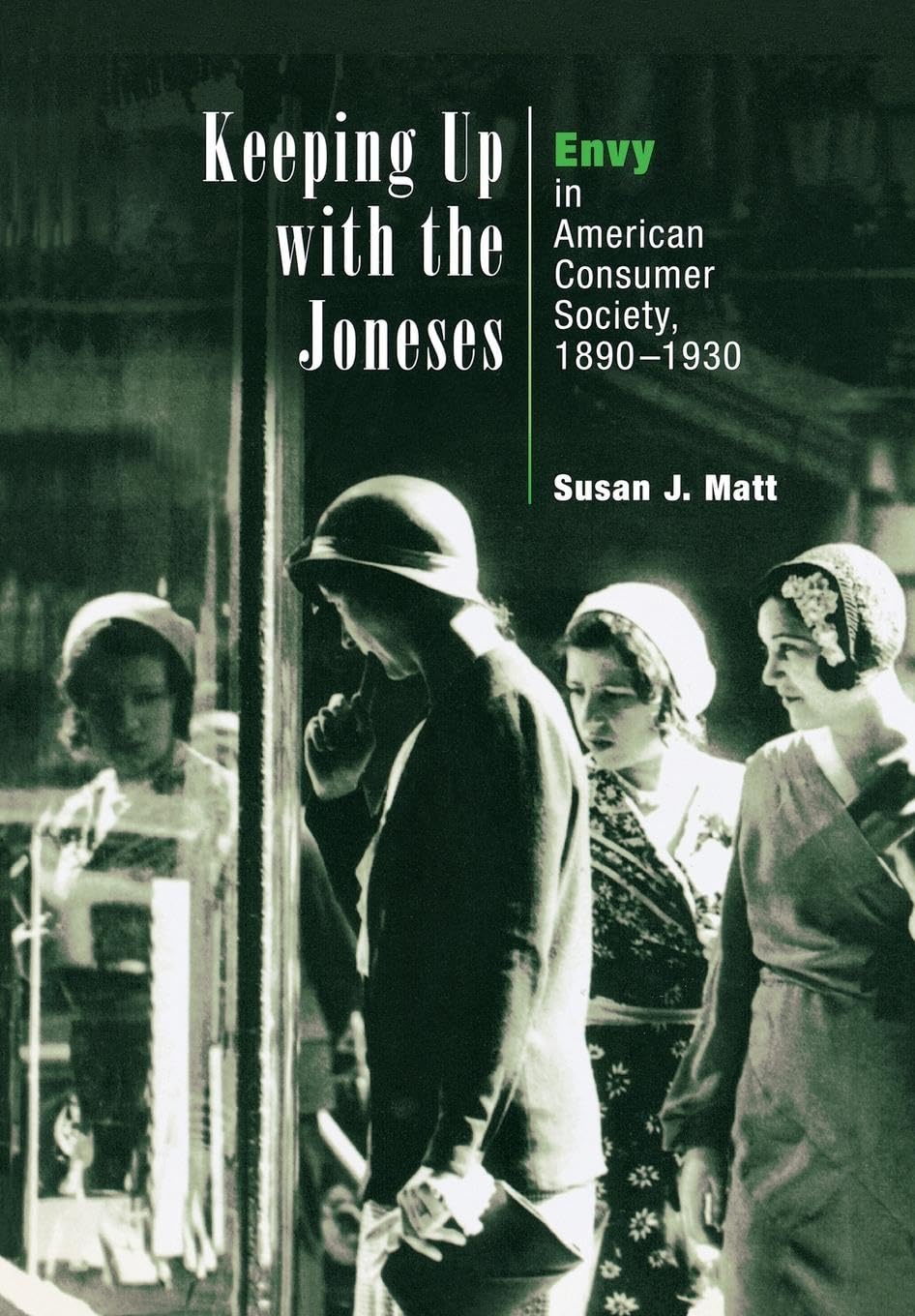
A Century Ago Many Americans Condemned Envy As A Destructive Emotion And A Sin. Today Few Americans Expect Criticism When They Express Envy, And Some Commentators Maintain That The Emotion Drives The Economy. This Shift In Attitude Is Susan Matt'S Central Concern. Keeping Up With The Joneses: Envy In American Consumer Society, 18901930 Examines A Key Transition In The Meaning Of Envy For The American Middle Class. Although People Certainly Have Experienced Envy Throughout History, The Expansion Of The Consumer Economy At The Turn Of The Twentieth Century Dramatically Reshaped The Social Role Of The Emotion. Matt Looks At How Different Groups Within The Middle Classmen In Whitecollar Jobs, Bourgeois Women, Farm Families, And Childrenresponded To The Transformation In Social And Cultural Life.Keeping Up With The Joneses Traces How Attitudes About Envy Changed As Department Stores, Mailorder Catalogs, Magazines, Movies, And Advertising Became More Prevalent, And The Mass Production Of Imitation Luxury Goods Offered Middle And Workingclass Individuals The Opportunity To Emulate Upperclass Life. Between 1890 And 1910 Moralists Sought To Tame Envy And Emulation In Order To Uphold A Moral Economy And Preserve Social Order. They Criticized The Liberalcapitalist Preoccupation With Personal Striving And Advancement And Praised The Virtue Of Contentment. They Admonished The Bourgeoisie To Be Satisfied With Their Circumstances And Cease Yearning For Their Neighbors' Possessions. After 1910 More Secular Commentators Gained Ground, Repudiating The Doctrine Of Contentment And Rejecting The Notion That There Were Divinely Ordained Limits On What Each Class Should Possess. They Encouraged Everyone To Pursue The Objects Of Desire. Envy Was No Longer A Sin, But A Valuable Economic Stimulant.The Expansion Of Consumer Economy Fostered Such Institutions As Department Stores And Advertising Firms, But It Also Depended On A Transformation In Attitudes And Emotional Codes. Matt Explores The Ways Gender, Geography, And Age Shaped This Transformation. Bridging The History Of Emotions And The History Of Consumerism, She Uncovers The Connection Between Changing Social Norms And The Growth Of The Consumer Economy.
⚠️ WARNING (California Proposition 65):
This product may contain chemicals known to the State of California to cause cancer,
birth defects, or other reproductive harm.
<div class="dynamic-checkout__content" id="dynamic-checkout-cart" data-shopify="dynamic-checkout-cart"> <shopify-accelerated-checkout-cart wallet-configs="[{"supports_subs":true,"supports_def_opts":false,"name":"shop_pay","wallet_params":{"shopId":73758048501,"merchantName":"Ergodebooks","personalized":true}},{"supports_subs":false,"supports_def_opts":false,"name":"amazon_pay","wallet_params":{"checkoutLanguage":"en_US","ledgerCurrency":"USD","placement":"Cart","sandbox":false,"merchantId":"A1G1ZY975O1T6J","productType":"PayAndShip","design":"C0002"}},{"supports_subs":true,"supports_def_opts":false,"name":"paypal","wallet_params":{"shopId":73758048501,"countryCode":"US","merchantName":"Ergodebooks","phoneRequired":true,"companyRequired":false,"shippingType":"shipping","shopifyPaymentsEnabled":true,"hasManagedSellingPlanState":false,"requiresBillingAgreement":false,"merchantId":"L873BZSC9NMQS","sdkUrl":"https://www.paypal.com/sdk/js?components=buttons\u0026commit=false\u0026currency=USD\u0026locale=en_US\u0026client-id=AbasDhzlU0HbpiStJiN1KRJ_cNJJ7xYBip7JJoMO0GQpLi8ePNgdbLXkC7_KMeyTg8tnAKW4WKrh9qmf\u0026merchant-id=L873BZSC9NMQS\u0026intent=authorize"}}]" access-token="c0f52a66b386e9fa5c0ab4c2febc737c" buyer-country="US" buyer-locale="en" buyer-currency="USD" shop-id="73758048501" cart-id="44a446aa0f475ce5b59eb99cc808dd2b" enabled-flags="["d6d12da0","32a68cd0","a1c7ccbe","ce346acf","c0874428"]" > <div class="wallet-button-wrapper"> <ul class='wallet-cart-grid wallet-cart-grid--skeleton' role="list" data-shopify-buttoncontainer="true"> <li data-testid='grid-cell' class='wallet-cart-button-container'><div class='wallet-cart-button wallet-cart-button__skeleton' role='button' disabled aria-hidden='true'> </div></li><li data-testid='grid-cell' class='wallet-cart-button-container'><div class='wallet-cart-button wallet-cart-button__skeleton' role='button' disabled aria-hidden='true'> </div></li><li data-testid='grid-cell' class='wallet-cart-button-container'><div class='wallet-cart-button wallet-cart-button__skeleton' role='button' disabled aria-hidden='true'> </div></li> </ul> </div> </shopify-accelerated-checkout-cart> <small id="shopify-buyer-consent" class="hidden" aria-hidden="true" data-consent-type="subscription"> One or more of the items in your cart is a recurring or deferred purchase. By continuing, I agree to the <span id="shopify-subscription-policy-button">cancellation policy</span> and authorize you to charge my payment method at the prices, frequency and dates listed on this page until my order is fulfilled or I cancel, if permitted. </small> </div>
Stay in the know
Subscribe to our newsletter and stay updated on latest offers, discounts and events near you.
For MAP (Minimum Advertised Price) violations and Intellectual Property (IP) or Trademark concerns, please contact:
support@ergodebooks.com
⚠️ California Proposition 65 Warning: Some products sold on this website may expose you to chemicals known to the State of California to cause cancer, birth defects, or other reproductive harm. For more information, visit www.P65Warnings.ca.gov.