If you have any questions, you are always welcome to contact us. We'll get back to you as soon as possible, withing 24 hours on weekdays.
Customer service
All questions about your order, return and delivery must be sent to our customer service team by e-mail at yourstore@yourdomain.com
Sale & Press
If you are interested in selling our products, need more information about our brand or wish to make a collaboration, please contact us at press@yourdomain.com
Help
If you have any questions, you are always welcome to contact us. We'll get back to you as soon as possible, withing 24 hours on weekdays.
Customer service
All questions about your order, return and delivery must be sent to our customer service team by e-mail at yourstore@yourdomain.com
Sale & Press
If you are interested in selling our products, need more information about our brand or wish to make a collaboration, please contact us at press@yourdomain.com
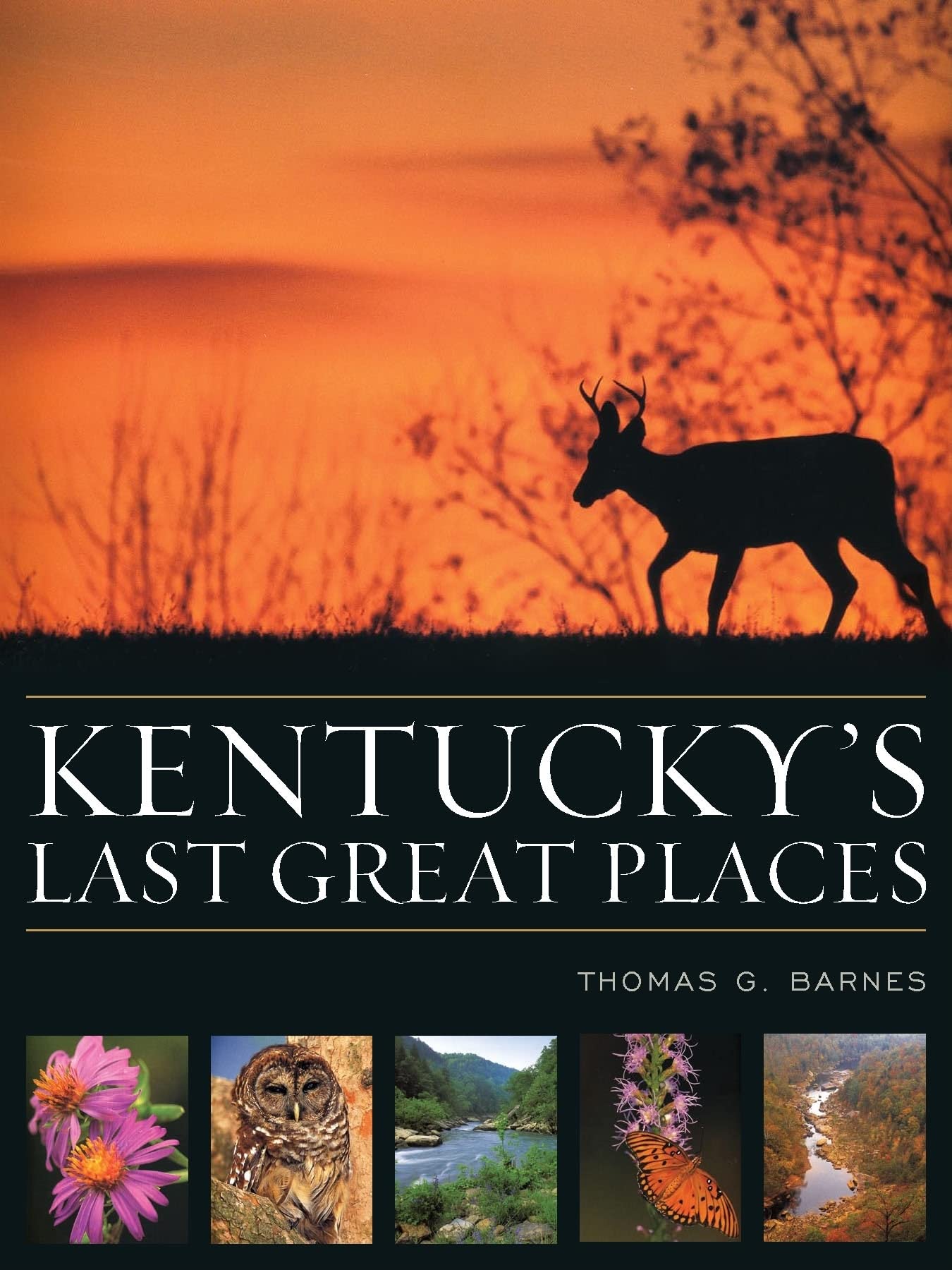
With over 100 glorious fullcolor photographs and insightful text, Kentucky's Last Great Places highlights the incredible natural beauty found in the Commonwealth's oldgrowth forests, prairies, wetlands, and other distinctive biological habitats. Many typesmore than 3,000 vascular plants, 230 fish, 105 amphibians and reptiles, 350 birds, 75 mammals, and 12,000 insectsmake Kentucky their home. Many of these species and their habitats are considered rare, threatened, or endangered. Overall, less than one percent of Kentucky is classified ecologically as being in a 'preEuropean' condition that deserves significant protection. Awardwinning photographer and author Thomas G. Barnes combines his striking photographs with essays describing the splendor found in more than forty of Kentucky's diverse natural preserves or ecological areas, including the oldgrowth Blanton Forest near Pine Mountain in Harlan County, Axe Lake Swamp in Ballard County near the Mississippi River, Red River Gorge, the Kentucky River Palisades, Mammoth Cave, and many others. This spectacular oversized book explores the biodiversity of Kentucky, the challenges to protecting its biological heritage, and the ways that organizations such as The Nature Conservancy, Kentucky Nature Preserves Commission, the National Park Service, and others are continuing to protect the state's unique biological legacy. Thomas G. Barnes, an associate extension professor of forestry at the University of Kentucky, is the author of Gardening for the Birds.
⚠️ WARNING (California Proposition 65):
This product may contain chemicals known to the State of California to cause cancer,
birth defects, or other reproductive harm.
For MAP (Minimum Advertised Price) violations and Intellectual Property (IP) or Trademark concerns, please contact:
support@ergodebooks.com
⚠️ California Proposition 65 Warning: Some products sold on this website may expose you to chemicals known to the State of California to cause cancer, birth defects, or other reproductive harm. For more information, visit www.P65Warnings.ca.gov.