If you have any questions, you are always welcome to contact us. We'll get back to you as soon as possible, withing 24 hours on weekdays.
Customer service
All questions about your order, return and delivery must be sent to our customer service team by e-mail at yourstore@yourdomain.com
Sale & Press
If you are interested in selling our products, need more information about our brand or wish to make a collaboration, please contact us at press@yourdomain.com
Help
If you have any questions, you are always welcome to contact us. We'll get back to you as soon as possible, withing 24 hours on weekdays.
Customer service
All questions about your order, return and delivery must be sent to our customer service team by e-mail at yourstore@yourdomain.com
Sale & Press
If you are interested in selling our products, need more information about our brand or wish to make a collaboration, please contact us at press@yourdomain.com
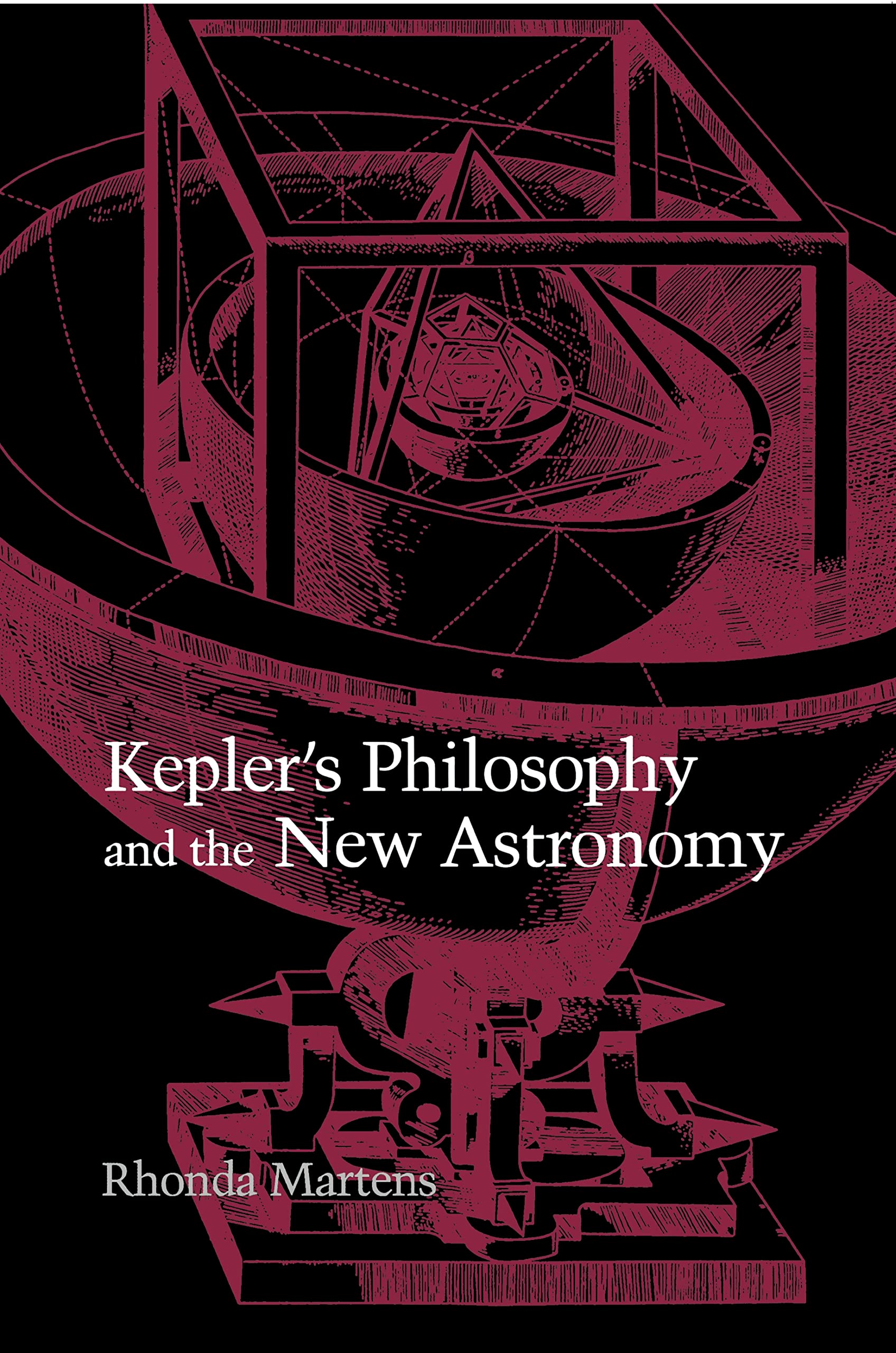
Johannes Kepler contributed importantly to every field he addressed. He changed the face of astronomy by abandoning principles that had been in place for two millennia, made important discoveries in optics and mathematics, and was an uncommonly good philosopher. Generally, however, Kepler's philosophical ideas have been dismissed as irrelevant and even detrimental to his legacy of scientific accomplishment. Here, Rhonda Martens offers the first extended study of Kepler's philosophical views and shows how those views helped him construct and justify the new astronomy.Martens notes that since Kepler became a Copernican before any empirical evidence supported Copernicus over the entrenched Ptolemaic system, his initial reasons for preferring Copernicanism were not telescope observations but rather methodological and metaphysical commitments. Further, she shows that Kepler's metaphysics supported the strikingly modern view of astronomical method that led him to discover the three laws of planetary motion and to wed physics and astronomya key development in the scientific revolution.By tracing the evolution of Kepler's thought in his astronomical, metaphysical, and epistemological works, Martens explores the complex interplay between changes in his philosophical views and the status of his astronomical discoveries. She shows how Kepler's philosophy paved the way for the discovery of elliptical orbits and provided a defense of physical astronomy's methodological soundness. In doing so, Martens demonstrates how an empirical discipline was inspired and profoundly shaped by philosophical assumptions.
⚠️ WARNING (California Proposition 65):
This product may contain chemicals known to the State of California to cause cancer,
birth defects, or other reproductive harm.
For MAP (Minimum Advertised Price) violations and Intellectual Property (IP) or Trademark concerns, please contact:
support@ergodebooks.com
⚠️ California Proposition 65 Warning: Some products sold on this website may expose you to chemicals known to the State of California to cause cancer, birth defects, or other reproductive harm. For more information, visit www.P65Warnings.ca.gov.