If you have any questions, you are always welcome to contact us. We'll get back to you as soon as possible, withing 24 hours on weekdays.
Customer service
All questions about your order, return and delivery must be sent to our customer service team by e-mail at yourstore@yourdomain.com
Sale & Press
If you are interested in selling our products, need more information about our brand or wish to make a collaboration, please contact us at press@yourdomain.com
Help
If you have any questions, you are always welcome to contact us. We'll get back to you as soon as possible, withing 24 hours on weekdays.
Customer service
All questions about your order, return and delivery must be sent to our customer service team by e-mail at yourstore@yourdomain.com
Sale & Press
If you are interested in selling our products, need more information about our brand or wish to make a collaboration, please contact us at press@yourdomain.com
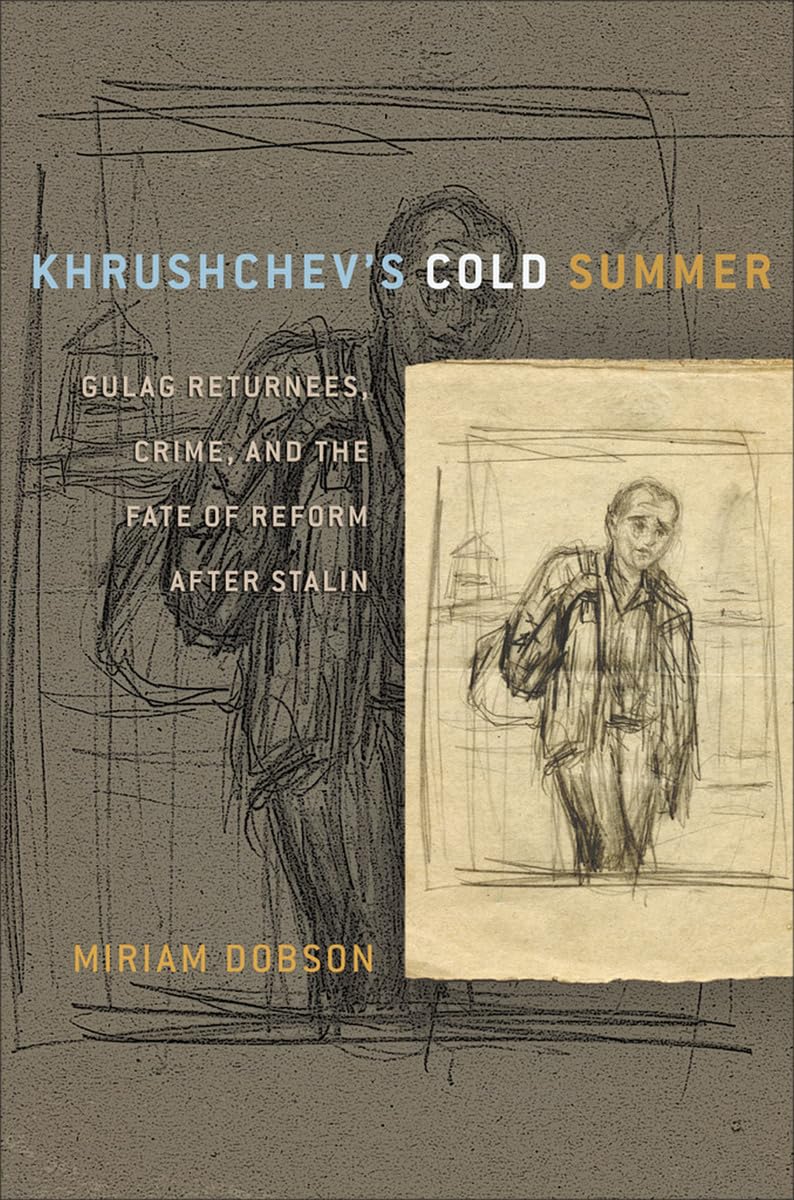
Between Stalin's death in 1953 and 1960, the government of the Soviet Union released hundreds of thousands of prisoners from the Gulag as part of a wideranging effort to reverse the worst excesses and abuses of the previous two decades and revive the spirit of the revolution. This exodus included not only victims of past purges but also those sentenced for criminal offenses. In Khrushchev's Cold Summer Miriam Dobson explores the impact of these returnees on communities and, more broadly, Soviet attempts to come to terms with the traumatic legacies of Stalin's terror.Confusion and disorientation undermined the regime's efforts at recovery. In the wake of Stalin's death, ordinary citizens and political leaders alike struggled to make sense of the country's recent bloody past and to cope with the complex social dynamics caused by attempts to reintegrate the large influx of returning prisoners, a number of whom were hardened criminals alienated and embittered by their experiences within the brutal camp system.Drawing on private letters as well as official reports on the party and popular mood, Dobson probes social attitudes toward the changes occurring in the first postStalin decade. Throughout, she features personal stories as articulated in the words of ordinary citizens, prisoners, and former prisoners. At the same time, she explores Soviet society's contradictory responses to the returnees and shows that for many the immediate postStalin years were anything but a breath of spring air after the long Stalinist winter.
⚠️ WARNING (California Proposition 65):
This product may contain chemicals known to the State of California to cause cancer,
birth defects, or other reproductive harm.
For MAP (Minimum Advertised Price) violations and Intellectual Property (IP) or Trademark concerns, please contact:
support@ergodebooks.com
⚠️ California Proposition 65 Warning: Some products sold on this website may expose you to chemicals known to the State of California to cause cancer, birth defects, or other reproductive harm. For more information, visit www.P65Warnings.ca.gov.