
Title
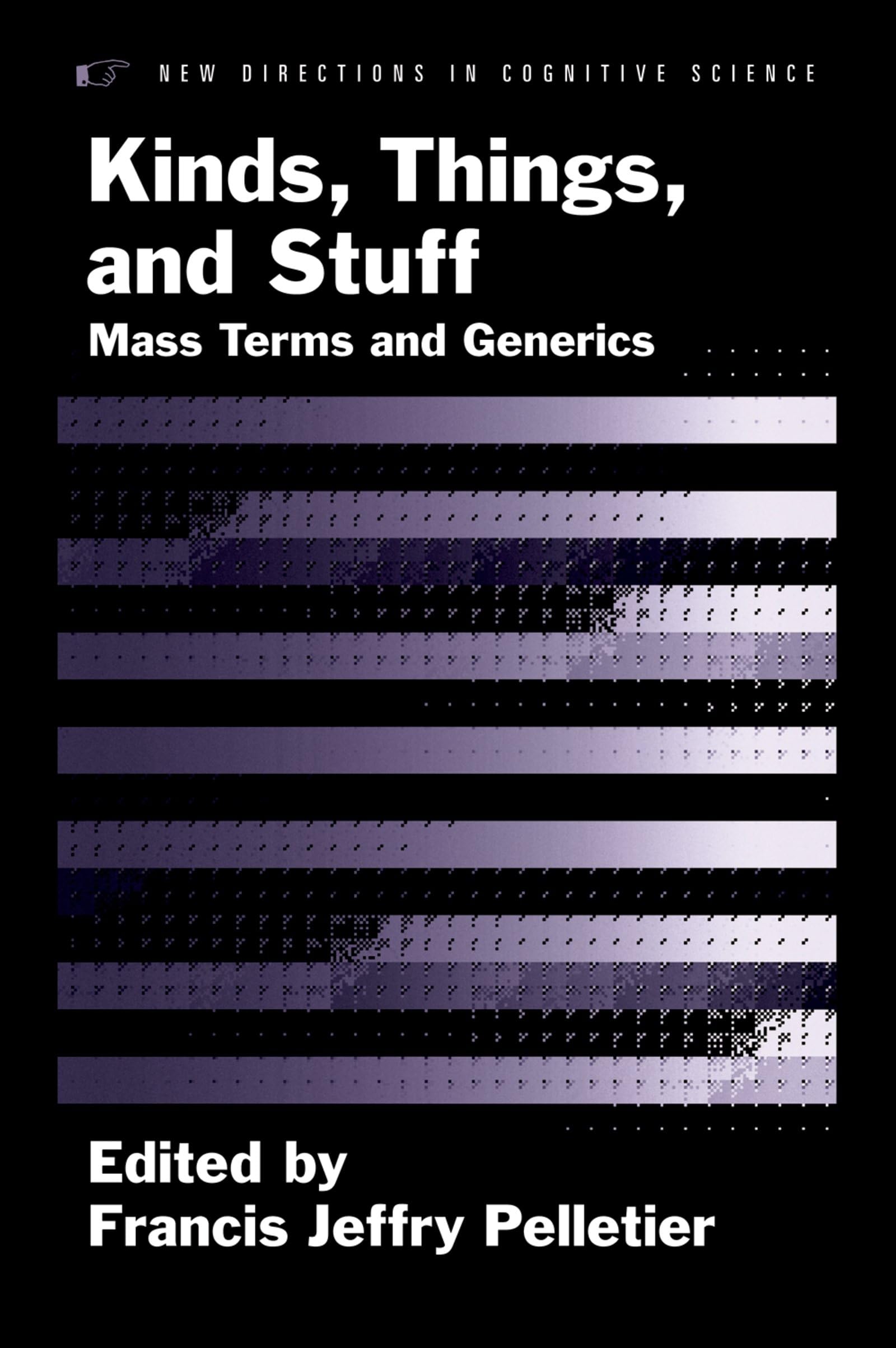
Kinds, Things, and Stuff: Mass Terms and Generics (New Directions in Cognitive Science),Used
Sold by Ergodebooks, an authorized reseller.
Returns accepted within 30 days | support@ergodebooks.com
Shipping Information
- Free Standard Shipping — United States only
- Processing Time: 3–5 business days
- Estimated Delivery: 6–10 business days after dispatch
- Double-boxed, fully insured & discreetly packaged
- Tracking number sent via email once dispatched
Returns & Refund
Returns accepted within 30 days of delivery.
Damaged or Defective Item
Free return shipping + replacement or full refund
Wrong Item Received
Free return shipping + replacement or full refund
Change of Mind
Return shipping at customer's expense · 25% restocking fee applies
Payment Option

A generic statement is a type of generalization that is made by asserting that a 'kind' has a certain property. For example we might hear that marshmallows are sweet. Here, we are talking about the 'kind' marshmallow and assert that individual instances of this kind have the property of being sweet. Almost all of our common sense knowledge about the everyday world is put in terms of generic statements. What can make these generic sentences be true even when there are exceptions? A mass term is one that does not 'divide its reference;' the word water is a mass term; the word dog is a count term. In a certain vicinity, one can count and identity how many dogs there are, but it doesn't make sense to do that for waterthere just is water present. The philosophical literature is rife with examples concerning how a thing can be composed of a mass, such as a statue being composed of clay. Both generic statements and mass terms have led philosophers, linguists, semanticists, and logicians to search for theories to accommodate these phenomena and relationships.The contributors to this interdisciplinary volume study the nature and use of generics and mass terms. Noted researchers in the psychology of language use material from the investigation of human performance and childlanguage learning to broaden the range of options open for formal semanticists in the construction of their theories, and to give credence to some of their earlier postulationsfor instance, concerning different types of predications that are available for true generics and for the role of object recognitions in the development of count vs. mass terms. Relevant data also is described by investigating the ways children learn these sorts of linguistic items: children can learn how to sue generic statements correctly at an early age, and children are adept at individuating objects and distinguishing them from the stuff of which they are made also at an early age.
⚠️ WARNING (California Proposition 65):
This product may contain chemicals known to the State of California to cause cancer, birth defects, or other reproductive harm.
For more information, please visit www.P65Warnings.ca.gov.
- Q: What are the dimensions of the book? A: The book measures nine point twenty-nine inches in length, one point eighteen inches in width, and six point eighteen inches in height.
- Q: How many pages does the book have? A: The book contains two hundred forty-eight pages, providing ample content for readers.
- Q: What type of binding does this book have? A: This book is bound in hardcover, ensuring durability and a quality reading experience.
- Q: Who is the author of the book? A: The author of this book is Francis Jeffry Pelletier, known for his contributions to cognitive science.
- Q: What is the subject matter of the book? A: This book explores mass terms and generics, focusing on how language reflects common knowledge.
- Q: Is this book suitable for academic study? A: Yes, this book is ideal for academic study, particularly in linguistics and cognitive science.
- Q: How can I use this book in my studies? A: You can use this book to understand generics and mass terms, aiding your research in language and philosophy.
- Q: Is this book appropriate for beginners in linguistics? A: Yes, the book is suitable for beginners, offering foundational insights into language theories.
- Q: What age group is this book suitable for? A: This book is suitable for adults and advanced students interested in cognitive science and linguistics.
- Q: How should I store this book? A: Store the book upright in a cool, dry place to maintain its condition and prevent damage.
- Q: What is the recommended care for this book? A: To care for the book, avoid exposure to direct sunlight and handle it with clean hands.
- Q: Is this book safe for younger readers? A: This book is intended for adult readers and may not be suitable for younger audiences.
- Q: What should I do if the book arrives damaged? A: If the book arrives damaged, contact the seller for return instructions and possible replacements.
- Q: What if I need to return the book? A: You can return the book according to the seller's return policy, typically within a specified timeframe.
- Q: Are there any common issues with this book? A: Common issues may include printing errors or binding defects, which should be reported to the seller.
- Q: How does this book compare to others in its field? A: This book is distinguished by its interdisciplinary approach to generics and mass terms, making it a valuable resource.