
Title
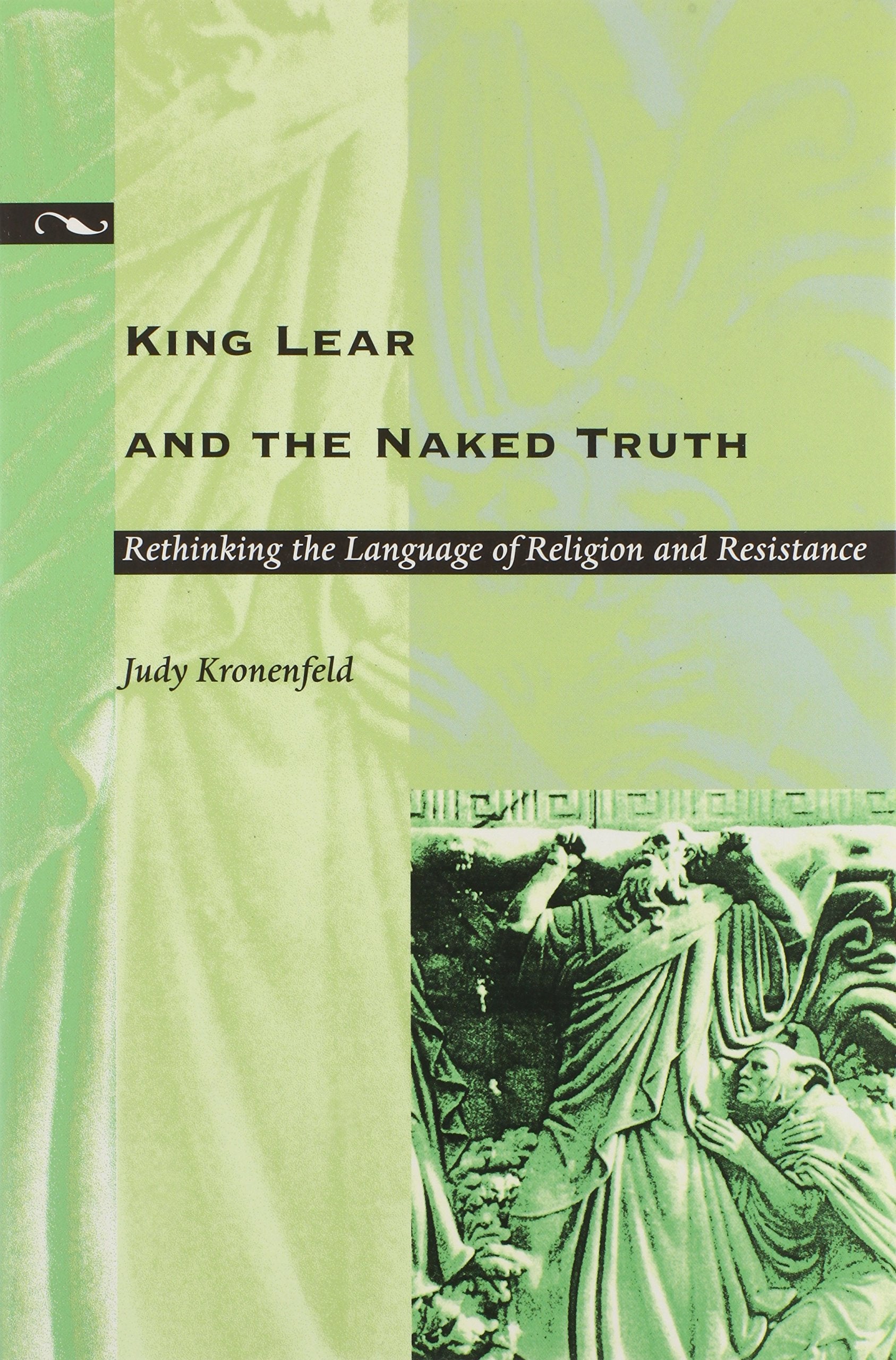
King Lear and the Naked Truth: Rethinking the Language of Religion and Resistance,Used
Sold by Ergodebooks, an authorized reseller.
Returns accepted within 30 days | support@ergodebooks.com
Shipping Information
- Free Standard Shipping — United States only
- Processing Time: 3–5 business days
- Estimated Delivery: 6–10 business days after dispatch
- Double-boxed, fully insured & discreetly packaged
- Tracking number sent via email once dispatched
Returns & Refund
Returns accepted within 30 days of delivery.
Damaged or Defective Item
Free return shipping + replacement or full refund
Wrong Item Received
Free return shipping + replacement or full refund
Change of Mind
Return shipping at customer's expense · 25% restocking fee applies
Payment Option

Taking King Lear as her central text, Judy Kronenfeld seriously questions the critical assumptions of much of todays most fashionable Shakespeare scholarship. Charting a new course beyond both New Historicist and deconstructionist critics, she suggests a theory of language and interpretation that provides essential historical and linguistic contexts for the key terms and concepts of the play. Opening the play up to the implications of these contexts and this interpretive theory, she reveals much about Lear, English Reformation religious culture, and the state of contemporary criticism.Kronenfelds focus expands from the text of Shakespeares play to a discussion of a shared Christian culturea shared language and set of valuesa common discursive field that frames the social ethics of the play. That expanded focus is used to address the multiple ways that clothing and nakedness function in the play, as well as the ways that these particular images and terms are understood in that shared context. As Kronenfeld moves beyond Lear to uncover the complex resonances of clothing and nakedness in sermons, polemical tracts, legislation, rhetoric, morality plays, and actual or alleged practices such as naked revolts by Anabaptists and the Adamians ritual disrobing during religious services, she demonstrates that many key terms and concepts of the period cannot be tied to a single ideology. Instead, they represent part of an intricate network of thought shared by people of seemingly opposite views, and it is within such shared cultural networks that dissent, resistance, and creativity can emerge. Warning her readers not to take the language of literary texts out of the linguistic context within which it first appeared, Kronenfeld has written a book that reinterprets the linguistic model that has been the basis for much poststructuralist criticism.
⚠️ WARNING (California Proposition 65):
This product may contain chemicals known to the State of California to cause cancer, birth defects, or other reproductive harm.
For more information, please visit www.P65Warnings.ca.gov.