
Title
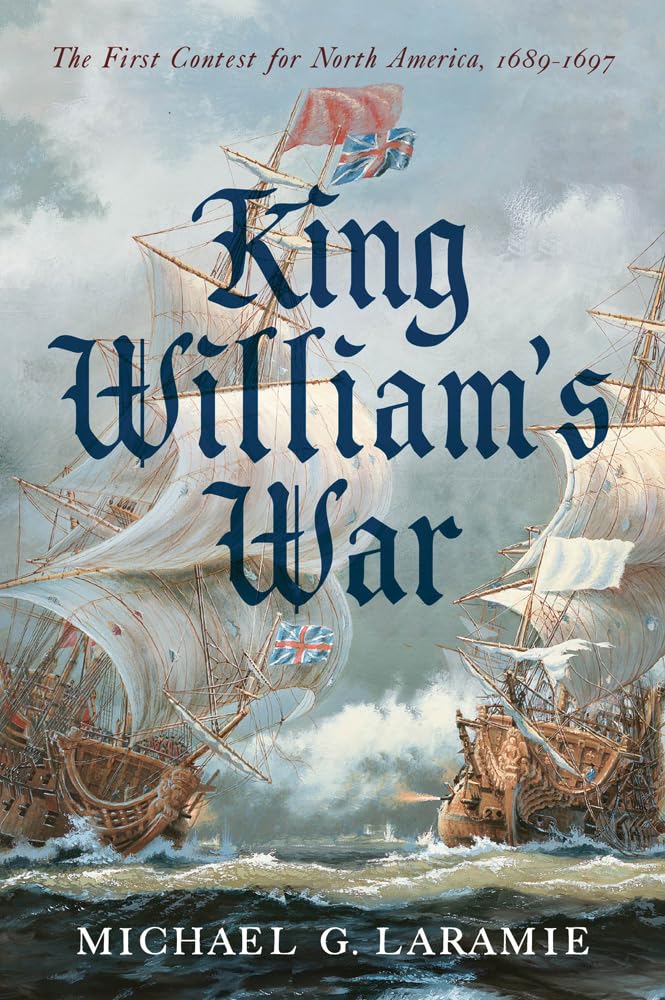
King William's War: The First Contest for North America, 16891697,Used
Sold by Ergodebooks, an authorized reseller.
Returns accepted within 30 days | support@ergodebooks.com
Shipping Information
- Free Standard Shipping — United States only
- Processing Time: 3–5 business days
- Estimated Delivery: 6–10 business days after dispatch
- Double-boxed, fully insured & discreetly packaged
- Tracking number sent via email once dispatched
Returns & Refund
Returns accepted within 30 days of delivery.
Damaged or Defective Item
Free return shipping + replacement or full refund
Wrong Item Received
Free return shipping + replacement or full refund
Change of Mind
Return shipping at customer's expense · 25% restocking fee applies
Payment Option

Winner of the New York Society of Colonial Wars Annual Book AwardFought in New York, New England, and Canada, the Conflict that Began the Long French and English Struggle for the New WorldWhile much has been written on the French and Indian War of 17541763, the colonial conflicts that preceded it have received comparatively little attention. Yet in King Williams War, the first clash between England and France for control of North America, the patterns of conflict for the next seventy years were laid, as were the goals and objectives of both sides, as well as the realization that the colonies of the two nations could not coexist.King Williams War actually encompassed several proxy wars being fought by the English and the French through their native allies. The Beaver Wars was a long running feud between the Iroquois Confederacy, New France, and New Frances native allies over control of the lucrative fur trade. Fueled by English guns and money, the Iroquois attempted to divert the French fur trade towards their English trading partners in Albany, and in the process gain control over other Indian tribes. To the east the proFrench Wabanaki of Maine, Nova Scotia, and New Brunswick had earlier fought a war with New England, but English expansion and French urgings, aided by foolish moves and political blunders on the part of New England, erupted into a second Wabanaki War on the eve of King Williams War. Thus, these two conflicts officially became one with the arrival of news of a declaration of war between France and England in 1689. The next nine years saw coordinated attacks, including French assaults on Schenectady, New York, and Massachusetts, and English attacks around Montreal and on Nova Scotia. The war ended diplomatically, but started again five years later in Queen Annes War.A riveting history full of memorable characters and events, and supported by extensive primary source material, King Williams War: The First Contest for North America, 16891697 by Michael G. Laramie is the first booklength treatment of a war that proved crucial to the future of North America.
⚠️ WARNING (California Proposition 65):
This product may contain chemicals known to the State of California to cause cancer, birth defects, or other reproductive harm.
For more information, please visit www.P65Warnings.ca.gov.
- Q: What is the main focus of 'King William's War: The First Contest for North America, 1689–1697'? A: The book primarily focuses on the conflict between England and France for control of North America, detailing the events of King William's War and its impact on future colonial conflicts.
- Q: Who is the author of this book? A: The author of 'King William's War: The First Contest for North America, 1689–1697' is Michael G. Laramie.
- Q: When was 'King William's War: The First Contest for North America' published? A: The book was published on November 15, 2017.
- Q: How many pages does the book have? A: The book contains 344 pages.
- Q: What type of binding does this book have? A: This edition of the book is a hardcover.
- Q: Is this book suitable for readers interested in American history? A: Yes, this book is ideal for readers interested in American history, particularly the colonial conflicts between England and France.
- Q: Does the book include primary source material? A: Yes, 'King William's War' is supported by extensive primary source material, providing a comprehensive historical account.
- Q: What type of reader would benefit from this book? A: Scholars, students of history, and anyone interested in early American colonial conflicts would benefit from reading this book.
- Q: Are there any notable events covered in the book? A: Yes, the book covers significant events including French assaults on Schenectady, New York, and English attacks around Montreal and Nova Scotia.
- Q: What award did this book win? A: The book won the New York Society of Colonial Wars Annual Book Award.