If you have any questions, you are always welcome to contact us. We'll get back to you as soon as possible, withing 24 hours on weekdays.
Customer service
All questions about your order, return and delivery must be sent to our customer service team by e-mail at yourstore@yourdomain.com
Sale & Press
If you are interested in selling our products, need more information about our brand or wish to make a collaboration, please contact us at press@yourdomain.com
Help
If you have any questions, you are always welcome to contact us. We'll get back to you as soon as possible, withing 24 hours on weekdays.
Customer service
All questions about your order, return and delivery must be sent to our customer service team by e-mail at yourstore@yourdomain.com
Sale & Press
If you are interested in selling our products, need more information about our brand or wish to make a collaboration, please contact us at press@yourdomain.com
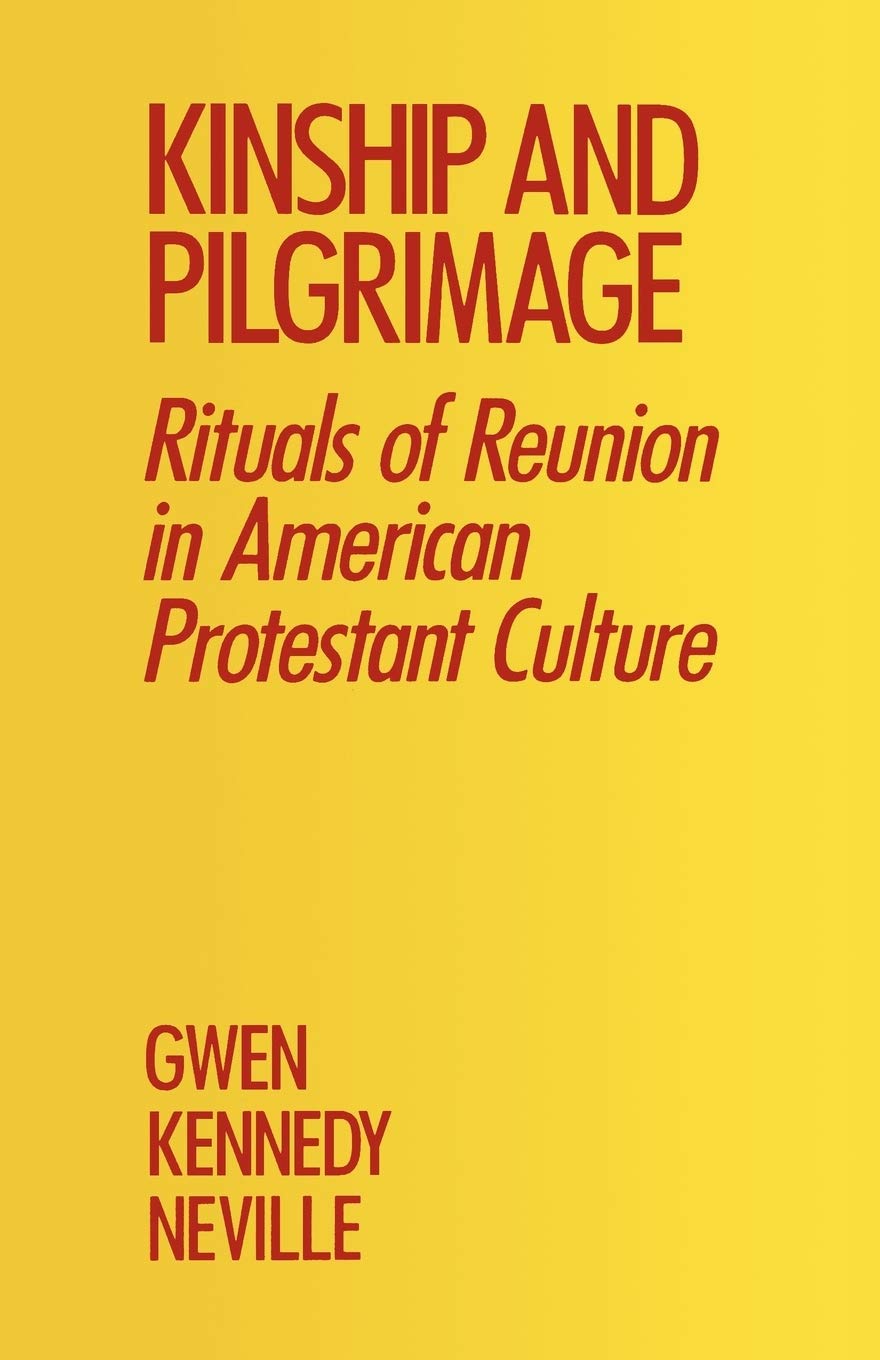
The twin concepts of kinship and pilgrimage have deep roots in Protestant culture. This cultural anthropological study, based in part on the author's own fieldwork, argues that in Reformed Protestantism, the Catholic custom of making pilgrimages to sacred spots has been replaced by the custom of 'reunion,' in which scattered members of a family or group return each year to their place of origin to take part in a quasisacred ritual meal and other ritual activities. Neville discusses open air services and kinbased gatherings in the Southern United States and Scotland as examples of symbolic forms that express certain themes in Northern European Protestant culture, contrasting these forms with the symbolic social statements in the Roman Catholic liturgical world of medieval Europe and traditional Mediterranean Catholicism. According to Neville, Protestant rituals of reunion such as family reunion, church homecoming, cemetery association day, camp meeting, and denomination conference center are part of an institutionalized pilgrimage complex that comments on Protestant culture and belief while presenting a symbolic inversion of the pilgrimage and the culture of Roman Catholic tradition.
⚠️ WARNING (California Proposition 65):
This product may contain chemicals known to the State of California to cause cancer,
birth defects, or other reproductive harm.
For MAP (Minimum Advertised Price) violations and Intellectual Property (IP) or Trademark concerns, please contact:
support@ergodebooks.com
⚠️ California Proposition 65 Warning: Some products sold on this website may expose you to chemicals known to the State of California to cause cancer, birth defects, or other reproductive harm. For more information, visit www.P65Warnings.ca.gov.