
Title
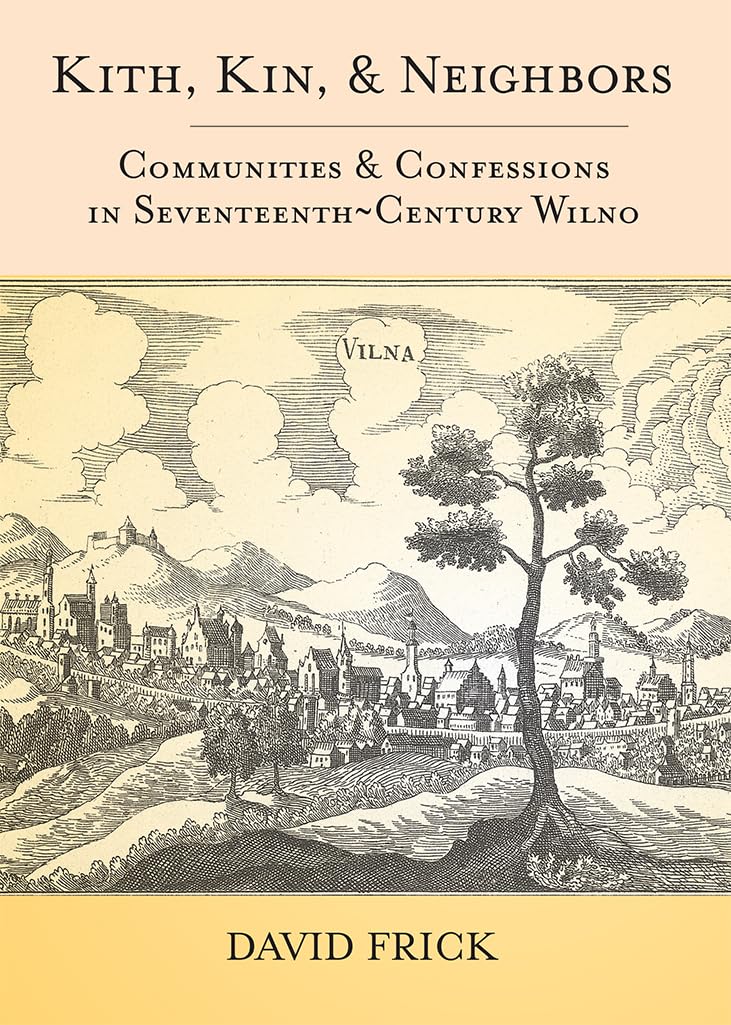
Kith, Kin, and Neighbors: Communities and Confessions in SeventeenthCentury Wilno,Used
Sold by Ergodebooks, an authorized reseller.
Returns accepted within 30 days | support@ergodebooks.com
Shipping Information
- Free Standard Shipping — United States only
- Processing Time: 3–5 business days
- Estimated Delivery: 6–10 business days after dispatch
- Double-boxed, fully insured & discreetly packaged
- Tracking number sent via email once dispatched
Returns & Refund
Returns accepted within 30 days of delivery.
Damaged or Defective Item
Free return shipping + replacement or full refund
Wrong Item Received
Free return shipping + replacement or full refund
Change of Mind
Return shipping at customer's expense · 25% restocking fee applies
Payment Option

In the midseventeenth century, Wilno (Vilnius), the second capital of the PolishLithuanian Commonwealth, was home to Poles, Lithuanians, Germans, Ruthenians, Jews, and Tatars, who worshiped in Catholic, Uniate, Orthodox, Calvinist, and Lutheran churches, one synagogue, and one mosque. Visitors regularly commented on the relatively peaceful coexistence of this bewildering array of peoples, languages, and faiths. In Kith, Kin, and Neighbors, David Frick shows how Wilnos inhabitants navigated and negotiated these differences in their public and private lives.This remarkable book opens with a walk through the streets of Wilno, offering a look over the royal quartermasters shoulder as he made his survey of the citys intramural houses in preparation for King Wladyslaw IVs visit in 1636. These surveys (Lustrations) provide concise descriptions of each house within the city walls that, in concert with court and church records, enable Frick to accurately discern Wilnos neighborhoods and human networks, ascertain the extent to which such networks were bounded confessionally and culturally, determine when citizens crossed these boundaries, and conclude which kinds of crossconfessional constellations were more likely than others. These maps provide the backdrops against which the dramas of Wilno lives played out: birth, baptism, education, marriage, separation or divorce, guild membership, poor relief, and death and funeral practices. Perhaps the most complete reconstruction ever written of life in an early modern European city, Kith, Kin, and Neighbors sets a new standard for urban history and for work on the religious and communal life of Eastern Europe.
⚠️ WARNING (California Proposition 65):
This product may contain chemicals known to the State of California to cause cancer, birth defects, or other reproductive harm.
For more information, please visit www.P65Warnings.ca.gov.