If you have any questions, you are always welcome to contact us. We'll get back to you as soon as possible, withing 24 hours on weekdays.
Customer service
All questions about your order, return and delivery must be sent to our customer service team by e-mail at yourstore@yourdomain.com
Sale & Press
If you are interested in selling our products, need more information about our brand or wish to make a collaboration, please contact us at press@yourdomain.com
Help
If you have any questions, you are always welcome to contact us. We'll get back to you as soon as possible, withing 24 hours on weekdays.
Customer service
All questions about your order, return and delivery must be sent to our customer service team by e-mail at yourstore@yourdomain.com
Sale & Press
If you are interested in selling our products, need more information about our brand or wish to make a collaboration, please contact us at press@yourdomain.com
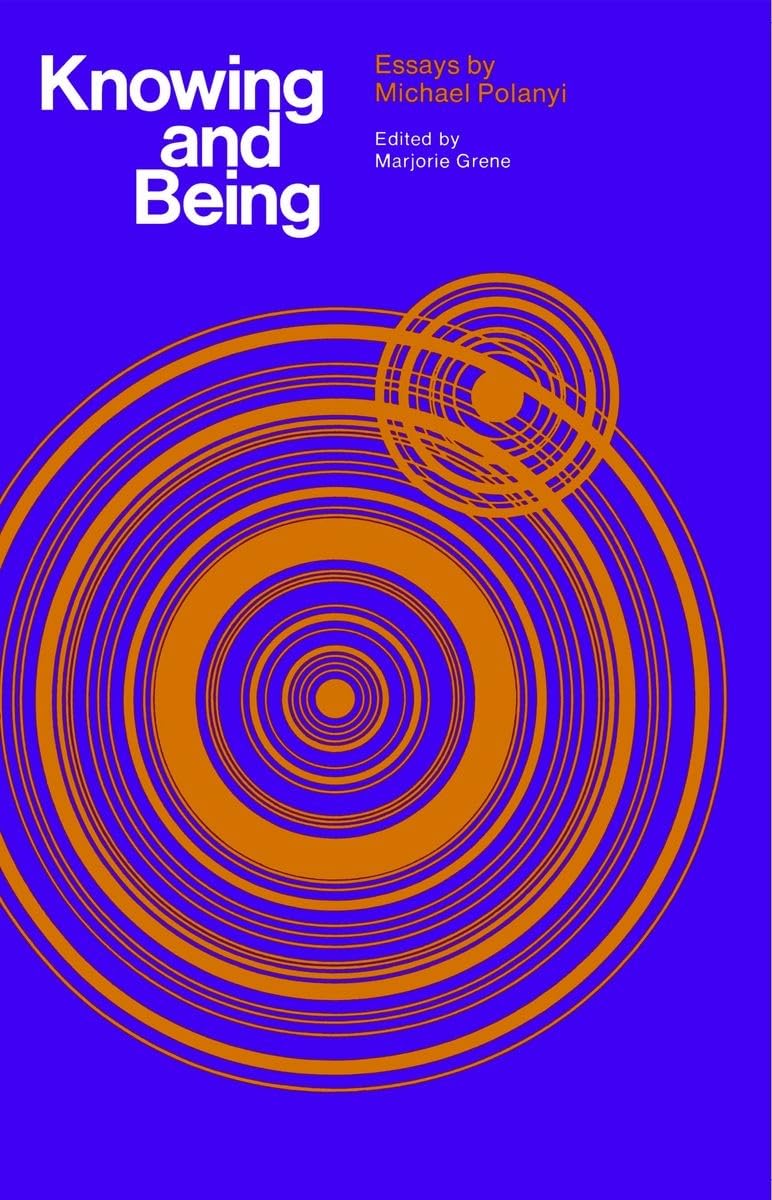
Because of the difficulty posed by the contrast between the search for truth and truth itself, Michael Polanyi believes that we must alter the foundation of epistemology to include as essential to the very nature of mind, the kind of groping that constitutes the recognition of a problem.This collection of essays, assembled by Marjorie Grene, exemplifies the development of Polanyi's theory of knowledge which was first presented in Science, Faith, and Society and later systematized in Personal Knowledge.Polanyi believes that the dilemma of the modern mind arises from the peculiar relation between the positivist claim for total objectivity in scientific knowledge and the unprecedented moral dynamism characterizing the social and political aspirations of the last century. The first part of Knowing and Being deals with this theme. Part two develops Polanyi's idea that centralization is incompatible with the life of science as well as his views on the role of tradition and authority in science. The essays on tacit knowing in Part Three proceed directly from his preoccupation with the nature of scientific discovery and reveal a pervasive substructure of all intelligent behavior. Polanyi believes that all knowing involves movement from internal clues to external evidence. Therefore, to explain the process of knowing, we must develop a theory of the nature of living things in general, including an account of that aspect of living things we call 'mind.' Part Four elaborates upon this theme.
⚠️ WARNING (California Proposition 65):
This product may contain chemicals known to the State of California to cause cancer,
birth defects, or other reproductive harm.
For MAP (Minimum Advertised Price) violations and Intellectual Property (IP) or Trademark concerns, please contact:
support@ergodebooks.com
⚠️ California Proposition 65 Warning: Some products sold on this website may expose you to chemicals known to the State of California to cause cancer, birth defects, or other reproductive harm. For more information, visit www.P65Warnings.ca.gov.