
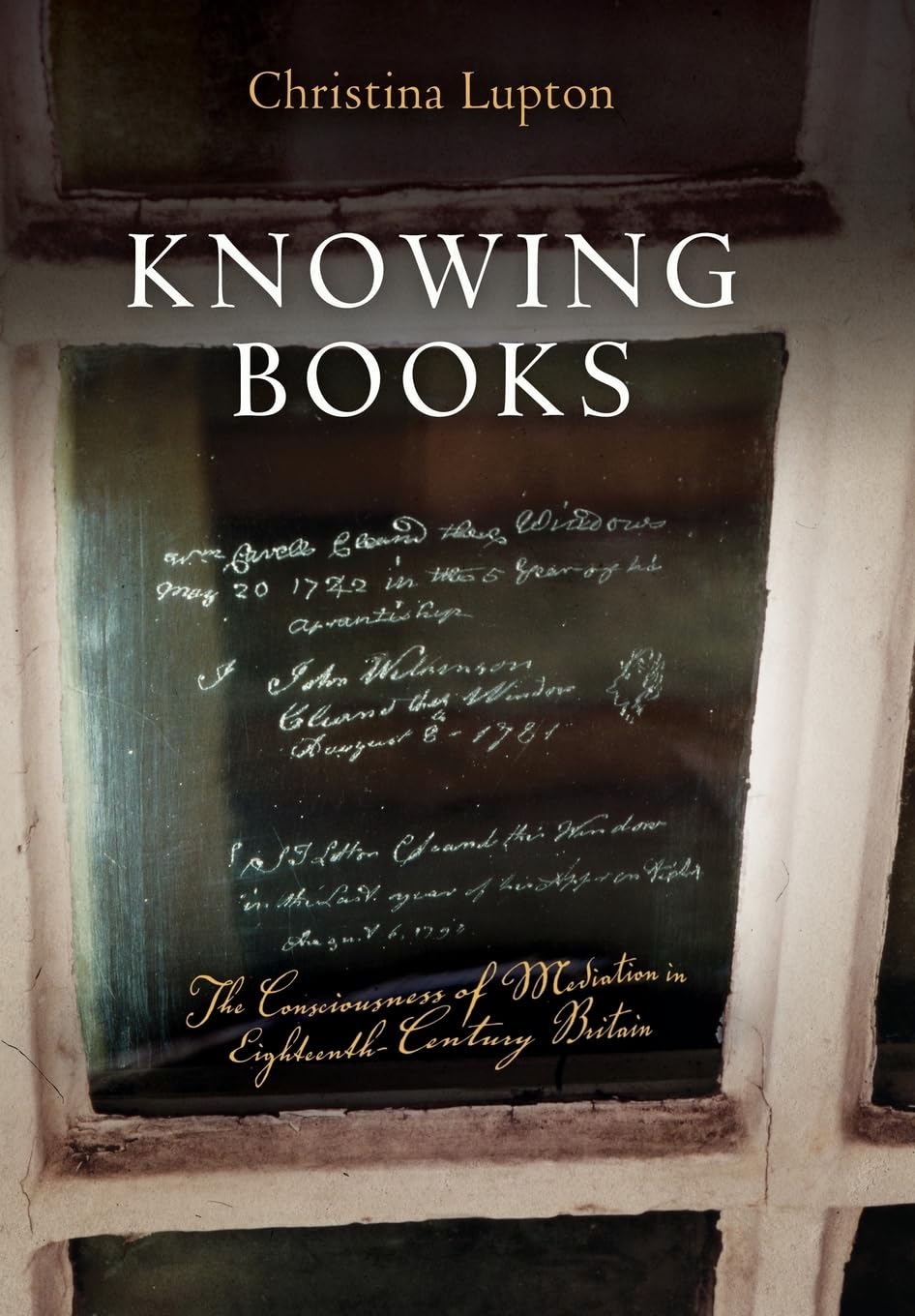
Title
Knowing Books: The Consciousness Of Mediation In Eighteenthcentury Britain (Material Texts),Used
Sold by Ergodebooks, an authorized reseller.
Returns accepted within 30 days | support@ergodebooks.com
Shipping Information
- Free Standard Shipping — United States only
- Processing Time: 3–5 business days
- Estimated Delivery: 6–10 business days after dispatch
- Double-boxed, fully insured & discreetly packaged
- Tracking number sent via email once dispatched
Returns & Refund
Returns accepted within 30 days of delivery.
Damaged or Defective Item
Free return shipping + replacement or full refund
Wrong Item Received
Free return shipping + replacement or full refund
Change of Mind
Return shipping at customer's expense · 25% restocking fee applies
Payment Option

The eighteenth century has long been associated with realism and objective description, modes of representation that deemphasize writing. But in the middle decades of the century, Christina Lupton observes, authors described with surprising candor the material and economic facets of their own texts' production. In Knowing Books Lupton examines a variety of eighteenthcentury sources, including sermons, graffiti, philosophical texts, and magazines, which illustrate the range and character of midcentury experiments with words announcing their status as physical objects. Books that 'know' their own presence on the page and in the reader's hand become, in Lupton's account, tantalizing objects whose entertainment value competes with that of realist narrative.Knowing Books introduces these mideighteenthcentury works as part of a long history of selfconscious texts being greeted as fashionable objects. Poststructuralist and Marxist approaches to literature celebrate the consciousness of writing and economic production as belonging to revolutionary understandings of the world, but authors of the period under Lupton's gaze expose the facts of mediation without being revolutionary. On the contrary, their explication of economic and material processes shores up their claim to material autonomy and economic success. Lupton uses media theory and close reading to suggest the desire of eighteenthcentury readers to attribute sentience to technologies and objects that entertain them.Rather than a historical study of print technology, Knowing Books offers a humanist interpretation of the will to cede agency to media. This horizon of theoretical engagement makes Knowing Books at once an account of the least studied decades of the eighteenth century and a work of relevance for those interested in new attitudes toward media in the twentyfirst.
⚠️ WARNING (California Proposition 65):
This product may contain chemicals known to the State of California to cause cancer, birth defects, or other reproductive harm.
For more information, please visit www.P65Warnings.ca.gov.
- Q: How many pages does the book have? A: The book has two hundred pages. This length allows for a thorough exploration of the themes presented.
- Q: What is the binding type of this book? A: The book is hardcover. This type of binding provides durability and a premium feel.
- Q: What are the dimensions of the book? A: The book measures six point two six inches in length, zero point five one inches in width, and nine point zero two inches in height. These dimensions make it easy to handle and store.
- Q: What genre does this book fall under? A: This book falls under the general category of literary criticism and historical analysis. It discusses the consciousness of mediation in the eighteenth century.
- Q: Who is the author of the book? A: The author is Christina Lupton. She provides a detailed examination of the material aspects of texts.
- Q: What themes are explored in this book? A: Themes explored include the relationship between text and materiality, as well as readers' perceptions of media. Lupton examines how these themes shape the understanding of literature.
- Q: How do I read this book for best understanding? A: To gain the most from this book, read it slowly and reflect on the themes presented. Take notes on examples given from various sources discussed.
- Q: Is this book suitable for academic study? A: Yes, this book is suitable for academic study. It provides a critical analysis that can enhance understanding of literary contexts.
- Q: What audience is this book intended for? A: The book is intended for scholars, students, and anyone interested in literary theory or the history of media. It offers insights that appeal to a range of readers.
- Q: How should I care for this hardcover book? A: To care for this hardcover book, store it upright in a cool, dry place. Avoid exposing it to direct sunlight to preserve its condition.
- Q: Is there a specific way to clean the book's cover? A: Yes, wipe the cover with a soft, dry cloth to remove dust. Avoid using water or cleaners to prevent damage.
- Q: How do I preserve the pages of this book? A: To preserve the pages, handle them gently and avoid folding or tearing. Keep the book in a protective case if possible.
- Q: What if the book arrives damaged? A: If the book arrives damaged, contact the seller for a return or exchange. Most retailers have policies in place for damaged goods.
- Q: Is there a warranty or guarantee for this book? A: Typically, books do not come with a warranty. However, check the retailer's return policy for any satisfaction guarantees.
- Q: Can I return this book if I don’t like it? A: Yes, you can usually return this book if you are not satisfied. Ensure to check the specific return policy of the retailer.
- Q: What should I do if I have questions about the content? A: If you have questions about the content, consider joining a discussion group or reaching out to academic forums. Engaging with others can enhance your understanding.