
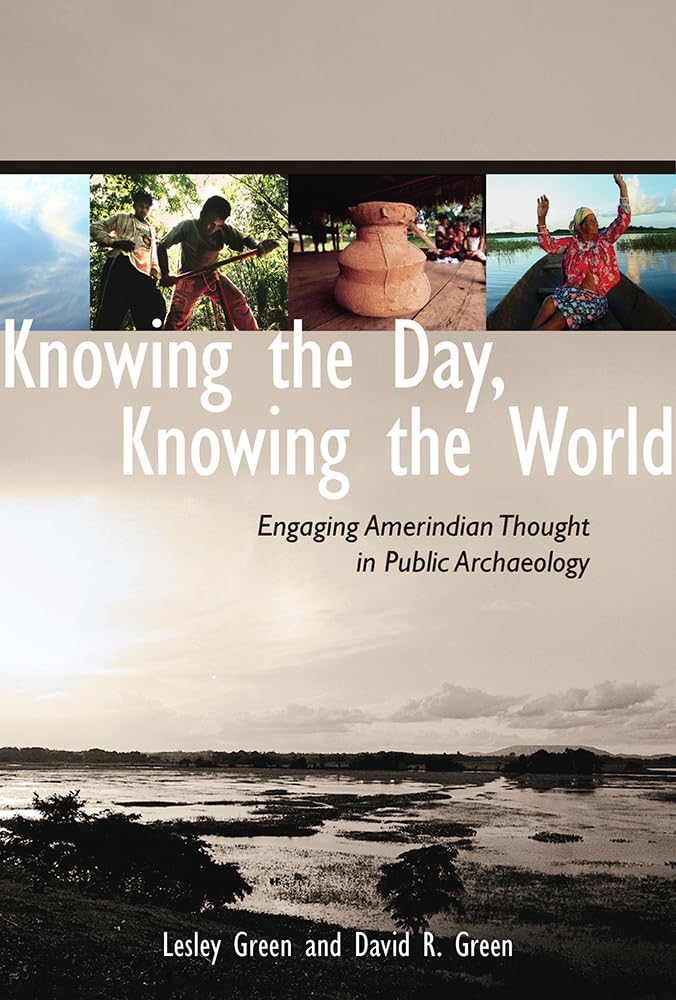
Title
Knowing The Day, Knowing The World: Engaging Amerindian Thought In Public Archaeology,Used
Sold by Ergodebooks, an authorized reseller.
Returns accepted within 30 days | support@ergodebooks.com
Shipping Information
- Free Standard Shipping — United States only
- Processing Time: 3–5 business days
- Estimated Delivery: 6–10 business days after dispatch
- Double-boxed, fully insured & discreetly packaged
- Tracking number sent via email once dispatched
Returns & Refund
Returns accepted within 30 days of delivery.
Damaged or Defective Item
Free return shipping + replacement or full refund
Wrong Item Received
Free return shipping + replacement or full refund
Change of Mind
Return shipping at customer's expense · 25% restocking fee applies
Payment Option

Based on more than a decade of research in Palikur lands known as Arukwa in the state of Amap, Brazil, Knowing the Day, Knowing the World reconsiders the dialogue between formal scholarship and Amerindian ways of knowing. Beginning and ending with a public archaeology project in the region, the book engages headon with Amerindian ways of thinking about space, time, and personhood. Demonstrating that Palikur knowledges are based on movement and a careful theorization of what it means to be present in a place, the book makes a sustained case for engaging with different ways of knowing. It shows how this kind of research can generate rich dialogues about nature, reality, and the ethical production of knowledge.The structure of the book reflects a gradual comprehension of Palikur ways of knowing during the course of field research. The text enters into the ethnographic material from the perspective of familiar disciplineshistory, geography, astronomy, geometry, and philosophyand explores the junctures in which conventional disciplinary frameworks cannot adequately convey Palikur understandings. Beginning with reflections on questions of personhood, ethics, and ethnicity, the authors rethink assumptions about history and geography. They learn and recount an alternative way of thinking about astronomy from the Palikur astronomical narratives, and they show how topological concepts embedded in everyday Palikur speech extend to different ways of conceptualizing landscape. In conclusion, they reflect on the challenges of comprehending alternative cosmologies and consider the insights that come from allowing ethnographic material to pose questions of modernist frameworks.
⚠️ WARNING (California Proposition 65):
This product may contain chemicals known to the State of California to cause cancer, birth defects, or other reproductive harm.
For more information, please visit www.P65Warnings.ca.gov.