
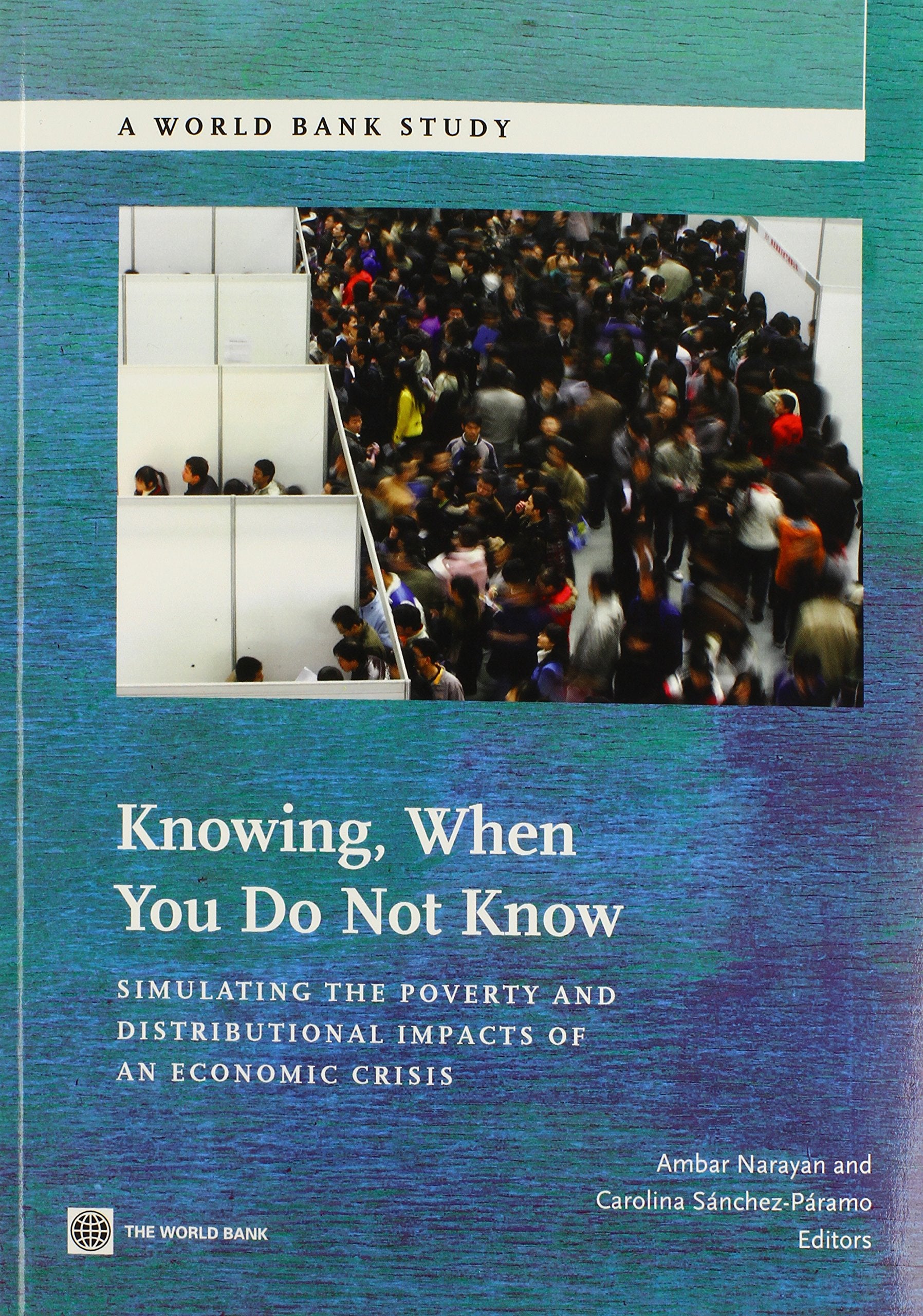
Title
Knowing When You Do Not Know: Simulating The Poverty And Distributional Impacts Of An Economic Crisis (World Bank Studies),New
Sold by Ergodebooks, an authorized reseller.
Returns accepted within 30 days | support@ergodebooks.com
Shipping Information
- Free Standard Shipping — United States only
- Processing Time: 3–5 business days
- Estimated Delivery: 6–10 business days after dispatch
- Double-boxed, fully insured & discreetly packaged
- Tracking number sent via email once dispatched
Returns & Refund
Returns accepted within 30 days of delivery.
Damaged or Defective Item
Free return shipping + replacement or full refund
Wrong Item Received
Free return shipping + replacement or full refund
Change of Mind
Return shipping at customer's expense · 25% restocking fee applies
Payment Option

Economists have long sought to predict how macroeconomic shocks willaffect individual welfare. Macroeconomic data and forecasts are easilyavailable when crises strike. But policy action requires not onlyunderstanding the magnitude of a macro shock, but also identifyingwhich households or individuals are being hurt by (or benefit from) thecrisis.A popular solution is to extrapolate the welfare impact of a shockfrom the historical response of income or consumption poverty tochanges in output, by estimating an 'elasticity' of poverty togrowth. Although this method provides an estimate for the aggregatepoverty impact of a macro shock, it has limited value for analysts andpolicymakers alike. Aggregate numbers are useful to capture theattention of policymakers and the international community, but in theabsence of any information on who is affected and to what extent,provide little guidance on what actions need to be taken.This volume outlines a more comprehensive approach to the problem,showcasing a microsimulation model, developed in response to demandfrom World Bank staff working in countries and country governments inthe wake of the global financial crisis of 200809. Starting with theidea of using simple macroeconomic projections as the 'macrolinkages' to a micro behavioral model built from household data,the model was conceptualized, refined and tested in a diverse mix ofcountries: Bangladesh, Philippines, Mexico, Poland and Mongolia. Theresults fed into country policy dialogue and lending operations of Bankteams, as well as various reports, research papers and briefs.
⚠️ WARNING (California Proposition 65):
This product may contain chemicals known to the State of California to cause cancer, birth defects, or other reproductive harm.
For more information, please visit www.P65Warnings.ca.gov.