If you have any questions, you are always welcome to contact us. We'll get back to you as soon as possible, withing 24 hours on weekdays.
Customer service
All questions about your order, return and delivery must be sent to our customer service team by e-mail at yourstore@yourdomain.com
Sale & Press
If you are interested in selling our products, need more information about our brand or wish to make a collaboration, please contact us at press@yourdomain.com
Help
If you have any questions, you are always welcome to contact us. We'll get back to you as soon as possible, withing 24 hours on weekdays.
Customer service
All questions about your order, return and delivery must be sent to our customer service team by e-mail at yourstore@yourdomain.com
Sale & Press
If you are interested in selling our products, need more information about our brand or wish to make a collaboration, please contact us at press@yourdomain.com
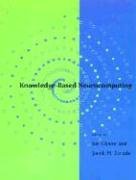
Neurocomputing methods are loosely based on a model of the brain as a network of simple interconnected processing elements corresponding to neurons. These methods derive their power from the collective processing of artificial neurons, the chief advantage being that such systems can learn and adapt to a changing environment. In knowledgebased neurocomputing, the emphasis is on the use and representation of knowledge about an application. Explicit modeling of the knowledge represented by such a system remains a major research topic. The reason is that humans find it difficult to interpret the numeric representation of a neural network.The key assumption of knowledgebased neurocomputing is that knowledge is obtainable from, or can be represented by, a neurocomputing system in a form that humans can understand. That is, the knowledge embedded in the neurocomputing system can also be represented in a symbolic or wellstructured form, such as Boolean functions, automata, rules, or other familiar ways. The focus of knowledgebased computing is on methods to encode prior knowledge and to extract, refine, and revise knowledge within a neurocomputing system.Contributors: C. Aldrich, J. Cervenka, I. Cloete, R.A. Cozzio, R. Drossu, J. Fletcher, C.L. Giles, F.S. Gouws, M. Hilario, M. Ishikawa, A. Lozowski, Z. Obradovic, C.W. Omlin, M. Riedmiller, P. Romero, G.P.J. Schmitz, J. Sima, A. Sperduti, M. Spott, J. Weisbrod, J.M. Zurada.
⚠️ WARNING (California Proposition 65):
This product may contain chemicals known to the State of California to cause cancer,
birth defects, or other reproductive harm.
For MAP (Minimum Advertised Price) violations and Intellectual Property (IP) or Trademark concerns, please contact:
support@ergodebooks.com
⚠️ California Proposition 65 Warning: Some products sold on this website may expose you to chemicals known to the State of California to cause cancer, birth defects, or other reproductive harm. For more information, visit www.P65Warnings.ca.gov.