
Title
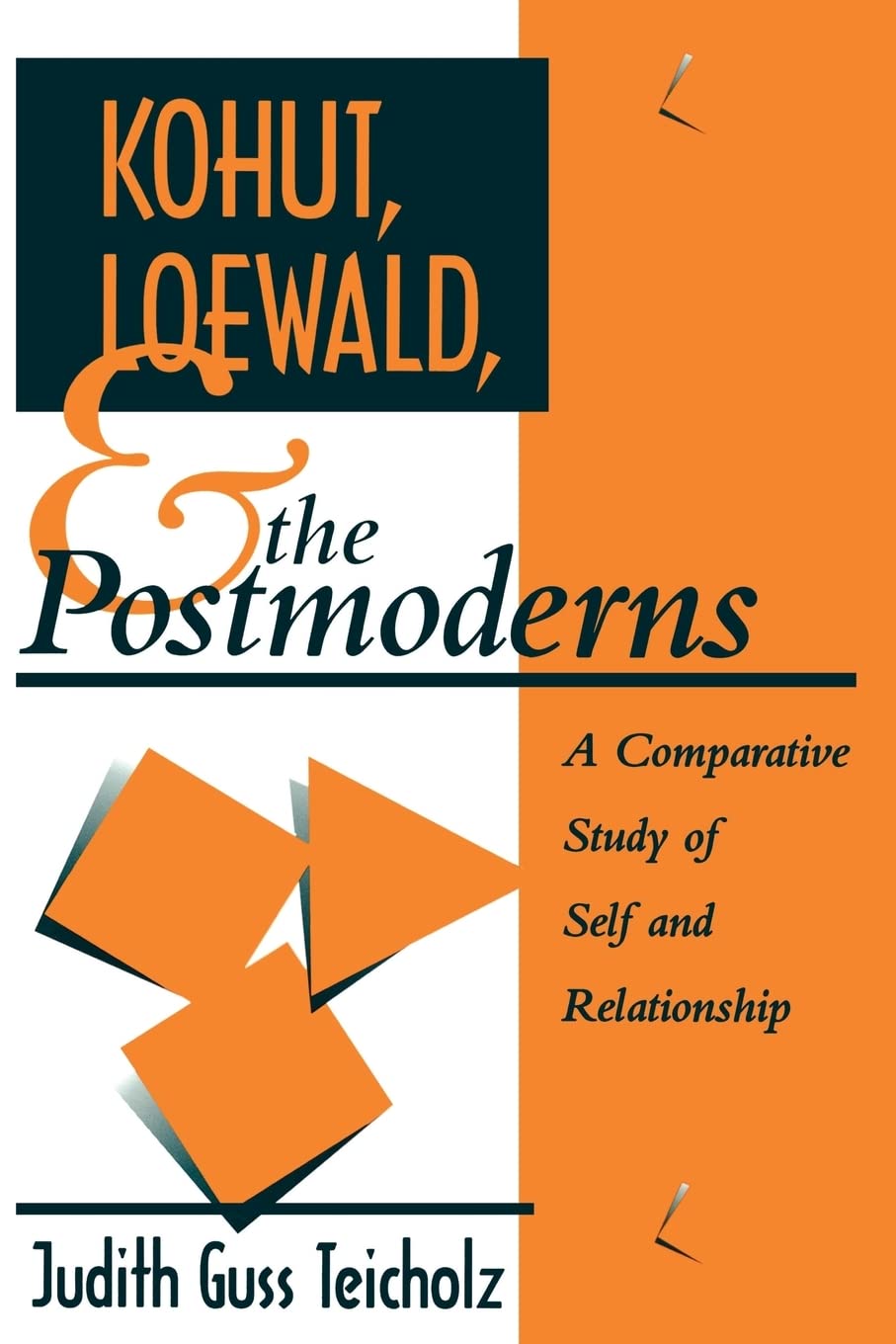
Kohut, Loewald and the Postmoderns (Psychoanalytic Inquiry Book Series),Used
Sold by Ergodebooks, an authorized reseller.
Returns accepted within 30 days | support@ergodebooks.com
Shipping Information
- Free Standard Shipping — United States only
- Processing Time: 3–5 business days
- Estimated Delivery: 6–10 business days after dispatch
- Double-boxed, fully insured & discreetly packaged
- Tracking number sent via email once dispatched
Returns & Refund
Returns accepted within 30 days of delivery.
Damaged or Defective Item
Free return shipping + replacement or full refund
Wrong Item Received
Free return shipping + replacement or full refund
Change of Mind
Return shipping at customer's expense · 25% restocking fee applies
Payment Option

In Kohut, Loewald, and the Postmoderns, Judith Teicholz, using the contemporary critique of Kohut and Loewald as a touchstone of inquiry into the current status of psychoanalysis, focuses on a select group of postmodern theorists whose recent writings comprise a questioning subtext to Kohut's and Loewald's ideas. Acutely aware of the important differences among these theorists, Teicholz nonetheless believes that their respective contributions, which present psychoanalysis as an interactive process in which the analyst's own subjectivity plays a constitutive role in the joint construction of meanings, achieve shared significance as a postmodern critique of Kohut and Loewald. She is especially concerned with the relationship both theoretically and technically between Kohut's emphasis on the analyst's empathic resonance with the analysand's viewpoint and affect, and the postmodern theorists' shared insistence on the expression of the analyst's own subjectivity in the treatment situation.Her analysis incorporates fine insight into the tensions and ambiguities in Kohut and Loewald, whose work ultimately emerges as a way station between modern and postmodern viewpoints, and her appreciation of Kohut and Loewald as transitional theorists makes for an admirably evenhanded exposition. She emphasizes throughout the various ways in which Kohut and Loewald gave nascent expression to postmodern attitudes, but she is no less appreciative of the originality of postmodern theorists, who address genuine lacunae in the thought and writings of these exemplars of an earlier generation.Teicholz's examination of what she terms two overlapping "partial revolutions" in psychoanalysis that of Kohut and Loewald on one hand and of the postmoderns on the other throws an illuminating searchlight on the path psychoanalysis has traveled over the last quarter of the 20th century.
⚠️ WARNING (California Proposition 65):
This product may contain chemicals known to the State of California to cause cancer, birth defects, or other reproductive harm.
For more information, please visit www.P65Warnings.ca.gov.
- Q: How many pages does the book have? A: The book has three hundred twenty pages. This length allows for an in-depth exploration of psychoanalytic theory and its critiques.
- Q: What is the binding type of the book? A: The book is available in paperback binding. This makes it lightweight and easier to handle for reading.
- Q: What are the dimensions of the book? A: The book measures five point ninety-eight inches in length, zero point seventy-five inches in width, and nine point zero two inches in height. These dimensions make it portable and easy to store.
- Q: Who is the author of the book? A: The author of the book is Judith G. Teicholz. She is known for her contributions to psychoanalysis and critiques of modern theorists.
- Q: What is the main theme of the book? A: The main theme explores the relationship between modern and postmodern psychoanalytic theories. It critiques the works of Kohut and Loewald through a contemporary lens.
- Q: Is this book suitable for beginners in psychoanalysis? A: Yes, this book is suitable for beginners. It provides a comprehensive introduction to the theories of Kohut and Loewald alongside postmodern critiques.
- Q: How can readers apply the concepts from this book? A: Readers can apply the concepts by reflecting on the interactive process of psychoanalysis described in the book. It encourages understanding the analyst's subjectivity in therapy.
- Q: Is this book appropriate for academic use? A: Yes, this book is appropriate for academic use. It offers critical insights into psychoanalytic theory and is suitable for coursework in psychology and mental health.
- Q: What type of audience would benefit from this book? A: Students, practitioners, and theorists in psychology and mental health would benefit from this book. It addresses both foundational concepts and modern critiques.
- Q: How should I store this book to ensure its longevity? A: Store the book in a cool, dry place away from direct sunlight. This will help maintain the integrity of the binding and pages.
- Q: Can I clean the book if it gets dirty? A: Yes, you can gently clean the book with a soft, dry cloth. Avoid using moisture as it can damage the pages.
- Q: What if I receive a damaged copy of the book? A: If you receive a damaged copy, you should contact customer support for a return or exchange. Most sellers have policies in place for damaged items.
- Q: Is there a warranty for this book? A: Typically, books do not come with warranties. However, check with the seller for their specific return policy on damaged or defective items.
- Q: What if I need more information about the book's content? A: You can often find more information in reviews or academic discussions online. Additionally, check the publisher's website for more details.
- Q: How does this book compare to other psychoanalytic texts? A: This book offers a unique postmodern perspective compared to traditional psychoanalytic texts. It critiques established theories while integrating modern viewpoints.
- Q: What makes this book a significant read in psychoanalysis? A: This book is significant because it bridges modern and postmodern theories, providing critical insights into psychoanalysis’ evolution. It challenges existing paradigms with contemporary thought.