
Title
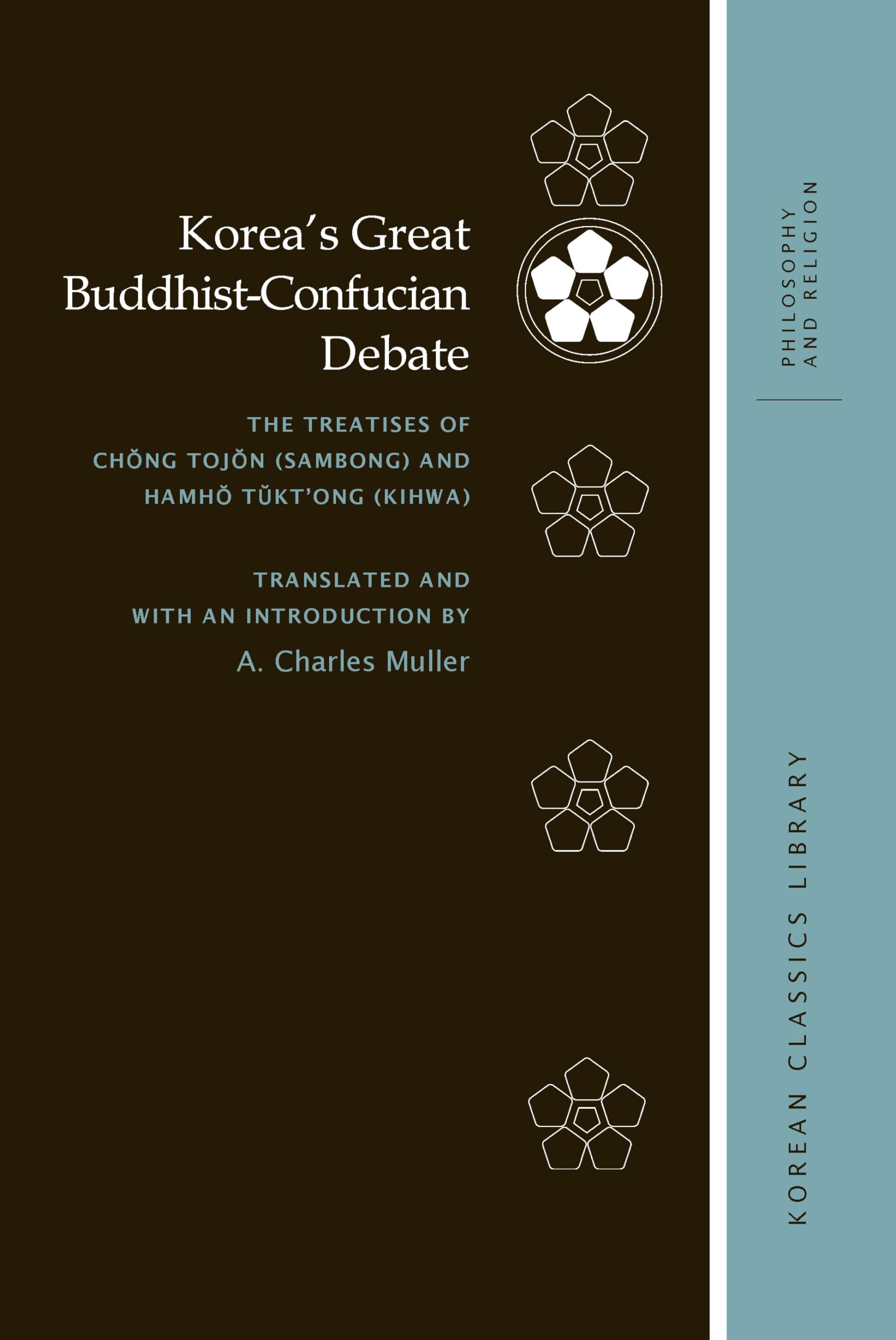
Koreas Great BuddhistConfucian Debate: The Treatises of Chong Tojon (Sambong) and Hamho Tuktong (Kihwa) (Korean Classics Librar,Used
Sold by Ergodebooks, an authorized reseller.
Returns accepted within 30 days | support@ergodebooks.com
Shipping Information
- Free Standard Shipping — United States only
- Processing Time: 3–5 business days
- Estimated Delivery: 6–10 business days after dispatch
- Double-boxed, fully insured & discreetly packaged
- Tracking number sent via email once dispatched
Returns & Refund
Returns accepted within 30 days of delivery.
Damaged or Defective Item
Free return shipping + replacement or full refund
Wrong Item Received
Free return shipping + replacement or full refund
Change of Mind
Return shipping at customer's expense · 25% restocking fee applies
Payment Option

This volume makes available in English the seminal treatises in Korea's greatest interreligious debate of the fourteenth and fifteenth centuries. On Mind, Material Force, and Principle and An Array of Critiques of Buddhism by Confucian statesman Chong Tojon (13421398) and Exposition of Orthodoxy by Son monk Kihwa (13761433) are presented here with extensive annotation. A substantial introduction provides a summary and analysis of the philosophical positions of both NeoConfucianism and Buddhism as well as a germane history of the interactions between these two traditions in East Asia, offering insight into religious tensions that persist to this day.Translator A. Charles Muller shows how, from the time Confucianism and Buddhism met in China, these thought systems existed, along with Daoism, in a competing relationship that featured significant mutual influence. A confrontative situation eventually developed in China, wherein Confucian leaders began to criticize Buddhism. During the lateKoryo and earlyChoson periods in Korea, the NeoConfucian polemic became the driving force in the movement to oust Buddhism from its position as Korea's state religion. In his essays, Chong drew together the gamut of arguments that had been made against Buddhism throughout its long history in Korea. Kihwa's essay met NeoConfucian contentions with an articulate Buddhist response. Thus, in a rare moment in the history of religions, a true philosophical debate ensued.This debate was made possible based upon the two religions' shared philosophical paradigm: essencefunction (ch'eyong). This traditional East Asian way of interpreting society, events, phenomena, human beings, and the world understands all things to have both essence and function, two contrasting yet wholly contiguous and mutually containing components. All three East Asian traditions took this as their underlying philosophical paradigm, and it is through this paradigm that they evaluated and criticized each other's doctrines and practices.Specialists in philosophy, religion, and Korean studies will appreciate Muller's exploration of this pivotal moment in Korean intellectual history. Because it includes a broad overview of the interactive history of East Asian religions, this book can also serve as a general introduction to East Asian philosophical thought.
⚠️ WARNING (California Proposition 65):
This product may contain chemicals known to the State of California to cause cancer, birth defects, or other reproductive harm.
For more information, please visit www.P65Warnings.ca.gov.