
Title
La Calle: Spatial Conflicts and Urban Renewal in a Southwest City,New
Sold by Ergodebooks, an authorized reseller.
Returns accepted within 30 days | support@ergodebooks.com
Shipping Information
- Free Standard Shipping — United States only
- Processing Time: 3–5 business days
- Estimated Delivery: 6–10 business days after dispatch
- Double-boxed, fully insured & discreetly packaged
- Tracking number sent via email once dispatched
Returns & Refund
Returns accepted within 30 days of delivery.
Damaged or Defective Item
Free return shipping + replacement or full refund
Wrong Item Received
Free return shipping + replacement or full refund
Change of Mind
Return shipping at customer's expense · 25% restocking fee applies
Payment Option

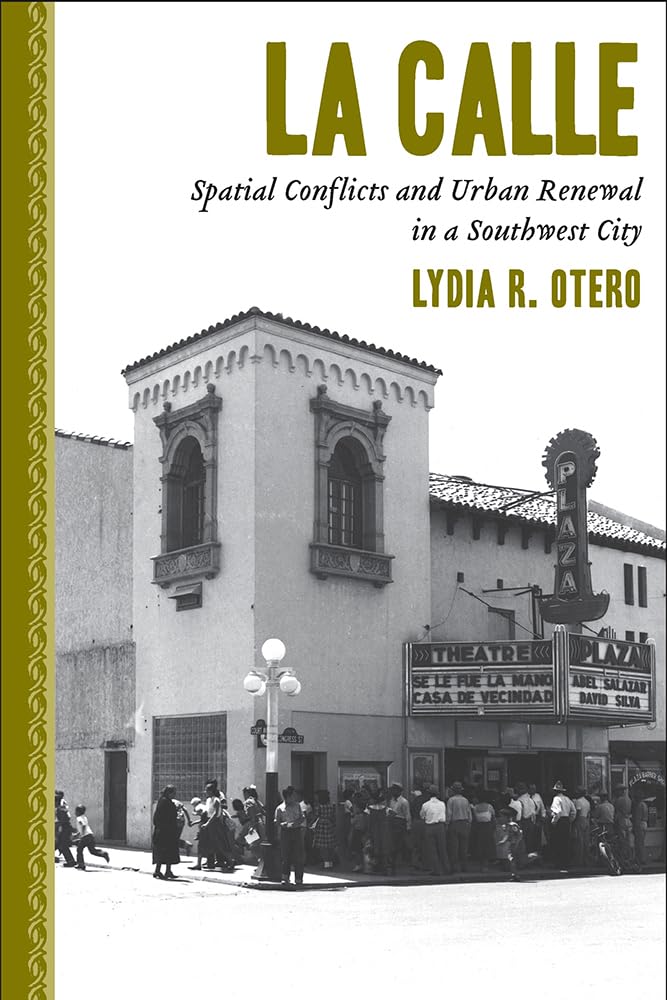
On March 1, 1966, the voters of Tucson approved the Pueblo Center Redevelopment ProjectArizona's first major urban renewal projectwhich targeted the most densely populated eighty acres in the state. For close to one hundred years, tucsonenses had created their own spatial reality in the historical, predominantly Mexican American heart of the city, an area most called 'la calle.' Here, amid small retail and service shops, restaurants, and entertainment venues, they openly lived and celebrated their culture. To make way for the Pueblo Center's new buildings, city officials proceeded to displace la calle's residents and to demolish their ethnically diverse neighborhoods, which, contends Lydia Otero, challenged the spatial and cultural assumptions of postwar modernity, suburbia, and urban planning.The author examines conflicting claims to urban space, place, and history as advanced by two opposing historic preservationist groups: the La Placita Committee and the Tucson Heritage Foundation. Otero gives voice to those who lived in, experienced, or remembered this contested area, and analyzes the historical narratives promoted by Anglo American elites in the service of tourism and cultural dominance.La Calle explores the forces behind the mass displacement: an unrelenting desire for order, a local economy increasingly dependent on tourism, and the pivotal power of federal housing policies. To understand how urban renewal resulted in the spatial reconfiguration of downtown Tucson, Otero draws on scholarship from a wide range of disciplines: Chicanx, ethnic, and cultural studies; urban history, sociology, and anthropology; city planning; and cultural and feminist geography.
⚠️ WARNING (California Proposition 65):
This product may contain chemicals known to the State of California to cause cancer, birth defects, or other reproductive harm.
For more information, please visit www.P65Warnings.ca.gov.