If you have any questions, you are always welcome to contact us. We'll get back to you as soon as possible, withing 24 hours on weekdays.
Customer service
All questions about your order, return and delivery must be sent to our customer service team by e-mail at yourstore@yourdomain.com
Sale & Press
If you are interested in selling our products, need more information about our brand or wish to make a collaboration, please contact us at press@yourdomain.com
Help
If you have any questions, you are always welcome to contact us. We'll get back to you as soon as possible, withing 24 hours on weekdays.
Customer service
All questions about your order, return and delivery must be sent to our customer service team by e-mail at yourstore@yourdomain.com
Sale & Press
If you are interested in selling our products, need more information about our brand or wish to make a collaboration, please contact us at press@yourdomain.com
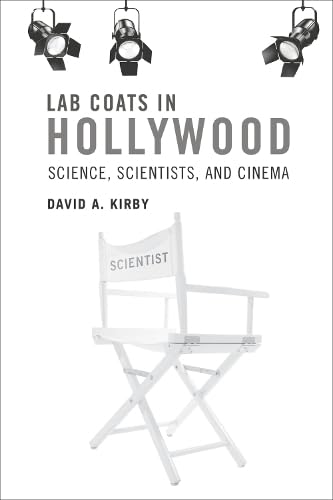
How science consultants make movie science plausible, in films ranging from 2001: A Space Odyssey to Finding Nemo.Stanley Kubrick's 2001: A Space Odyssey, released in 1968, is perhaps the most scientifically accurate film ever produced. The film presented such a plausible, realistic vision of space flight that many moon hoax proponents believe that Kubrick staged the 1969 moon landing using the same studios and techniques. Kubrick's scientific verisimilitude in 2001 came courtesy of his science consultantsincluding two former NASA scientistsand the more than sixtyfive companies, research organizations, and government agencies that offered technical advice. Although most filmmakers don't consult experts as extensively as Kubrick did, films ranging from A Beautiful Mind and Contact to Finding Nemo and The Hulk have achieved some degree of scientific credibility because of science consultants. In Lab Coats in Hollywood, David Kirby examines the interaction of science and cinema: how science consultants make movie science plausible, how filmmakers negotiate scientific accuracy within production constraints, and how movies affect popular perceptions of science.Drawing on interviews and archival material, Kirby examines such science consulting tasks as fact checking and shaping visual iconography. Kirby finds that cinema can influence science as well: Depictions of science in popular films can promote research agendas, stimulate technological development, and even stir citizens into political action.
⚠️ WARNING (California Proposition 65):
This product may contain chemicals known to the State of California to cause cancer,
birth defects, or other reproductive harm.
For MAP (Minimum Advertised Price) violations and Intellectual Property (IP) or Trademark concerns, please contact:
support@ergodebooks.com
⚠️ California Proposition 65 Warning: Some products sold on this website may expose you to chemicals known to the State of California to cause cancer, birth defects, or other reproductive harm. For more information, visit www.P65Warnings.ca.gov.