
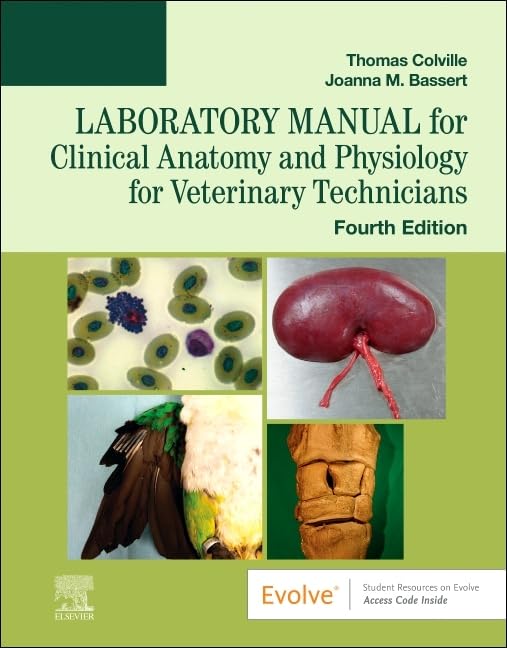
Title
Mosby Laboratory Manual for Clinical Anatomy & Physiology for Veterinary Technicians
Sold by Ergodebooks, an authorized reseller.
Returns accepted within 30 days | support@ergodebooks.com
Shipping Information
- Free Standard Shipping — United States only
- Processing Time: 3–5 business days
- Estimated Delivery: 6–10 business days after dispatch
- Double-boxed, fully insured & discreetly packaged
- Tracking number sent via email once dispatched
Returns & Refund
Returns accepted within 30 days of delivery.
Damaged or Defective Item
Free return shipping + replacement or full refund
Wrong Item Received
Free return shipping + replacement or full refund
Change of Mind
Return shipping at customer's expense · 25% restocking fee applies
Payment Option

The Laboratory Manual for Clinical Anatomy and Physiology for Veterinary Technicians, 4th Edition, is an essential resource designed to enhance the learning experience for veterinary technicians. This manual effectively bridges the gap between theoretical knowledge and practical application in a laboratory setting.
This comprehensive laboratory manual offers a structured approach to understanding veterinary anatomy and physiology through an array of engaging activities. With clear, step-by-step dissection guides and a focus on clinically oriented learning exercises, the manual equips students with the skills necessary to identify and understand anatomical structures and physiological concepts. The inclusion of vivid illustrations and terminology exercises makes complex information more accessible and easier to grasp.
Key Features:- Comprehensive Content: Covers essential topics in veterinary anatomy and physiology, tailored for veterinary technicians.
- Step-by-Step Dissection Guides: Clear instructions for dissecting complex organs, such as the heart, ensuring a thorough understanding of anatomy.
- Engaging Learning Activities: Includes terminology exercises, illustration identification, and case presentations to reinforce knowledge.
- High-Quality Illustrations: Full-color illustrations enhance visual learning and provide a solid grasp of anatomic structures.
- Learning Objectives: Clear objectives at the beginning of each chapter help focus study efforts and enhance retention.
- Review Activities: Each chapter contains review exercises that reinforce key concepts and ensure comprehension.
- Clinical Relevance: Contextualizes learning by highlighting the clinical significance of anatomical and physiological content.
This laboratory manual is a valuable tool for veterinary technicians, students, and educators looking to enrich the learning experience. It is particularly beneficial for those who wish to develop practical skills in anatomy and physiology while preparing for real-world applications in veterinary practice. By utilizing this manual, users will gain a solid foundation in the critical concepts of veterinary science, setting them up for success in their careers.
⚠️ WARNING (California Proposition 65):
This product may contain chemicals known to the State of California to cause cancer, birth defects, or other reproductive harm.
For more information, please visit www.P65Warnings.ca.gov.
- Q: How many pages does this laboratory manual have? A: This laboratory manual contains five hundred twelve pages. It provides comprehensive coverage of anatomy and physiology concepts tailored for veterinary technicians.
- Q: What is the binding type of this book? A: The binding type is paperback. This makes it lightweight and flexible for easy handling during lab activities.
- Q: What are the dimensions of the book? A: The dimensions are nine point two five inches in length, one inch in width, and eleven inches in height. These dimensions make it a practical size for lab use.
- Q: Who is the author of this laboratory manual? A: The author is Thomas P. Colville, DVM, MSc. He is known for his expertise in veterinary anatomy and physiology.
- Q: What edition is this laboratory manual? A: This is the fourth edition of the laboratory manual. It incorporates updated information and resources for veterinary students.
- Q: How can I use this laboratory manual effectively? A: You can use this manual to apply your anatomy and physiology knowledge in a lab setting. It includes exercises, case presentations, and dissection guides to enhance your learning.
- Q: Is this manual suitable for beginners in veterinary medicine? A: Yes, this manual is suitable for beginners. It provides clear, step-by-step instructions and activities that help reinforce foundational concepts in veterinary anatomy and physiology.
- Q: What types of exercises are included in the manual? A: The manual includes terminology exercises, illustration identification, labeling tasks, and clinical case presentations. These activities are designed to enhance understanding of veterinary concepts.
- Q: Are there dissection guides in this manual? A: Yes, there are step-by-step dissection guides included. These guides cover complex organs and help familiarize students with the dissection process in a visual format.
- Q: How should I care for this laboratory manual? A: To care for this manual, keep it in a dry, clean place to prevent damage. Avoid exposing it to excessive moisture, which could ruin the pages.
- Q: Can I use this manual for home study? A: Yes, this manual is ideal for home study. It provides comprehensive exercises and review activities that reinforce key concepts in veterinary medicine.
- Q: Is this manual safe for all audiences? A: Yes, the content of this manual is educational and appropriate for students studying veterinary medicine. It is designed for academic use.
- Q: What if the manual arrives damaged? A: If the manual arrives damaged, you should contact the seller for a return or exchange. Most sellers provide a warranty or satisfaction guarantee.
- Q: Does this manual have illustrations? A: Yes, it features high-quality, full-color illustrations. These illustrations aid in understanding anatomical structures and concepts.
- Q: What is the clinical significance of the exercises in the manual? A: The exercises are clinically oriented and help students learn the language of anatomy and physiology while identifying structures and concepts relevant to veterinary practice.
- Q: Are review activities included in each chapter? A: Yes, every chapter contains review activities and study exercises. These are designed to reinforce the information learned in that chapter.