
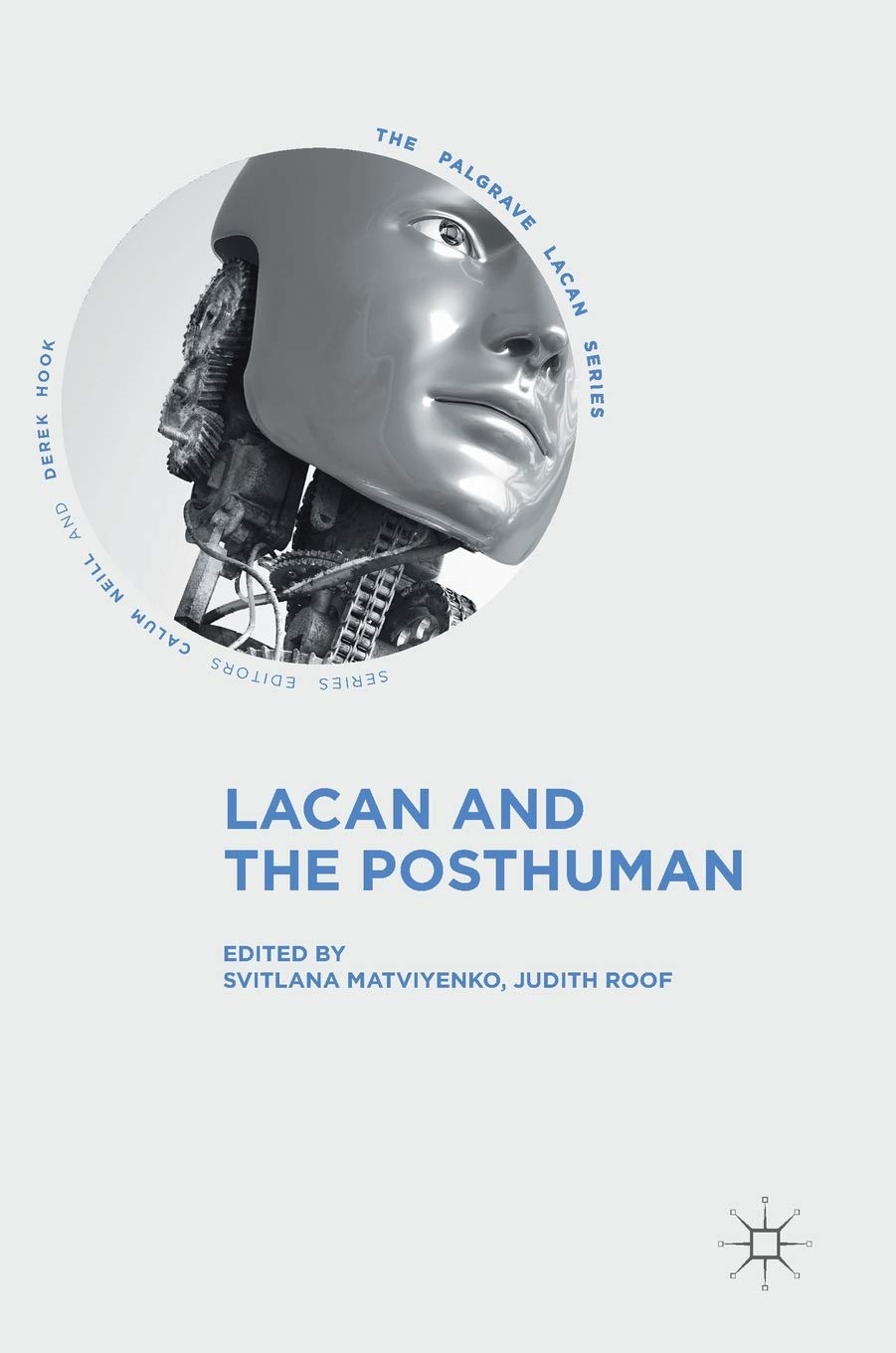
Title
Lacan And The Posthuman (The Palgrave Lacan Series)
Sold by Ergodebooks, an authorized reseller.
Returns accepted within 30 days | support@ergodebooks.com
Shipping Information
- Free Standard Shipping — United States only
- Processing Time: 3–5 business days
- Estimated Delivery: 6–10 business days after dispatch
- Double-boxed, fully insured & discreetly packaged
- Tracking number sent via email once dispatched
Returns & Refund
Returns accepted within 30 days of delivery.
Damaged or Defective Item
Free return shipping + replacement or full refund
Wrong Item Received
Free return shipping + replacement or full refund
Change of Mind
Return shipping at customer's expense · 25% restocking fee applies
Payment Option

When Posthumanism Displaces The Traditional Human Subject, What Does Psychoanalysis Add To Contemporary Conversations About Subject/Object Relations, Systems, Perspectives, And Values? This Book Discusses Whether Posthumanism Itself Is A Cultural Indication Of A Shift In Thinking That Is Moving From Language To Matter, From A Politics Focused On Social Relations To One Organized According To A Broader Sense Of Object In Environments. Together The Authors Question What Is At Stake In This Shift And What Psychoanalysis Can Say About It.Promoting Psychoanalysis Focus On The Cybernetic Relationships Among Subjects, Language, Social Organizations, Desire, Drive, And Other Human Motivations, This Book Demonstrates The Continued Relevance Of Lacans Work Not Only To Continued Understandings Of The Human Subject, But To The Broader Cultural Impasses We Now Face. Why Posthumanism? Why Now? In What Ways Is Posthumanist Thought Linked To The Emergence Of Digital Technologies? Exploring Posthumanism From The Insights Of Lacans Psychoanalysis, Chapters Expose And Elucidate Not Only The Conditions Within Which Posthumanist Thought Arises, But Also Reveal Symptoms Of Its Flaws: The Blindness To Anthropomorphization, Projection, And Unrecognized Shifts In Scale And Perspective, As Well As Its Mode Of Transcendental Thought That Enables Many Posthumanist Declarations. This Book Explains How Lacanian Notions Of The Subject Inform Current Discussions About Human Complicity With, And Resistance To, Algorithmic Governing Regimes, Which Themselves More Wholly Produce A Post Humanism Than Any Philosophical Displacement Of Human Centrality Could.
⚠️ WARNING (California Proposition 65):
This product may contain chemicals known to the State of California to cause cancer, birth defects, or other reproductive harm.
For more information, please visit www.P65Warnings.ca.gov.
- Q: How many pages does the book have? A: This book has two hundred twenty-six pages. It provides in-depth discussions on Posthumanism and psychoanalysis.
- Q: What is the binding style of this book? A: This book is hardcover bound. This durable binding is ideal for long-term use and shelf display.
- Q: What are the dimensions of the book? A: The book measures six inches in length, zero point seventy-five inches in width, and eight point five inches in height. These dimensions make it a convenient size for reading.
- Q: Who is the author of this book? A: The author of this book is Svitlana Matviyenko. She explores the intersections of psychoanalysis and Posthumanism.
- Q: In what category is this book listed? A: This book is listed under the Personality category. It engages with themes relevant to contemporary psychological discussions.
- Q: What are the main themes of the book? A: The book explores themes of Posthumanism, psychoanalysis, and subject/object relations. It critically examines their implications in modern contexts.
- Q: How do I read this book effectively? A: To read this book effectively, approach it by reflecting on the complex themes of Posthumanism and psychoanalysis. Take notes on key concepts for better understanding.
- Q: Is this book suitable for beginners in psychoanalysis? A: Yes, this book can be suitable for beginners. It introduces themes in an accessible manner while still providing depth for more advanced readers.
- Q: What is the target audience for this book? A: The target audience for this book includes students and scholars interested in psychoanalysis and cultural theory. It is also relevant for those engaged in digital humanities.
- Q: How do I keep this book in good condition? A: To keep this book in good condition, store it upright on a shelf and avoid exposure to moisture. Clean it gently with a dry cloth to remove dust.
- Q: Is this book safe for readers under eighteen? A: Yes, the book is safe for readers under eighteen. However, it discusses complex themes that may require guidance for younger audiences.
- Q: Can I return the book if it arrives damaged? A: Yes, you can return the book if it arrives damaged. Check the return policy from the seller for specific instructions.
- Q: What if I have trouble understanding the concepts in the book? A: If you have trouble understanding the concepts, consider discussing them in study groups or seeking out supplementary materials. Online forums can also provide additional insights.
- Q: Is there a warranty for this book? A: No, typically there is no warranty for books. However, you can check the retailer’s policy for any guarantees or returns.
- Q: How can I contact support if I have an issue with my order? A: To contact support, use the customer service information provided by the retailer. They can assist with any order-related issues.
- Q: What makes this book different from other books on Posthumanism? A: This book distinguishes itself by integrating Lacanian psychoanalysis with Posthumanist thought, offering unique insights into subjectivity and cultural critiques.