
Title
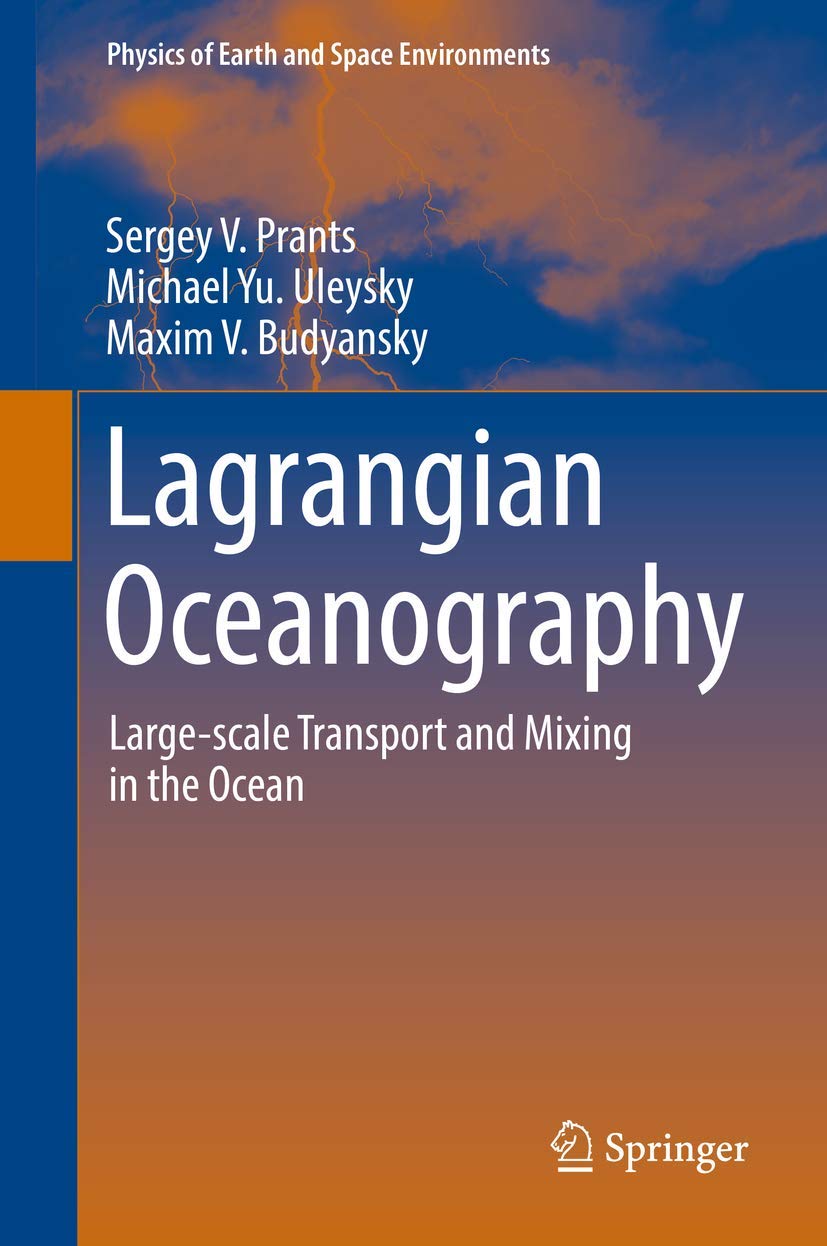
Lagrangian Oceanography: Largescale Transport and Mixing in the Ocean (Physics of Earth and Space Environments),Used
Sold by Ergodebooks, an authorized reseller.
Returns accepted within 30 days | support@ergodebooks.com
Shipping Information
- Free Standard Shipping — United States only
- Processing Time: 3–5 business days
- Estimated Delivery: 6–10 business days after dispatch
- Double-boxed, fully insured & discreetly packaged
- Tracking number sent via email once dispatched
Returns & Refund
Returns accepted within 30 days of delivery.
Damaged or Defective Item
Free return shipping + replacement or full refund
Wrong Item Received
Free return shipping + replacement or full refund
Change of Mind
Return shipping at customer's expense · 25% restocking fee applies
Payment Option

This book uses the Lagrangian approach, especially useful and convenient for studying largescale transport and mixing in the ocean, to present a detailed view of ocean circulation. This approach focuses on simulations and on monitoring the trajectories of fluid particles, which are governed by advection equations. The first chapter of the book is devoted to dynamical systems theory methods, which provide the framework, methodology and key concepts for the Lagrangian approach. The book then moves on to an analysis of chaotic mixing and crossstream transport in idealized models of oceanic meandering currents like the Gulfstream in the Atlantic, the Kuroshio in the Pacific, and Antarctic Circumpolar Current, after which the current state of physical oceanography is reviewed. The latter half of the book applies the techniques and methods already described in order to study eddies, currents, fronts and largescale mixing and transport in the FarEastern seas and the northwestern part of the Pacific Ocean. Finally, the book concludes with a discussion of Lagrangian simulation and monitoring of water contamination after the Fukushima disaster of 2011. The propagation of Fukushimaderived radionuclides, surface transport across the Kuroshio Extension current, and the role of mesoscale eddies in the transport of Fukushimaderived cesium isotopes in the ocean are examined, and a comparison of simulation results with actual measurements are presented.Written by some of the world leaders in the application of Lagrangian methods in oceanography, this title will be of benefit to the oceanographic community by presenting the necessary background of the Lagrangian approach in an accessible manner.
⚠️ WARNING (California Proposition 65):
This product may contain chemicals known to the State of California to cause cancer, birth defects, or other reproductive harm.
For more information, please visit www.P65Warnings.ca.gov.