
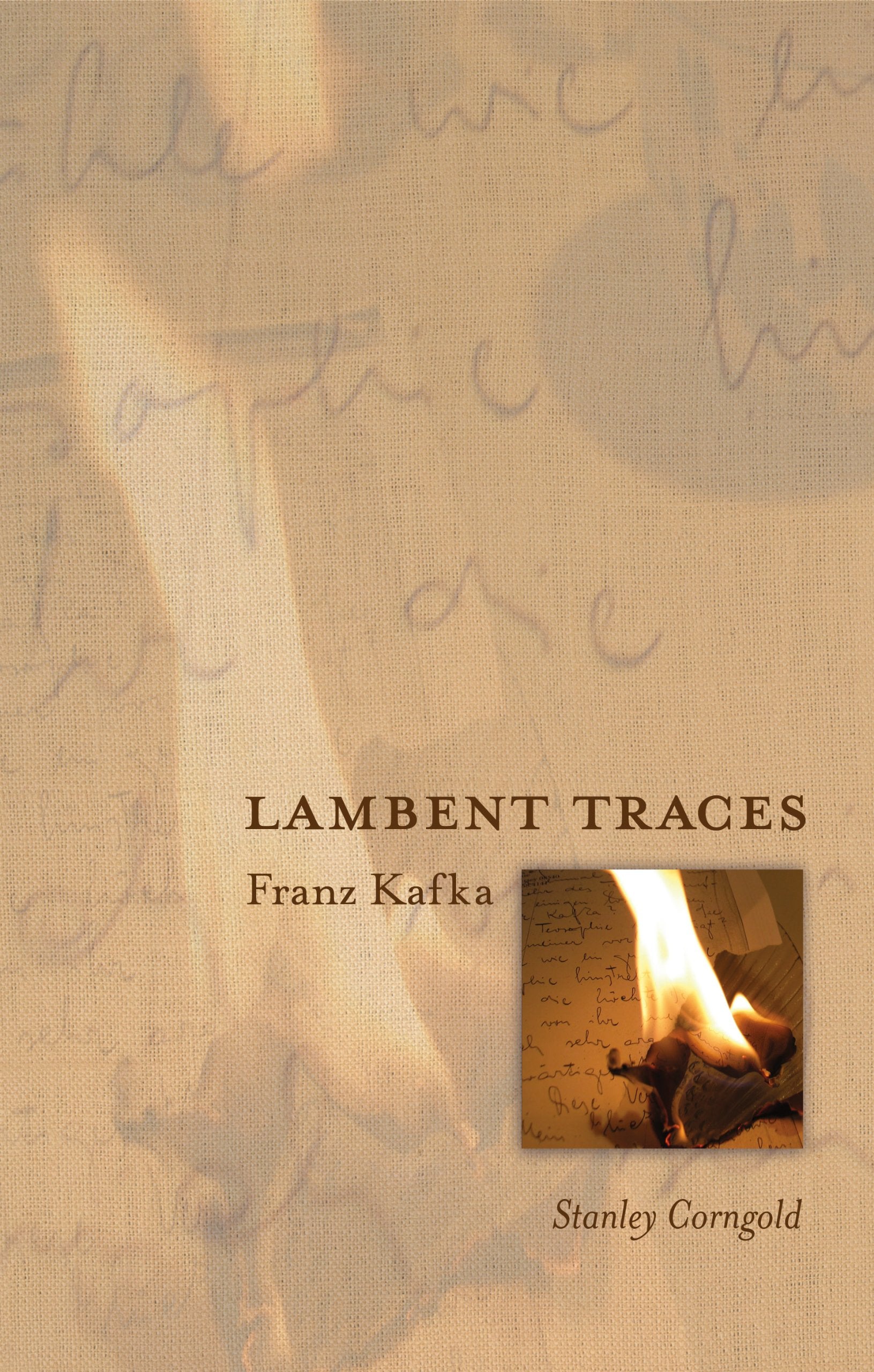
Title
Lambent Traces: Franz Kafka,Used
Sold by Ergodebooks, an authorized reseller.
Returns accepted within 30 days | support@ergodebooks.com
Shipping Information
- Free Standard Shipping — United States only
- Processing Time: 3–5 business days
- Estimated Delivery: 6–10 business days after dispatch
- Double-boxed, fully insured & discreetly packaged
- Tracking number sent via email once dispatched
Returns & Refund
Returns accepted within 30 days of delivery.
Damaged or Defective Item
Free return shipping + replacement or full refund
Wrong Item Received
Free return shipping + replacement or full refund
Change of Mind
Return shipping at customer's expense · 25% restocking fee applies
Payment Option

On the night of September 22, 1912, Franz Kafka wrote his story "The Judgment," which came out of him "like a regular birth." This act of creation struck him as an unmistakable sign of his literary destiny. Thereafter, the search of many of his characters for the Law, for a home, for artistic fulfillment can be understood as a figure for Kafka's own search to reproduce the ecstasy of a single night.In Lambent Traces: Franz Kafka, the preeminent American critic and translator of Franz Kafka traces the implications of Kafka's literary breakthrough. Kafka's first concern was not his responsibility to his culture but to his fate as literature, which he pursued by exploring "the limits of the human." At the same time, he kept his transcendental longings sober by notingwith incomparable ironytheir virtual impossibility.At times Kafka's passion for personal transcendence as a writer entered into a torturous and witty conflict with his desire for another sort of transcendence, one driven by a modern Gnosticism. This struggle prompted him continually to scrutinize different kinds of mediation, such as confessional writing, the dream, the media, the idea of marriage, skepticism, asceticism, and the imitation of death. Lambent Traces: Franz Kafka concludes with a reconstruction and critique of the approaches to Kafka by such major critics as Adorno, Gilman, and Deleuze and Guattari..
⚠️ WARNING (California Proposition 65):
This product may contain chemicals known to the State of California to cause cancer, birth defects, or other reproductive harm.
For more information, please visit www.P65Warnings.ca.gov.
- Q: What is the page count of Lambent Traces: Franz Kafka? A: The book contains two hundred ninety-six pages. This makes it a substantial read for those interested in literary criticism.
- Q: What is the binding type of this book? A: The book is bound in hardcover. This provides durability and a more premium feel compared to paperback editions.
- Q: Who is the author of Lambent Traces: Franz Kafka? A: The author is Stanley Corngold. He is known for his contributions to Kafka studies and literary translation.
- Q: What themes are explored in this book? A: The book explores themes of literary destiny and the search for artistic fulfillment. It delves into Kafka's complex relationship with transcendence.
- Q: Is Lambent Traces suitable for casual readers? A: Yes, it is suitable for casual readers with an interest in literature. However, some familiarity with Kafka's works may enhance understanding.
- Q: Can I read this book if I am new to literary criticism? A: Yes, newcomers to literary criticism can read this book. It offers insights that can be appreciated even by those unfamiliar with academic analysis.
- Q: How should I care for my hardcover copy of this book? A: To care for your hardcover book, keep it in a cool, dry place away from direct sunlight. Avoid exposing it to moisture to prevent damage.
- Q: What is the best way to store this book? A: Store the book upright on a shelf to maintain its shape. Ensure it is not overcrowded to prevent bending or crushing.
- Q: Is there a return policy for Lambent Traces: Franz Kafka? A: Yes, there is a return policy that typically allows returns within a specified period. Check with the retailer for specific details.
- Q: What if I receive a damaged copy of this book? A: If you receive a damaged copy, you should contact the seller immediately. Most retailers will assist with returns or exchanges.
- Q: Who published Lambent Traces: Franz Kafka? A: The book is published by Princeton University Press. This publisher is known for its academic and scholarly works.
- Q: Are there any notable critics discussed in this book? A: Yes, the book discusses major critics such as Adorno, Gilman, and Deleuze and Guattari. Their perspectives provide depth to Kafka's analysis.
- Q: What kind of criticism does Lambent Traces focus on? A: It focuses on literary criticism and theory, specifically regarding Franz Kafka's works and their implications in literature.
- Q: Is this book appropriate for educational settings? A: Yes, it is appropriate for educational settings, particularly in literature and criticism courses. It can serve as a valuable resource.
- Q: What writing style does the author use in this book? A: The author employs an analytical and interpretative writing style. This style is typical for literary criticism and engages with complex ideas.