
Title
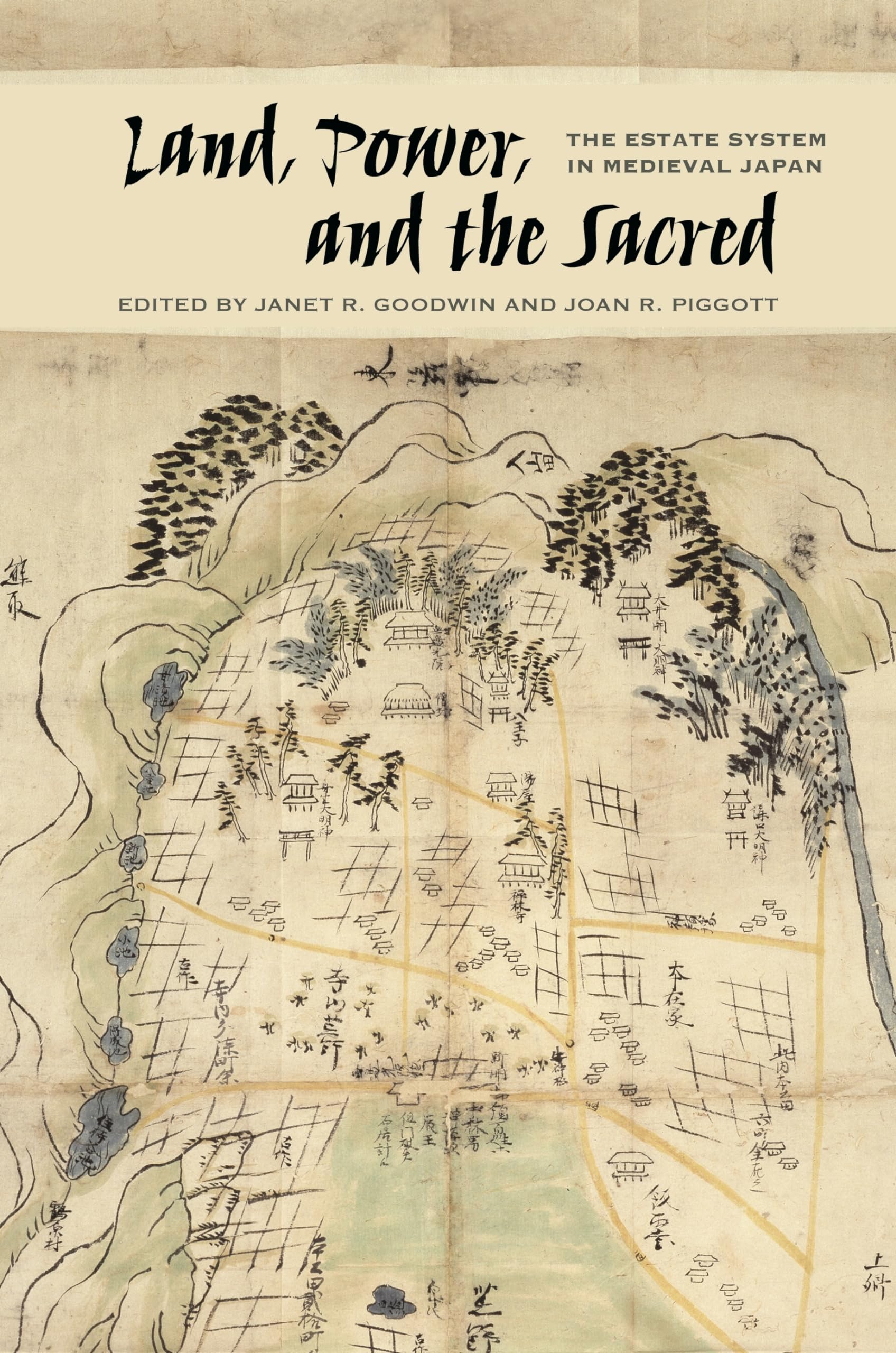
Land, Power, and the Sacred: The Estate System in Medieval Japan,Used
Sold by Ergodebooks, an authorized reseller.
Returns accepted within 30 days | support@ergodebooks.com
Shipping Information
- Free Standard Shipping — United States only
- Processing Time: 3–5 business days
- Estimated Delivery: 6–10 business days after dispatch
- Double-boxed, fully insured & discreetly packaged
- Tracking number sent via email once dispatched
Returns & Refund
Returns accepted within 30 days of delivery.
Damaged or Defective Item
Free return shipping + replacement or full refund
Wrong Item Received
Free return shipping + replacement or full refund
Change of Mind
Return shipping at customer's expense · 25% restocking fee applies
Payment Option

Landed estates (shoen) produced much of the material wealth supporting all levels of late classical and medieval Japanese society. During the tenth through sixteenth centuries, estates served as sites of de facto government, trade network nodes, developing agricultural technology, and centers of religious practice and ritual. Although mostly farmland, many yielded nonagricultural products, including lumber, salt, fish, and silk, and provided livelihoods for craftsmen, seafarers, peddlers, and performers, as well as for cultivators. By the twelfth century, an estate system permeated much of the Japanese archipelago. This volume examines the system from three perspectives: the land itself; the power derived from and exerted over the land; and the religion institutions and individuals that were involved in landholding practices.Chapters by Japanese and Western scholars explore how the estate system arose, developed, and eventually collapsed. Several investigate a single estate or focus on agricultural techniques, while others survey estates in broad contexts such as economic change and maritime trade. Other chapters look at how we learn about estates by inspecting documents, landscape features, archaeological remains, and extant buildings and images; how representatives of every social stratum worked together to make the land productive and, conversely, how cooperative arrangements failed and rivals battled one another, making conflict as well as collaboration a hallmark of the system. On a more personal level, we follow the monk Chogens restoration of Obe Estate and his installation of a famous Amida triad in a temple he built on the premises; the strategies of royal ladies Josaimonin, Hachijoin, and Kokamonin as they strove to keep their landholdings viable; and the murder of estate official Gorozaemon, whose own neighbors killed him as a result of a much larger dispute between two powerful warrior families.Land, Power, and the Sacred represents a significant expansion and revision of our knowledge of medieval Japanese estates. A range of readers will welcome the primary source research and comparative perspectives it offers; those who do not specialize in Japanese medieval history but recognize the value of teaching the history of estates will find a chapter devoted to the topic invaluable.Contributors and translators:Kristina BuhrmaMichelle DamianDavid EasonSakurai Eiji (translated by Ethan Segal)Philip GarrettJanet R. GoodwinYoshiko KainumaRieko KameiDycheSachiko KawaiHirota Koji (translated by Janet R. Goodwin)Oyama Kyohei (translated by Janet R. Goodwin)Nagamura Makoto (translated by Janet R. Goodwin)Endo Motoo (translated by Janet R. Goodwin)Joan R. PiggottEthan SegalDan ShererKimura Shigemitsu (translated by Kristina Buhrman)Noda Taizo (translated by David Eason)Nishida Takeshi (translated by Michelle Damian)
⚠️ WARNING (California Proposition 65):
This product may contain chemicals known to the State of California to cause cancer, birth defects, or other reproductive harm.
For more information, please visit www.P65Warnings.ca.gov.
- Q: What is the main topic of 'Land, Power, and the Sacred: The Estate System in Medieval Japan'? A: The book explores the estate system in medieval Japan, focusing on the land, the power derived from it, and the religious institutions involved in landholding practices.
- Q: Who are the contributors to this book? A: The book features contributions from various scholars including Kristina Buhrman, Michelle Damian, David Eason, and several others who provide insights into the estate system.
- Q: What time period does the book cover? A: The book examines the estate system during the tenth through sixteenth centuries in Japan.
- Q: Is this book suitable for readers unfamiliar with Japanese history? A: Yes, the book includes a chapter devoted to the history of estates, making it accessible for readers who do not specialize in Japanese medieval history.
- Q: How many pages does the book have? A: The book consists of 570 pages.
- Q: What type of binding does the book have? A: The book is available in paperback binding.
- Q: When was 'Land, Power, and the Sacred' published? A: The book was published on February 29, 2020.
- Q: What are the key themes discussed in the book? A: Key themes include the rise and fall of the estate system, economic change, maritime trade, and the interplay between land, power, and religion.
- Q: Are there any archaeological insights included in the book? A: Yes, the book includes discussions on how estates are studied through archaeological remains and landscape features.
- Q: What is the significance of the estate system in Japanese history according to the book? A: The estate system is significant as it shaped the material wealth, governance, and social dynamics of late classical and medieval Japanese society.