
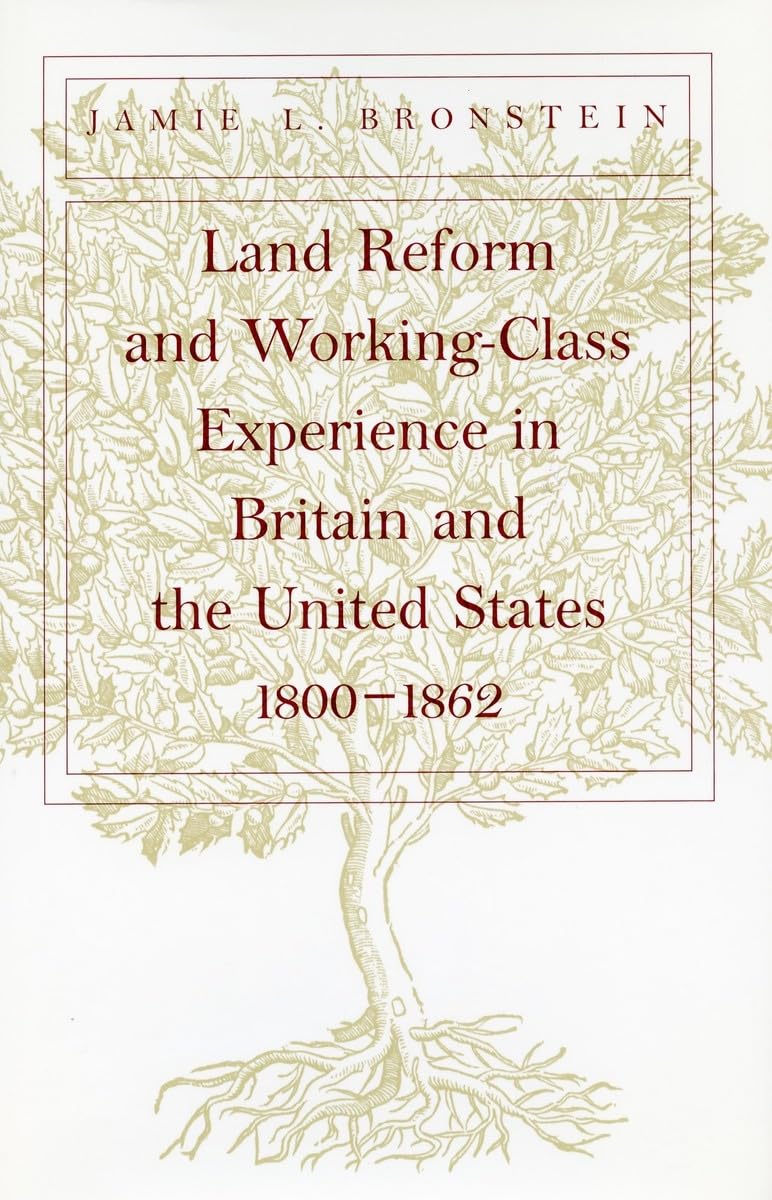
Title
Land Reform And Workingclass Experience In Britain And The United States, 18001862,Used
Sold by Ergodebooks, an authorized reseller.
Returns accepted within 30 days | support@ergodebooks.com
Shipping Information
- Free Standard Shipping — United States only
- Processing Time: 3–5 business days
- Estimated Delivery: 6–10 business days after dispatch
- Double-boxed, fully insured & discreetly packaged
- Tracking number sent via email once dispatched
Returns & Refund
Returns accepted within 30 days of delivery.
Damaged or Defective Item
Free return shipping + replacement or full refund
Wrong Item Received
Free return shipping + replacement or full refund
Change of Mind
Return shipping at customer's expense · 25% restocking fee applies
Payment Option

By exploring in detail land reform movements in Britain and the United States, this book transcends traditional labor history and conceptions of class to deepen our understanding of the social, political, and economic history of both countries in the nineteenth century.Although divided by their diverse experiences of industrialization, and living in countries with different amounts of available land, many working people in both Britain and the United States dreamed of free or inexpensive land to release them from the grim conditions of the 1840s: depressing, overcrowded cities, low wages or unemployment, and stifling lives. Focusing on the Chartist Land Company, the Potters JointStock Emigration Society, and the American National Reform movement, this study analyses the ideas that motivated workers to turn to land reform, the creation of workingclass land reform cultures and identities among both men and women, and the international communication that enabled the formation of a transatlantic movement.Though there were similarities in the ideas behind the land reform movements, in their organizational strategies, and in their relationships with other reform movements in the two countries, the authors examination of their grassroots constituencies reveals key differences. In the United States, land reformers included small proprietors as well as artisans and factory workers. In Britain, by contrast, at least a quarter of Chartist Land Company participants lived in cottonmanufacturing towns, strongholds of unpropertied workers and radical activity.When the land reform movements came into contact with the organs of the press and government, the differences in membership became crucial. The Chartist Land Company was repressed by a government alarmed at the prospect of workers autonomy, and the Potters JointStock Emigration Society died the natural death of straitened finances, but the American land reform movement experienced some measure of successso much so that during the revolution in American political parties during the 1850s, land reform, once a radical issue, became a mainstream plank in the Republican platform
⚠️ WARNING (California Proposition 65):
This product may contain chemicals known to the State of California to cause cancer, birth defects, or other reproductive harm.
For more information, please visit www.P65Warnings.ca.gov.
- Q: How many pages does the book have? A: This book has three hundred eighty-four pages. It's a hardcover edition published by Stanford University Press.
- Q: What is the size of the book? A: The book measures six inches in length, one point two inches in width, and nine point zero two inches in height.
- Q: Who is the author of this book? A: The author of the book is Jamie L. Bronstein. She provides a detailed exploration of land reform movements.
- Q: What is the genre of this book? A: This book falls under the category of Labor and Industrial Relations. It focuses on historical aspects of class and social movements.
- Q: Is this book suitable for academic study? A: Yes, this book is suitable for academic study. It provides in-depth analysis and perspectives on land reform in the nineteenth century.
- Q: How is the book structured in terms of content? A: The book is structured around key movements like the Chartist Land Company and the American National Reform movement, offering comparative insights.
- Q: What should I do to keep the book in good condition? A: To keep the book in good condition, store it upright and avoid exposure to direct sunlight. Dust off the cover periodically to maintain its appearance.
- Q: Does this book contain any illustrations or maps? A: No, this book does not contain illustrations or maps. It focuses on textual analysis of historical movements and ideas.
- Q: Can this book be used as a reference for discussions on class identity? A: Yes, the book can be used as a reference for discussions on class identity. It explores the cultures and identities formed through land reform movements.
- Q: Are there any notable themes in the book? A: Yes, some notable themes in the book include the relationship between land reform and working-class identity, as well as transatlantic connections.
- Q: What if I receive a damaged copy of the book? A: If you receive a damaged copy of the book, contact the seller for a replacement or refund. Most sellers have a return policy for damaged items.
- Q: Is there a warranty for this book? A: No, there is typically no warranty for books. However, check with the seller for their return or exchange policy.
- Q: How can I contact customer support for this book? A: To contact customer support, reach out to the retailer where you purchased the book. They will provide assistance for any issues.
- Q: Is the book available in digital format? A: It is not specified, but many books by Stanford University Press are available in both print and digital formats. Check online retailers for availability.
- Q: What if I want to learn more about labor history after reading this book? A: If you want to learn more about labor history, consider exploring additional works by the author or related scholars in the field.