
Title
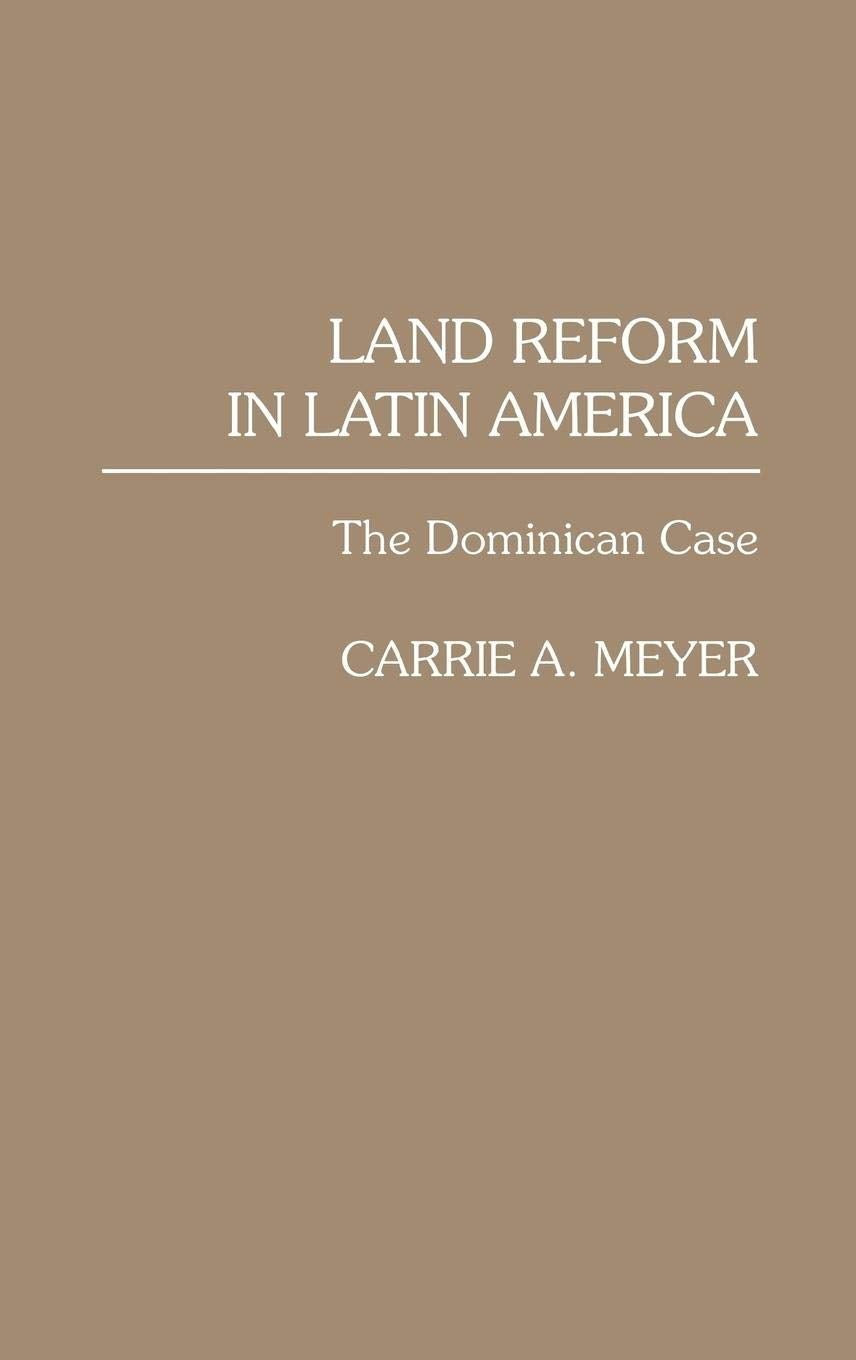
Land Reform In Latin America: The Dominican Case
Sold by Ergodebooks, an authorized reseller.
Returns accepted within 30 days | support@ergodebooks.com
Shipping Information
- Free Standard Shipping — United States only
- Processing Time: 3–5 business days
- Estimated Delivery: 6–10 business days after dispatch
- Double-boxed, fully insured & discreetly packaged
- Tracking number sent via email once dispatched
Returns & Refund
Returns accepted within 30 days of delivery.
Damaged or Defective Item
Free return shipping + replacement or full refund
Wrong Item Received
Free return shipping + replacement or full refund
Change of Mind
Return shipping at customer's expense · 25% restocking fee applies
Payment Option

Although land reform in Latin America has long been heralded by scholars and development economists, as well as by revolutionaries, as the essential ingredient for economic growth, the results of actual land reform projects have been largely disappointing. This book attempts to identify the reasons for these results by analyzing some of the microeconomic factors underlying the inadequate performance of reform sector agriculture. Basing her analysis on a detailed case study of agrarian reform in the Dominican Republic, Meyer deals specifically with the organizational structure of the reform project itself, evaluating the relative efficiency of associative, individual, and collective organizational structures.Meyer begins by providing both a comprehensive survey of the issues surrounding agrarian reform projects in Latin America and an introduction to the history, land settlement patterns, and agriculture of the Dominican Republic. The following chapters detail the history and institutional structure of agrarian reform in the Dominican Republic, review the literature relevant to the study of reform sector projects, and offer case studies of particular reform projects. The author then develops original microeconomic models to explore the implications of the individual, collective, and associative organizational structures. Taken as a whole, Meyer's study provides both theoretical and empirical evidence to support the superior efficiency of the associative organizational structure over either the individual or collective farming approach in the Dominican Republic.
⚠️ WARNING (California Proposition 65):
This product may contain chemicals known to the State of California to cause cancer, birth defects, or other reproductive harm.
For more information, please visit www.P65Warnings.ca.gov.