
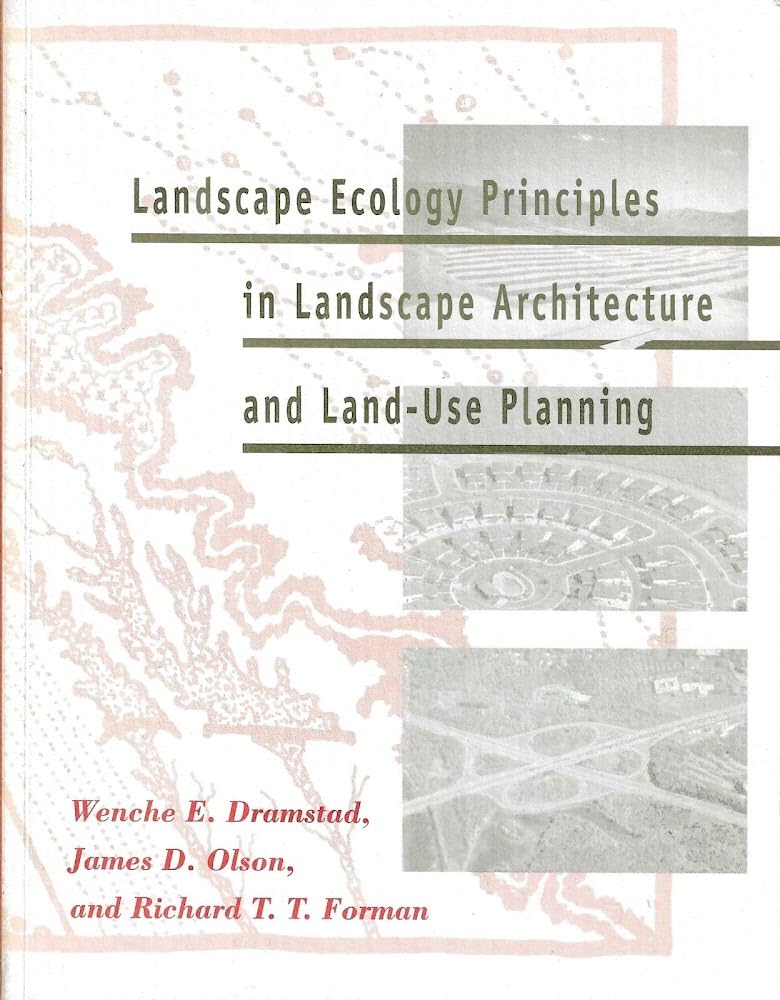
Title
Landscape Ecology Principles In Landscape Architecture And Landuse Planning
Sold by Ergodebooks, an authorized reseller.
Returns accepted within 30 days | support@ergodebooks.com
Shipping Information
- Free Standard Shipping — United States only
- Processing Time: 3–5 business days
- Estimated Delivery: 6–10 business days after dispatch
- Double-boxed, fully insured & discreetly packaged
- Tracking number sent via email once dispatched
Returns & Refund
Returns accepted within 30 days of delivery.
Damaged or Defective Item
Free return shipping + replacement or full refund
Wrong Item Received
Free return shipping + replacement or full refund
Change of Mind
Return shipping at customer's expense · 25% restocking fee applies
Payment Option

Landscape Ecology Has Emerged In The Past Decade As An Important And Useful Tool For Landuse Planners And Landscape Architects. While Professionals And Scholars Have Begun To Incorporate Aspects Of This New Field Into Their Work, There Remains A Need For A Summary Of Key Principles And How They Might Be Applied In Design And Planning.This Volume Fills That Need. It Is A Concise Handbook That Lists And Illustrates Key Principles In The Field, Presenting Specific Examples Of How The Principles Can Be Applied In A Range Of Scales And Diverse Types Of Landscapes Around The World.Chapters Cover: Patches Size, Number, And Location Edges And Boundaries Corridors And Connectivity Mosaics Summaries Of Case Studies From Around The World
⚠️ WARNING (California Proposition 65):
This product may contain chemicals known to the State of California to cause cancer, birth defects, or other reproductive harm.
For more information, please visit www.P65Warnings.ca.gov.
- Q: What are the dimensions of this book? A: The book measures seven point zero one inches in length, nine point zero two inches in height, and zero point four inches in width.
- Q: How many pages does this book have? A: This book contains eighty pages, providing a concise overview of landscape ecology principles.
- Q: What binding type does this book have? A: This book is a paperback, making it lightweight and easy to handle.
- Q: Who is the author of this book? A: The author of this book is Wenche Dramstad, a recognized figure in landscape ecology.
- Q: What is the main focus of this book? A: The book focuses on landscape ecology principles as applied to landscape architecture and land-use planning.
- Q: Is this book suitable for beginners? A: Yes, this book is suitable for both beginners and professionals interested in landscape ecology and planning.
- Q: How can I apply the principles from this book? A: The principles can be applied in various design and planning contexts, illustrated with specific examples across diverse landscapes.
- Q: Are there case studies in this book? A: Yes, the book includes summaries of case studies from around the world, demonstrating the application of landscape ecology principles.
- Q: Is this book useful for land-use planners? A: Yes, this book serves as a useful resource for land-use planners seeking to incorporate landscape ecology into their work.
- Q: What topics are covered in this book? A: The book covers topics such as patches, edges and boundaries, corridors, connectivity, and mosaics.
- Q: How should I store this book? A: Store this book in a cool, dry place, away from direct sunlight to preserve its condition.
- Q: Can I clean this book? A: Yes, you can gently wipe the cover with a dry cloth to remove dust and keep it clean.
- Q: What if my book arrives damaged? A: If your book arrives damaged, contact the seller for return or exchange options.
- Q: What is the return policy for this book? A: Check with the seller for specific return policies regarding this book.
- Q: Is this book appropriate for academic use? A: Yes, this book is appropriate for academic use, especially in courses related to landscape architecture and ecology.
- Q: What makes this book a good reference? A: This book is a concise handbook that summarizes key principles and their applications, making it a valuable reference for professionals.