If you have any questions, you are always welcome to contact us. We'll get back to you as soon as possible, withing 24 hours on weekdays.
Customer service
All questions about your order, return and delivery must be sent to our customer service team by e-mail at yourstore@yourdomain.com
Sale & Press
If you are interested in selling our products, need more information about our brand or wish to make a collaboration, please contact us at press@yourdomain.com
Help
If you have any questions, you are always welcome to contact us. We'll get back to you as soon as possible, withing 24 hours on weekdays.
Customer service
All questions about your order, return and delivery must be sent to our customer service team by e-mail at yourstore@yourdomain.com
Sale & Press
If you are interested in selling our products, need more information about our brand or wish to make a collaboration, please contact us at press@yourdomain.com
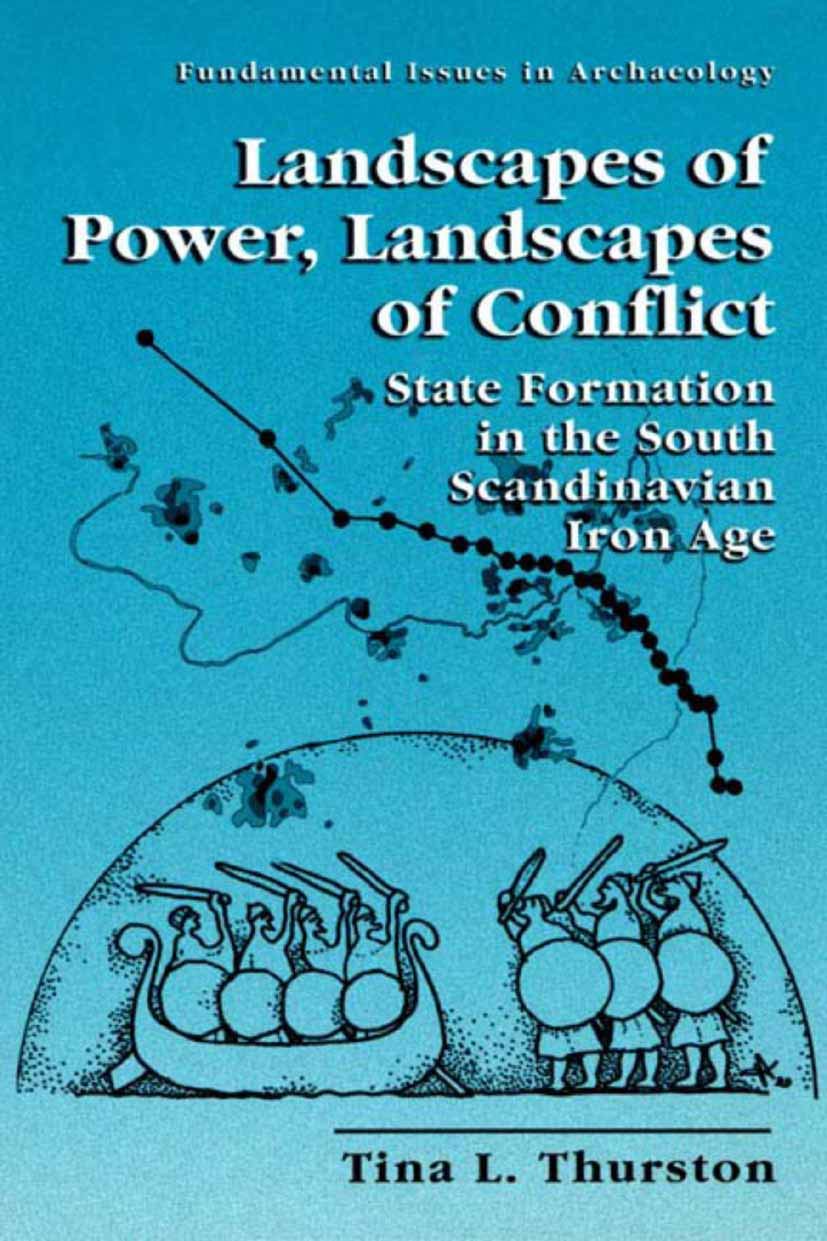
Tina Thurstons Landscapes of Power; Landscapes of Conflict is a thi generation processual analysis of sociopolitical evolution during the Iron Age in southern Scandinavia. Several red flags seem to be raised at once. Are not archaeologists now postprocessual, using new interpretive approaches to derstand human history? Is not evolution a discredited concept in which cieties are arbitrarily arranged along a unilinear scheme? Should not modern approaches be profoundly historical and agentcentered? In any event, were not Scandinavians the ultimate barbarian Vikings parasitizing the complex civilized world of southern and central Europe? Tina Thurstons book focuses our attention on the significant innovations of anthropological archaeology at the end of the twentieth century. A brief overview of processual archaeology can set the context for preciating Landscapes ofPower; Landscapes of Conflict. During the 1960s the emergent processual archaeology (a. k. a. the New Archaeology) cryst lized an evolutionary paradigm that framed research with the comparative ethnography of Service and Fried. It was thought that human societies p gressed through stages of social development and that the goal was to d cover the evolutionary prime movers (such as irrigation, warfare, trade, and population) that drove social and cultural change. By the 1970s prime movers had fallen from favor and social evolution was conceived as complicated flows of causation involving many variables.
⚠️ WARNING (California Proposition 65):
This product may contain chemicals known to the State of California to cause cancer,
birth defects, or other reproductive harm.
For MAP (Minimum Advertised Price) violations and Intellectual Property (IP) or Trademark concerns, please contact:
support@ergodebooks.com
⚠️ California Proposition 65 Warning: Some products sold on this website may expose you to chemicals known to the State of California to cause cancer, birth defects, or other reproductive harm. For more information, visit www.P65Warnings.ca.gov.