If you have any questions, you are always welcome to contact us. We'll get back to you as soon as possible, withing 24 hours on weekdays.
Customer service
All questions about your order, return and delivery must be sent to our customer service team by e-mail at yourstore@yourdomain.com
Sale & Press
If you are interested in selling our products, need more information about our brand or wish to make a collaboration, please contact us at press@yourdomain.com
Help
If you have any questions, you are always welcome to contact us. We'll get back to you as soon as possible, withing 24 hours on weekdays.
Customer service
All questions about your order, return and delivery must be sent to our customer service team by e-mail at yourstore@yourdomain.com
Sale & Press
If you are interested in selling our products, need more information about our brand or wish to make a collaboration, please contact us at press@yourdomain.com
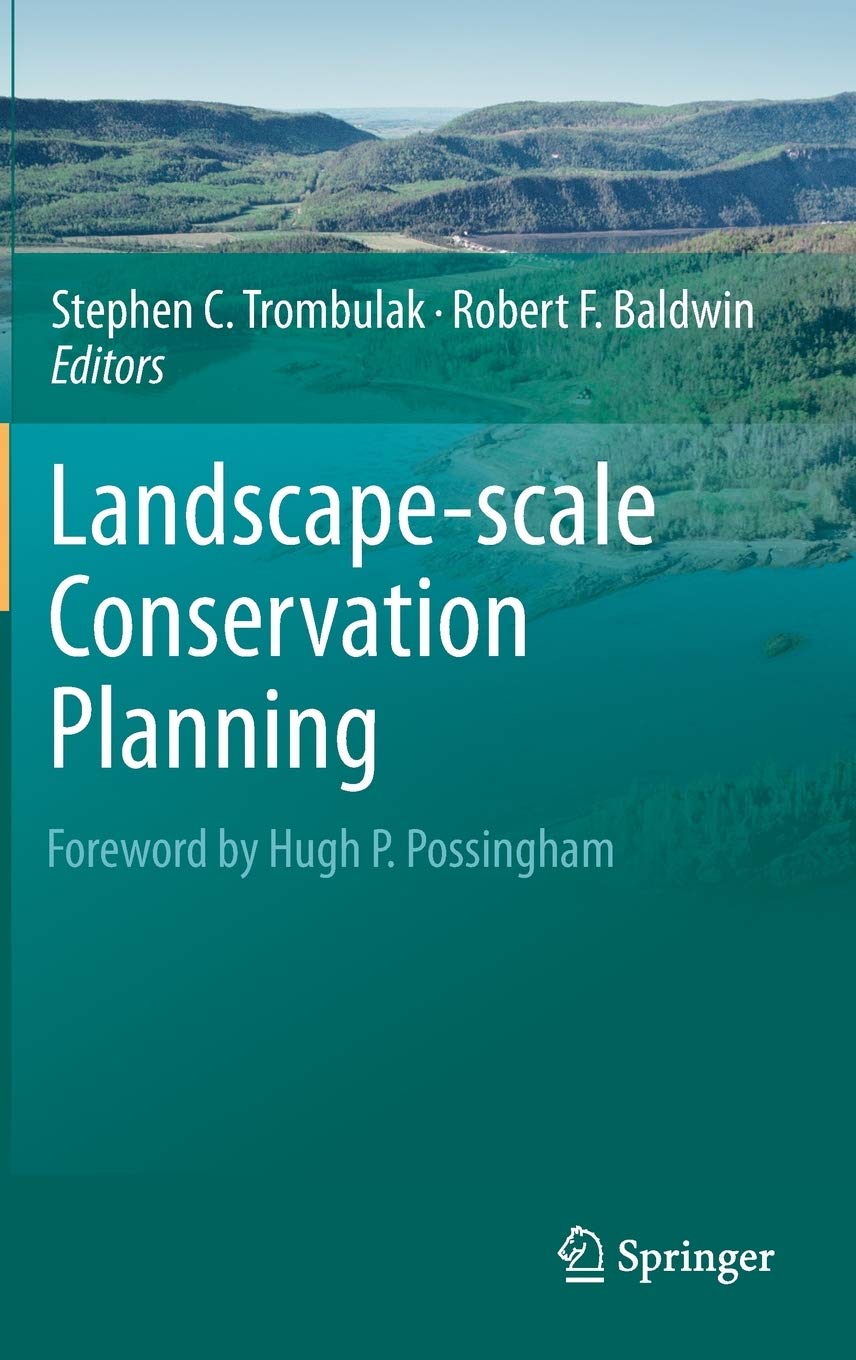
Hugh P. Possingham Landscapescale conservation planning is coming of age. In the last couple of decades, conservation practitioners, working at all levels of governance and all spatial scales, have embraced the CARE principles of conservation planning Comprehensiveness, Adequacy, Representativeness, and Efficiency. Hundreds of papers have been written on this theme, and several different kinds of software program have been developed and used around the world, making conservation planning based on these principles global in its reach and influence. Does this mean that all the science of conservation planning is over that the discovery phase has been replaced by an engineering phase as we move from defining the rules to implementing them in the landscape? This book and the continuing growth in the literature suggest that the answer to this question is most definitely no. All of applied conservation can be wrapped up into a single sentence: what should be done (the action), in what place, at what time, using what mechanism, and for what outcome (the objective). It all seems pretty simple what, where, when, how and why. However stating a problem does not mean it is easy to solve.
⚠️ WARNING (California Proposition 65):
This product may contain chemicals known to the State of California to cause cancer,
birth defects, or other reproductive harm.
For MAP (Minimum Advertised Price) violations and Intellectual Property (IP) or Trademark concerns, please contact:
support@ergodebooks.com
⚠️ California Proposition 65 Warning: Some products sold on this website may expose you to chemicals known to the State of California to cause cancer, birth defects, or other reproductive harm. For more information, visit www.P65Warnings.ca.gov.