
Title
Language Acquisition By Eye,Used
Sold by Ergodebooks, an authorized reseller.
Returns accepted within 30 days | support@ergodebooks.com
Shipping Information
- Free Standard Shipping — United States only
- Processing Time: 3–5 business days
- Estimated Delivery: 6–10 business days after dispatch
- Double-boxed, fully insured & discreetly packaged
- Tracking number sent via email once dispatched
Returns & Refund
Returns accepted within 30 days of delivery.
Damaged or Defective Item
Free return shipping + replacement or full refund
Wrong Item Received
Free return shipping + replacement or full refund
Change of Mind
Return shipping at customer's expense · 25% restocking fee applies
Payment Option

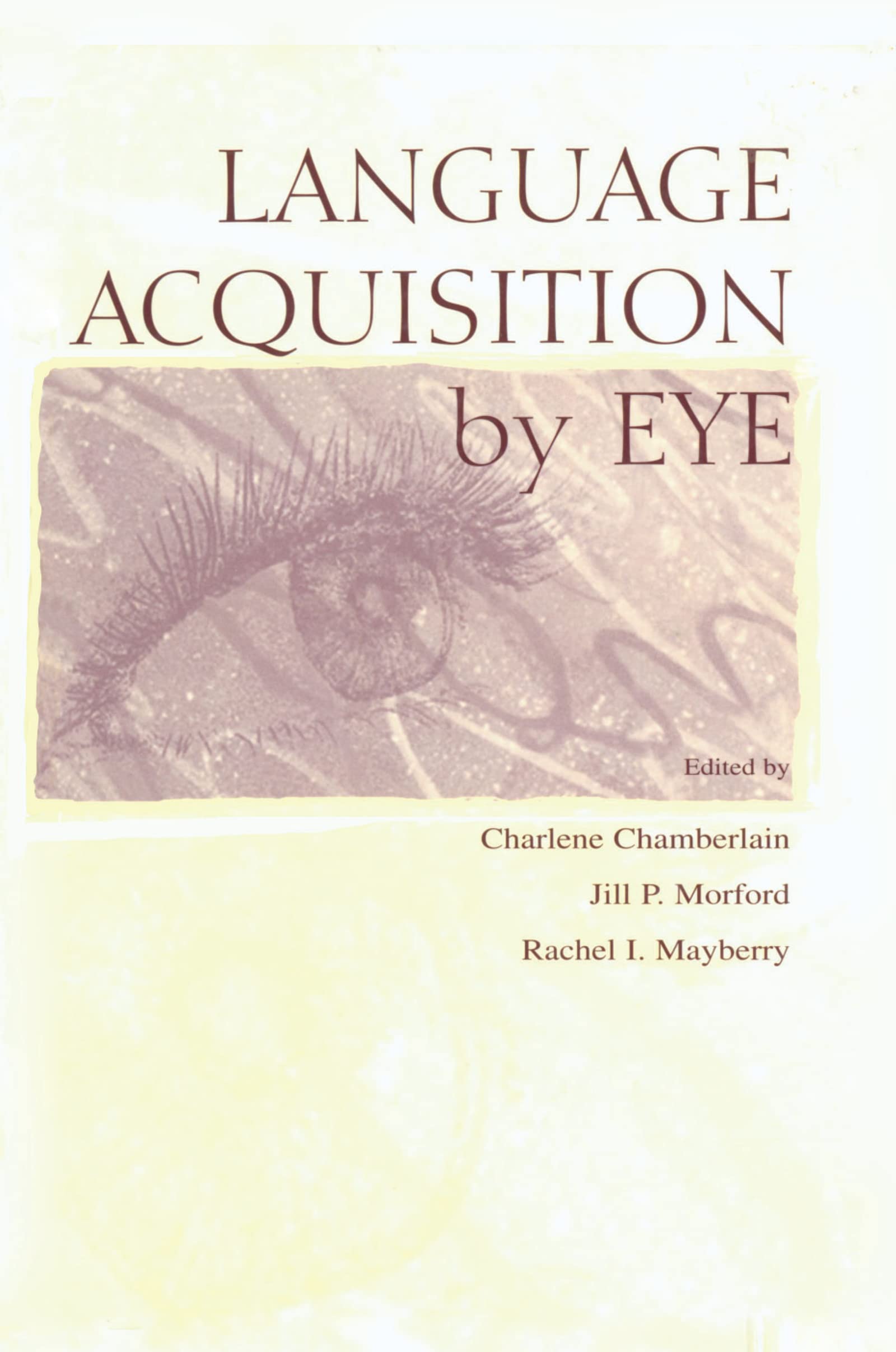
This book focuses on the early acquisition of signed languages and the later development of reading by children who use signed languages. It represents the first collection of research papers focused solely on the acquisition of various signed languages by very young childrenall of whom are acquiring signed languages natively, from deaf parents. It is also the first collection to investigate the possible relationships between the acquisition of signed language and reading development in schoolaged children. The underlying questions addressed by the chapters are how visualgestural languages develop and whether and how visual languages can serve the foundation for learning a second visual representation of language, namely, reading.Language Acquisition by Eye is divided into two parts, anchored in the toddler phase and the schoolpupil phase. The central focus of Part I is on the earliest stages of signed language acquisition. The chapters in this part address important questions as to what 'babytalk' looks like in signed language and the effect it has on babies' attention, what early babbling looks like in signed language, what babies' earliest signs look like, how parents talk to their babies in signed language to ensure that their babies 'see' what's being said, and what the earliest sentences in signed languages tell us about the acquisition of grammar. With contrasting research paradigms, these chapters all show the degree to which parents and babies are highly sensitive to one another's communicative interactions in subtle and complex ways. Such observations cannot be made for spoken language acquisition because speech does not require that the parent and child look at each other during communication whereas signed language does.Part II focuses on the relationship between signed language acquisition and reading development in children who are deaf. All of these chapters report original research that investigates and uncovers a positive relationship between the acquisition and knowledge of signed language and the development of reading skills and as a result, represents a historical first in reading research. This section discusses how current theory applies to the case of deaf children's reading and presents new data that illuminates reading theory. Using a variety of research paradigms, each chapter finds a positive rather than a negative correlation between signed language knowledge and usage, and the development of reading skill. These chapters are sure to provide the foundation for new directions in reading research.
⚠️ WARNING (California Proposition 65):
This product may contain chemicals known to the State of California to cause cancer, birth defects, or other reproductive harm.
For more information, please visit www.P65Warnings.ca.gov.