
Title

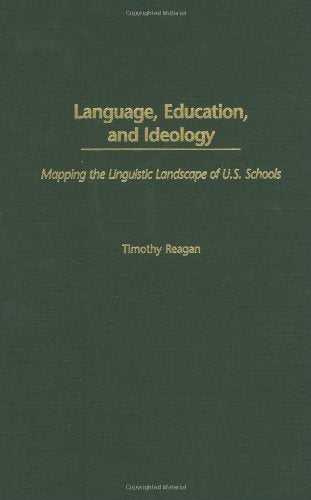
Language, Education, and Ideology: Mapping the Linguistic Landscape of U.S. Schools,Used
Sold by Ergodebooks, an authorized reseller.
Returns accepted within 30 days | support@ergodebooks.com
Shipping Information
- Free Standard Shipping — United States only
- Processing Time: 3–5 business days
- Estimated Delivery: 6–10 business days after dispatch
- Double-boxed, fully insured & discreetly packaged
- Tracking number sent via email once dispatched
Returns & Refund
Returns accepted within 30 days of delivery.
Damaged or Defective Item
Free return shipping + replacement or full refund
Wrong Item Received
Free return shipping + replacement or full refund
Change of Mind
Return shipping at customer's expense · 25% restocking fee applies
Payment Option

Product Description Language educators in general, and foreign language educators in particular, need to be aware of and sensitive to issues related to the interface and nexus of language, education, and ideology. This work places foreign language education in its social context, as well as applying critical pedagogy to the foreign language classroom, to help educators become more aware of the social, political, historical, and economic contexts in which they work and which effect the classroom setting.Research and scholarship in critical pedagogy is impressive, extensive, and powerful, and has had significant impact on nearly every aspect of contemporary educational scholarship. One area in which critical theory and critical pedagogy have been slow to have a noticeable effect, however, is that of language education, especially foreign language education. Further, while a number of important works address issues of critical literacy, there are no general works presenting critical perspectives on language and language issues targeting classroom teachers and other educators.This work offers a broad and comprehensive overview of language and linguistic issues that emerge in the classroom context from a critical philosophical perspective. The central focus is on the nexus of issues of language, education, and ideology, as the title suggests, and specific topics covered will include language and power, linguistic purism, the marginalization of second language education in the United States, the phenomenon of ideological monolingualism in the United States, the hierarchy of the less commonly taught languages (both in terms of its etiology and the ideological and hegemonic functions this hierarchy serves), nonmainstream language varieties in school settings, issues of linguistic legitimacy in the classroom context, the politics and ideological context of bilingual education in the United States, language policy both as a tool for oppression and as a means of empowerment, and finally, the need for critical language awareness on the part of all educators. Review ?This cogent, wellwritten essay, intended to persuade as much as to inform, explores contemporary sociolinguistic conclusions about language....This book would be particularly suitable for undergraduates who have not encountered its premises before. Highly recommended. Undergraduate collections.?Choice"This cogent, wellwritten essay, intended to persuade as much as to inform, explores contemporary sociolinguistic conclusions about language....This book would be particularly suitable for undergraduates who have not encountered its premises before. Highly recommended. Undergraduate collections."Choice About the Author TIMOTHY REAGAN is Professor of Educational Linguistics, Neag School of Education, University of Connecticut.
⚠️ WARNING (California Proposition 65):
This product may contain chemicals known to the State of California to cause cancer, birth defects, or other reproductive harm.
For more information, please visit www.P65Warnings.ca.gov.