
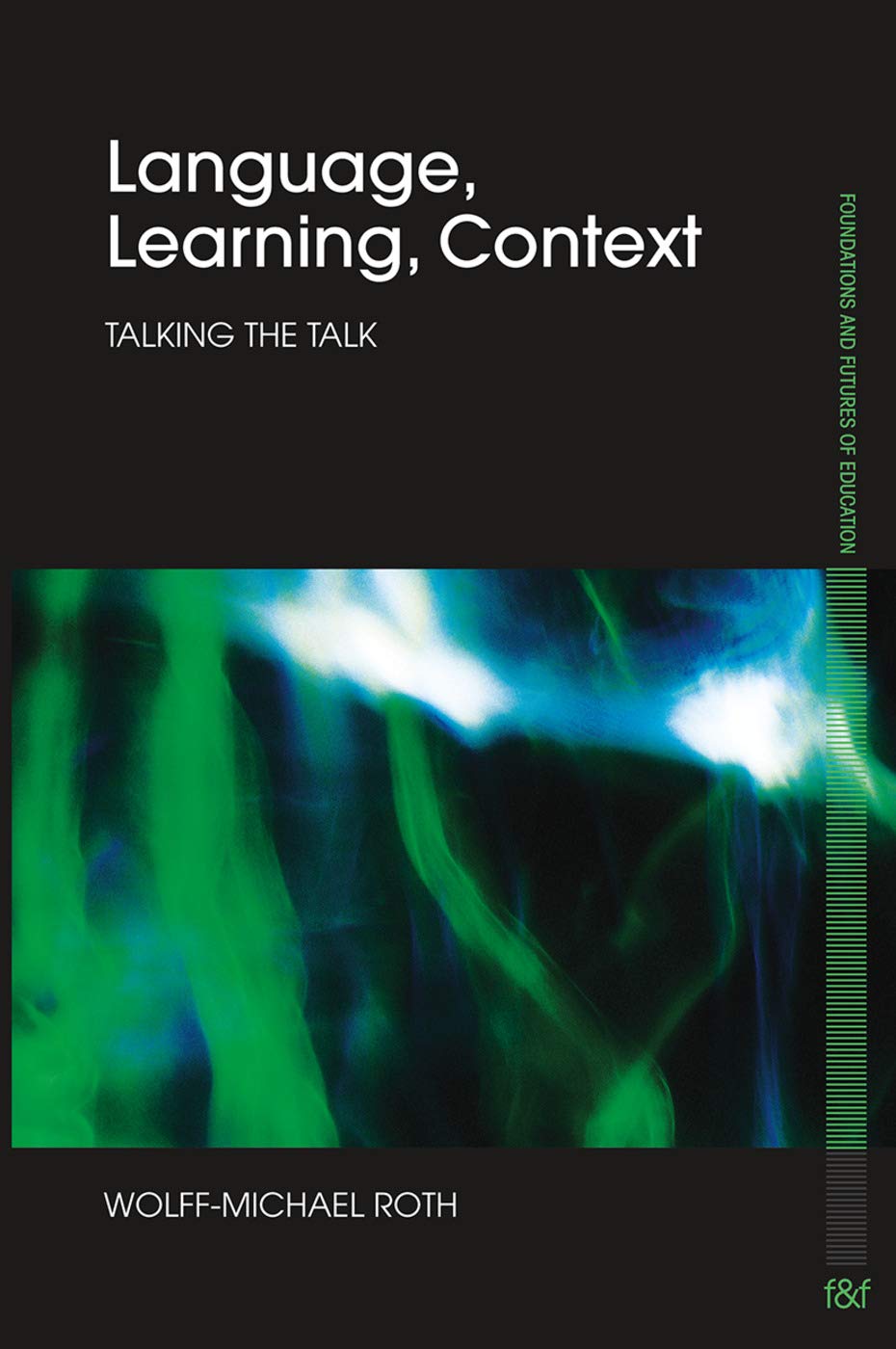
Title
Language, Learning, Context (Foundations and Futures of Education),New
Sold by Ergodebooks, an authorized reseller.
Returns accepted within 30 days | support@ergodebooks.com
Shipping Information
- Free Standard Shipping — United States only
- Processing Time: 3–5 business days
- Estimated Delivery: 6–10 business days after dispatch
- Double-boxed, fully insured & discreetly packaged
- Tracking number sent via email once dispatched
Returns & Refund
Returns accepted within 30 days of delivery.
Damaged or Defective Item
Free return shipping + replacement or full refund
Wrong Item Received
Free return shipping + replacement or full refund
Change of Mind
Return shipping at customer's expense · 25% restocking fee applies
Payment Option

In what way do educators understand the language they use to make sense of the educational environment?How does language enable educators and how can they consciously make the most of its potential?Using the right language and setting the correct tone in the school classroom has repercussions for all involved; whether it affects the linguistic development of a student or the effective delivery of a lesson, language plays an important factor in any educational context.As such, this innovative book focuses right at the heart of learning, arguing that current theories of speech in classrooms do not, and cannot, capture the essentially passive aspects of talking. Until now, these verbal and physical expressions of communication have been left untheorised, leaving the potential of an entire secondary area of language untapped.Exploring his argument along three clear, but interrelated lines of investigation, the author focuses on our understanding, on language itself and finally on communication. Thus he argues: that language is unintentional and our understanding of it is limited as soon as we speak, language appears beyond us in a highly singular, situated context that communication cannot be reduced to the simple production of words.Building on the work of linguistic philosophers such as Martin Heidegger, Donald Davidson, Paul Ricur and Jacques Derrida, these salient points are further elaborated to fully develop the relationship between thinking and talk in educational settings.This invaluable book makes recommendations for the praxis of teaching and will appeal to students, researchers, and practising science and mathematics teachers, as well as those with interests in language and literacy.
⚠️ WARNING (California Proposition 65):
This product may contain chemicals known to the State of California to cause cancer, birth defects, or other reproductive harm.
For more information, please visit www.P65Warnings.ca.gov.