
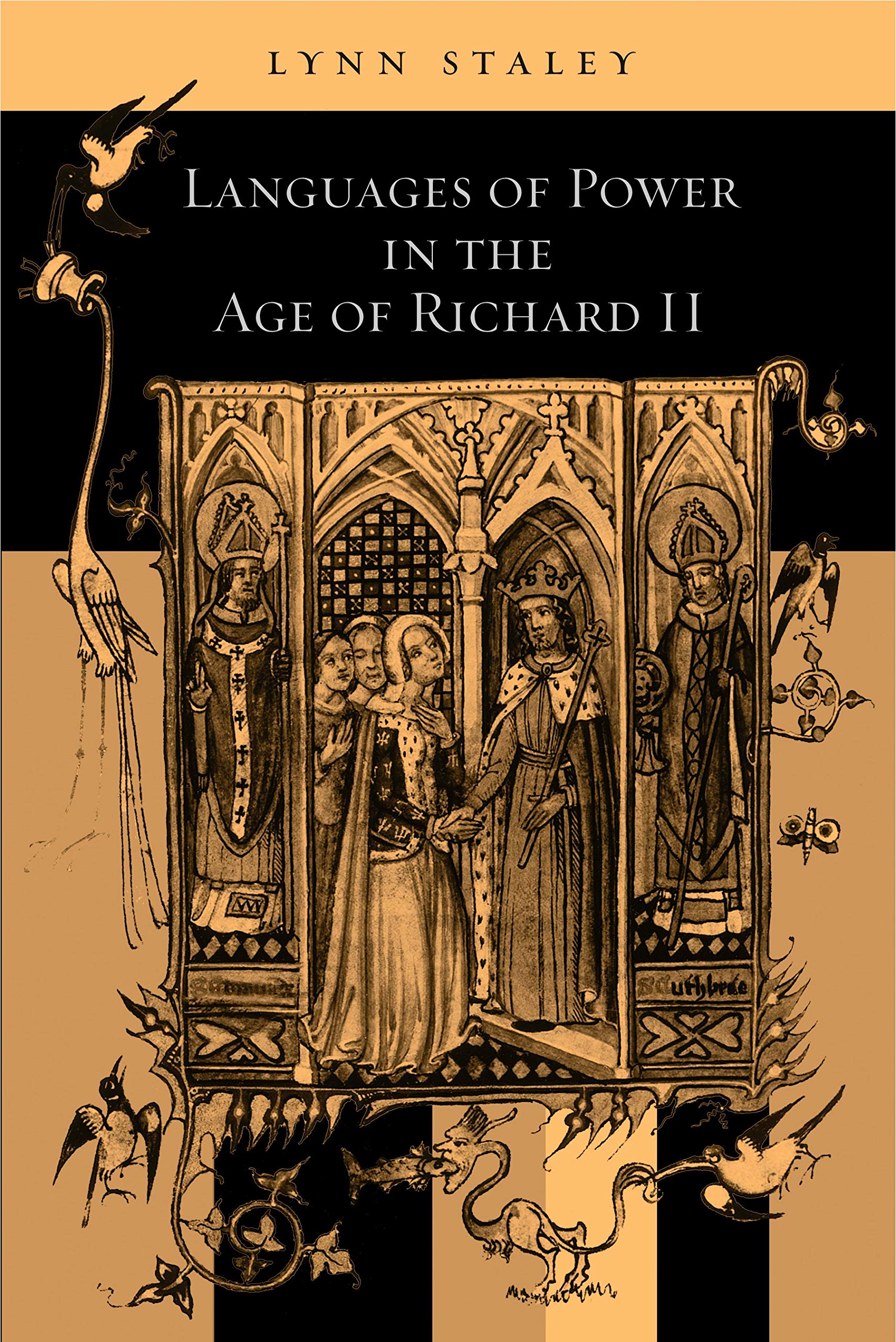
Title
Languages of Power in the Age of Richard II,New
Sold by Ergodebooks, an authorized reseller.
Returns accepted within 30 days | support@ergodebooks.com
Shipping Information
- Free Standard Shipping — United States only
- Processing Time: 3–5 business days
- Estimated Delivery: 6–10 business days after dispatch
- Double-boxed, fully insured & discreetly packaged
- Tracking number sent via email once dispatched
Returns & Refund
Returns accepted within 30 days of delivery.
Damaged or Defective Item
Free return shipping + replacement or full refund
Wrong Item Received
Free return shipping + replacement or full refund
Change of Mind
Return shipping at customer's expense · 25% restocking fee applies
Payment Option

In this book the distinguished medievalist Lynn Staley turns her attention to one of the most dramatic periods in English history, the reign of Richard II, as seen through a range of texts including literary, political, chronicle, and pictorial. Richard II, who ruled from 1377 to 1399, succeeded to the throne as a child after the fiftyyear reign of Edward III, and found himself beset throughout his reign by military, political, religious, economic, and social problems that would have tried even the most skilled of statesmen. At the same time, these years saw some of Englands most gifted courtly writers, among them Chaucer and Gower, who were keenly attuned to the political machinations erupting around them. In Languages of Power in the Age of Richard II Staley does not so much read literature through history as offer a way of reading history through its refractions in literature. In essence, the text both isolates and traces what is an actual search for a language of power during the reign of Richard II and scrutinizes the ways in which Chaucer and other courtly writers participated in these attempts to articulate the concept of princely power. As one who took it upon himself to comment on the various means by which history is made, Chaucer emerges from Staleys narrative as a poet without peer.
⚠️ WARNING (California Proposition 65):
This product may contain chemicals known to the State of California to cause cancer, birth defects, or other reproductive harm.
For more information, please visit www.P65Warnings.ca.gov.