
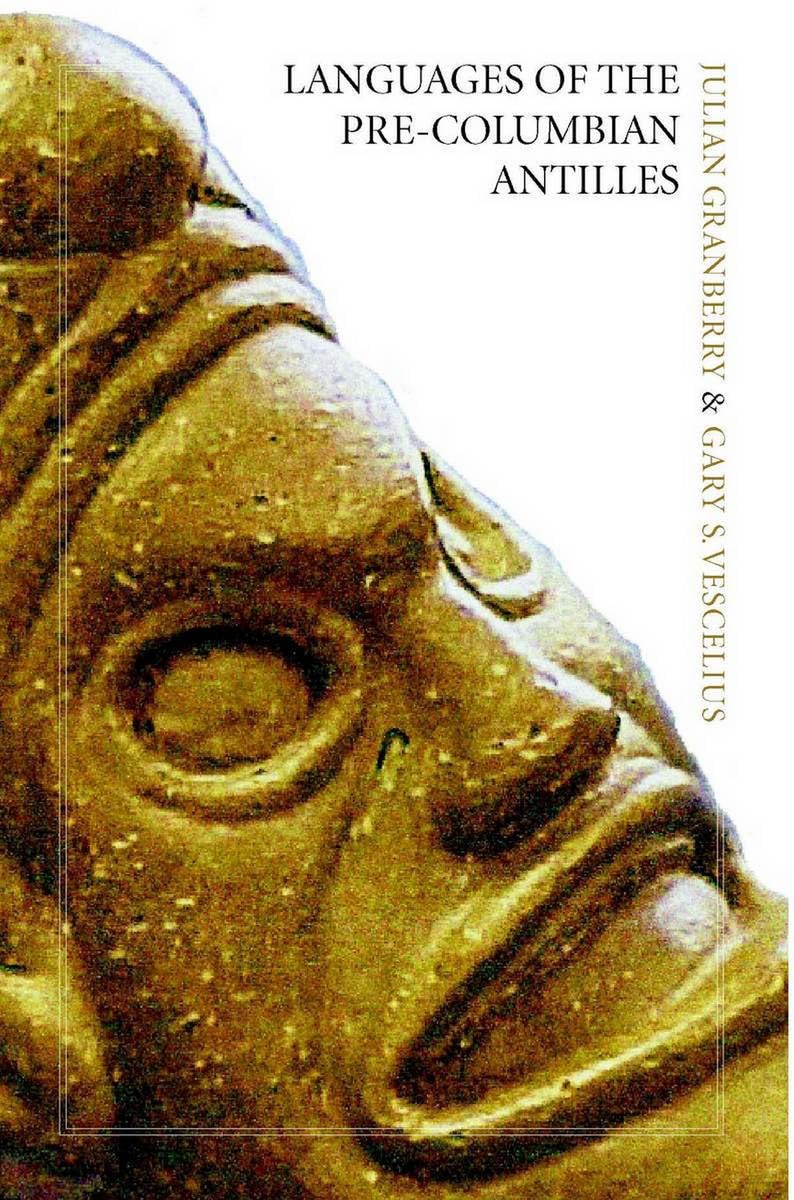
Title
Languages Of The Precolumbian Antilles
Sold by Ergodebooks, an authorized reseller.
Returns accepted within 30 days | support@ergodebooks.com
Shipping Information
- Free Standard Shipping — United States only
- Processing Time: 3–5 business days
- Estimated Delivery: 6–10 business days after dispatch
- Double-boxed, fully insured & discreetly packaged
- Tracking number sent via email once dispatched
Returns & Refund
Returns accepted within 30 days of delivery.
Damaged or Defective Item
Free return shipping + replacement or full refund
Wrong Item Received
Free return shipping + replacement or full refund
Change of Mind
Return shipping at customer's expense · 25% restocking fee applies
Payment Option

A Linguistic Analysis Supporting A New Model Of The Colonization Of The Antilles Before 1492This Work Formulates A Testable Hypothesis Of The Origins And Migration Patterns Of The Aboriginal Peoples Of The Greater Antilles (Cuba, Jamaica, Hispaniola, And Puerto Rico), The Lucayan Islands (The Commonwealth Of The Bahamas And The Crown Colony Of The Turks And Caicos), The Virgin Islands, And The Northernmost Of The Leeward Islands, Prior To European Contact. Using Archaeological Data As Corroboration, The Authors Synthesize Evidence That Has Been Available In Scattered Locales For More Than 500 Years But Which Has Never Before Been Correlated And Critically Examined.Within Any Welldefined Geographical Area (Such As These Islands), The Linguistic Expectation And Norm Is That People Speaking The Same Or Closely Related Language Will Intermarry, And, By Participating In A Common Gene Pool, Will Show Similar Socioeconomic And Cultural Traits, As Well As Common Artifact Preferences. From An Archaeological Perspective, The Converse Is Deducible: Artifact Inventories Of A Welldefined Sociogeographical Area Are Likely To Have Been Created By Speakers Of The Same Or Closely Related Language Or Languages.Languages Of The Precolumbian Antilles Presents Information Based On These Assumptions. The Data Is Scantscattered Words And Phrases In Spanish Explorers' Journals, Local Place Names Written On Maps Or In Missionary Recordsbut The Collaboration Of The Authors, One A Linguist And The Other An Archaeologist, Has Tied The Linguistics To The Ground Wherever Possible And Allowed The Construction Of A Framework With Which To Understand The Relationships, Movements, And Settlement Patterns Of Caribbean Peoples Before Columbus Arrived.
⚠️ WARNING (California Proposition 65):
This product may contain chemicals known to the State of California to cause cancer, birth defects, or other reproductive harm.
For more information, please visit www.P65Warnings.ca.gov.
- Q: What is the main focus of 'Languages of the Pre-Columbian Antilles'? A: The book presents a linguistic analysis that supports a new model of colonization in the Antilles before 1492, exploring the origins and migration patterns of the aboriginal peoples.
- Q: Who are the authors of this book? A: The authors are Julian Granberry, a linguist, and an archaeologist who collaborated to tie linguistic evidence to archaeological findings.
- Q: What type of evidence does the book use to support its hypotheses? A: It utilizes archaeological data and linguistic evidence from historical sources, such as explorers' journals and local place names.
- Q: How many pages does 'Languages of the Pre-Columbian Antilles' have? A: The book contains 176 pages.
- Q: Is this book a first edition? A: Yes, 'Languages of the Pre-Columbian Antilles' is published as a first edition.
- Q: What is the condition of the used book? A: The book is described as a used book in good condition.
- Q: What binding type does this book have? A: The book is available in paperback binding.
- Q: When was 'Languages of the Pre-Columbian Antilles' published? A: The book was published on August 19, 2004.
- Q: What are the cultural implications discussed in the book? A: The book discusses how language and artifact inventories can reveal the social and cultural traits of the aboriginal peoples in the Antilles.
- Q: Can this book help in understanding the settlement patterns before Columbus? A: Yes, it provides a framework for understanding the relationships, movements, and settlement patterns of Caribbean peoples prior to European contact.