If you have any questions, you are always welcome to contact us. We'll get back to you as soon as possible, withing 24 hours on weekdays.
Customer service
All questions about your order, return and delivery must be sent to our customer service team by e-mail at yourstore@yourdomain.com
Sale & Press
If you are interested in selling our products, need more information about our brand or wish to make a collaboration, please contact us at press@yourdomain.com
Help
If you have any questions, you are always welcome to contact us. We'll get back to you as soon as possible, withing 24 hours on weekdays.
Customer service
All questions about your order, return and delivery must be sent to our customer service team by e-mail at yourstore@yourdomain.com
Sale & Press
If you are interested in selling our products, need more information about our brand or wish to make a collaboration, please contact us at press@yourdomain.com
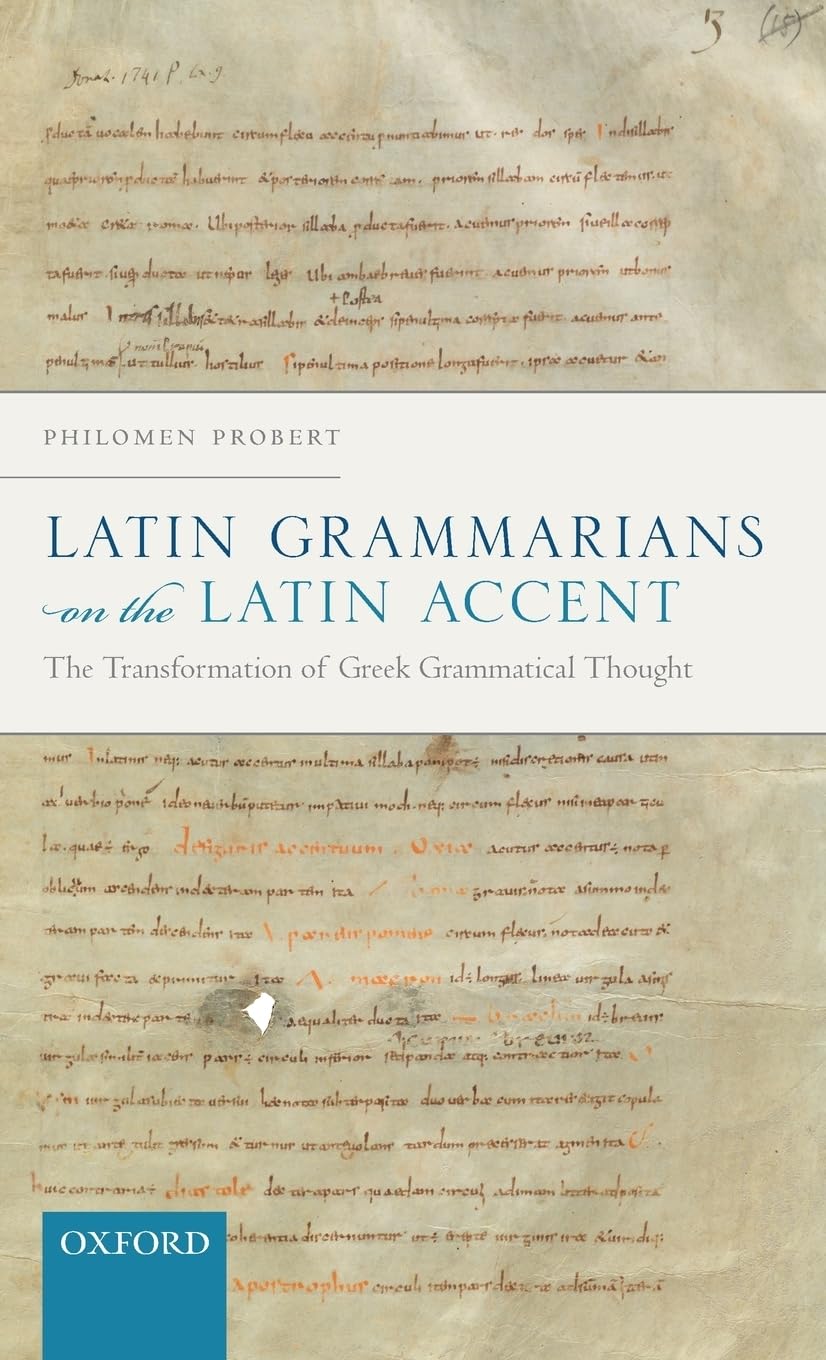
Latin Grammarians on the Latin Accent offers a fresh perspective on a longstanding debate about the value of Latin grammarians writing about the Latin accent: should the information they give us be taken seriously, or should much of it be dismissed as copied mindlessly from Greek sources? This book focusses on understanding the Latin grammarians on their own terms: what they actually say about accents, and what they mean by it. Careful examination of Greek and Latin grammatical texts leads to a better understanding of the workings of Greek grammatical theory on prosody, and of its interpretation in the Latin grammatical tradition. It emerges that Latin grammarians took over from Greek grammarians a system of grammatical description that operated on two levels: an abstract level that we are not supposed to be able to hear, and the concrete level of audible speech. The two levels are linked by a system of rules. Some points of Greek thought on prosody were taken over onto the abstract level and not intended as statements about the actual sound of Latin, while other points were so intended. While this book largely sets aside the question whether the Latin grammarians tell us the truth about the Latin accent, focussing instead on understanding what they actually say, it begins to offer answers for those wishing to know when to 'believe' Latin grammarians in the traditional sense: the book shows which of their statements are intended and which are not intended as statements about the actual sound of Latin.
⚠️ WARNING (California Proposition 65):
This product may contain chemicals known to the State of California to cause cancer,
birth defects, or other reproductive harm.
For MAP (Minimum Advertised Price) violations and Intellectual Property (IP) or Trademark concerns, please contact:
support@ergodebooks.com
⚠️ California Proposition 65 Warning: Some products sold on this website may expose you to chemicals known to the State of California to cause cancer, birth defects, or other reproductive harm. For more information, visit www.P65Warnings.ca.gov.