If you have any questions, you are always welcome to contact us. We'll get back to you as soon as possible, withing 24 hours on weekdays.
Customer service
All questions about your order, return and delivery must be sent to our customer service team by e-mail at yourstore@yourdomain.com
Sale & Press
If you are interested in selling our products, need more information about our brand or wish to make a collaboration, please contact us at press@yourdomain.com
Help
If you have any questions, you are always welcome to contact us. We'll get back to you as soon as possible, withing 24 hours on weekdays.
Customer service
All questions about your order, return and delivery must be sent to our customer service team by e-mail at yourstore@yourdomain.com
Sale & Press
If you are interested in selling our products, need more information about our brand or wish to make a collaboration, please contact us at press@yourdomain.com
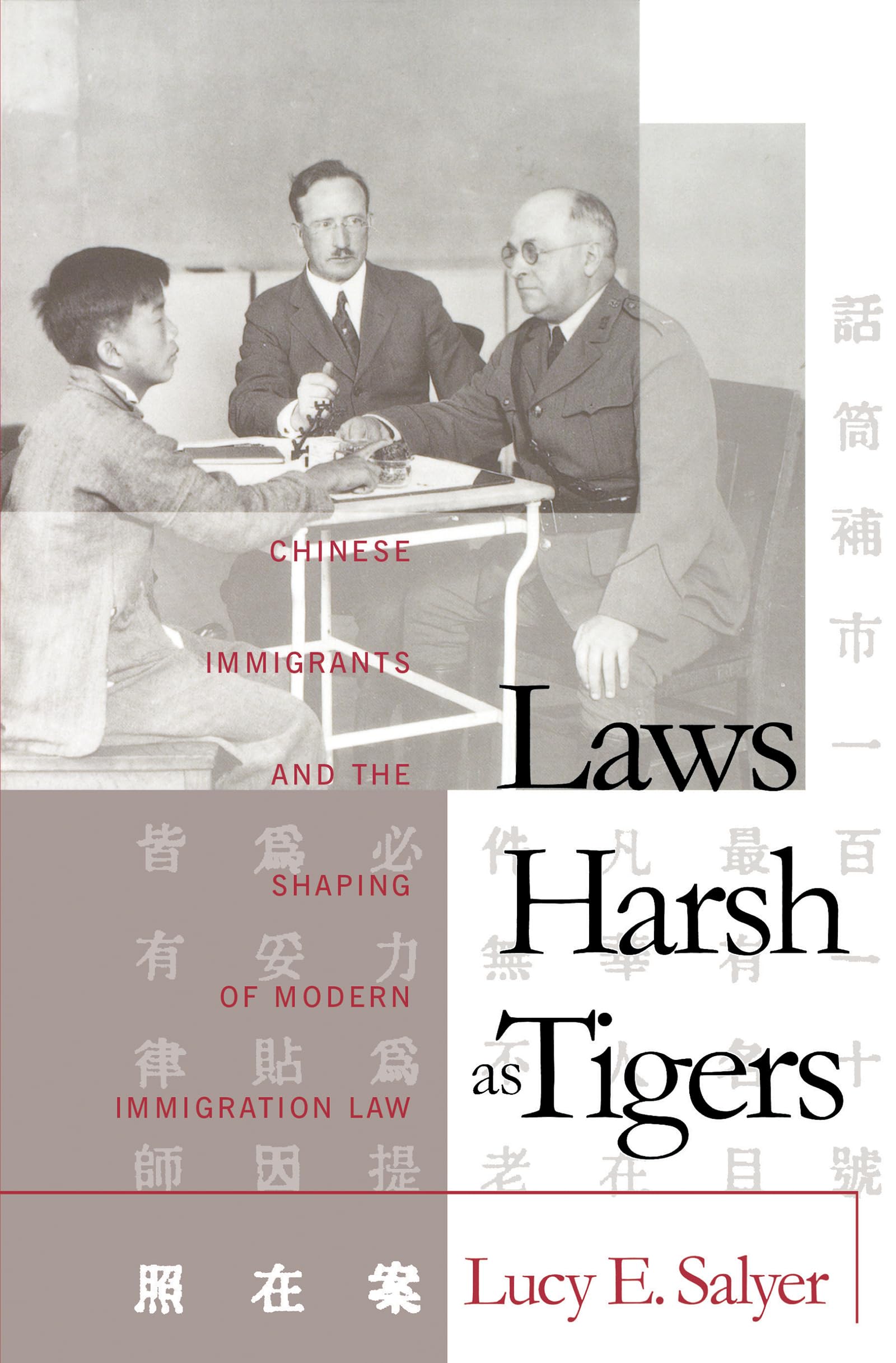
Focusing primarily on the exclusion of the Chinese, Lucy Salyer analyzes the popular and legal debates surrounding immigration law and its enforcement during the height of nativist sentiment in the early twentieth century. She argues that the struggles between Chinese immigrants, U.S. government officials, and the lower federal courts that took place around the turn of the century established fundamental principles that continue to dominate immigration law today and make it unique among branches of American law. By establishing the centrality of the Chinese to immigration policy, Salyer also integrates the history of Asian immigrants on the West Coast with that of European immigrants in the East.Salyer demonstrates that Chinese immigrants and Chinese Americans mounted sophisticated and oftensuccessful legal challenges to the enforcement of exclusionary immigration policies. Ironically, their persistent litigation contributed to the development of legal doctrines that gave the Bureau of Immigration increasing power to counteract resistance. Indeed, by 1924, immigration law had begun to diverge from constitutional norms, and the Bureau of Immigration had emerged as an exceptionally powerful organization, free from many of the constraints imposed upon other government agencies.
⚠️ WARNING (California Proposition 65):
This product may contain chemicals known to the State of California to cause cancer,
birth defects, or other reproductive harm.
For MAP (Minimum Advertised Price) violations and Intellectual Property (IP) or Trademark concerns, please contact:
support@ergodebooks.com
⚠️ California Proposition 65 Warning: Some products sold on this website may expose you to chemicals known to the State of California to cause cancer, birth defects, or other reproductive harm. For more information, visit www.P65Warnings.ca.gov.