
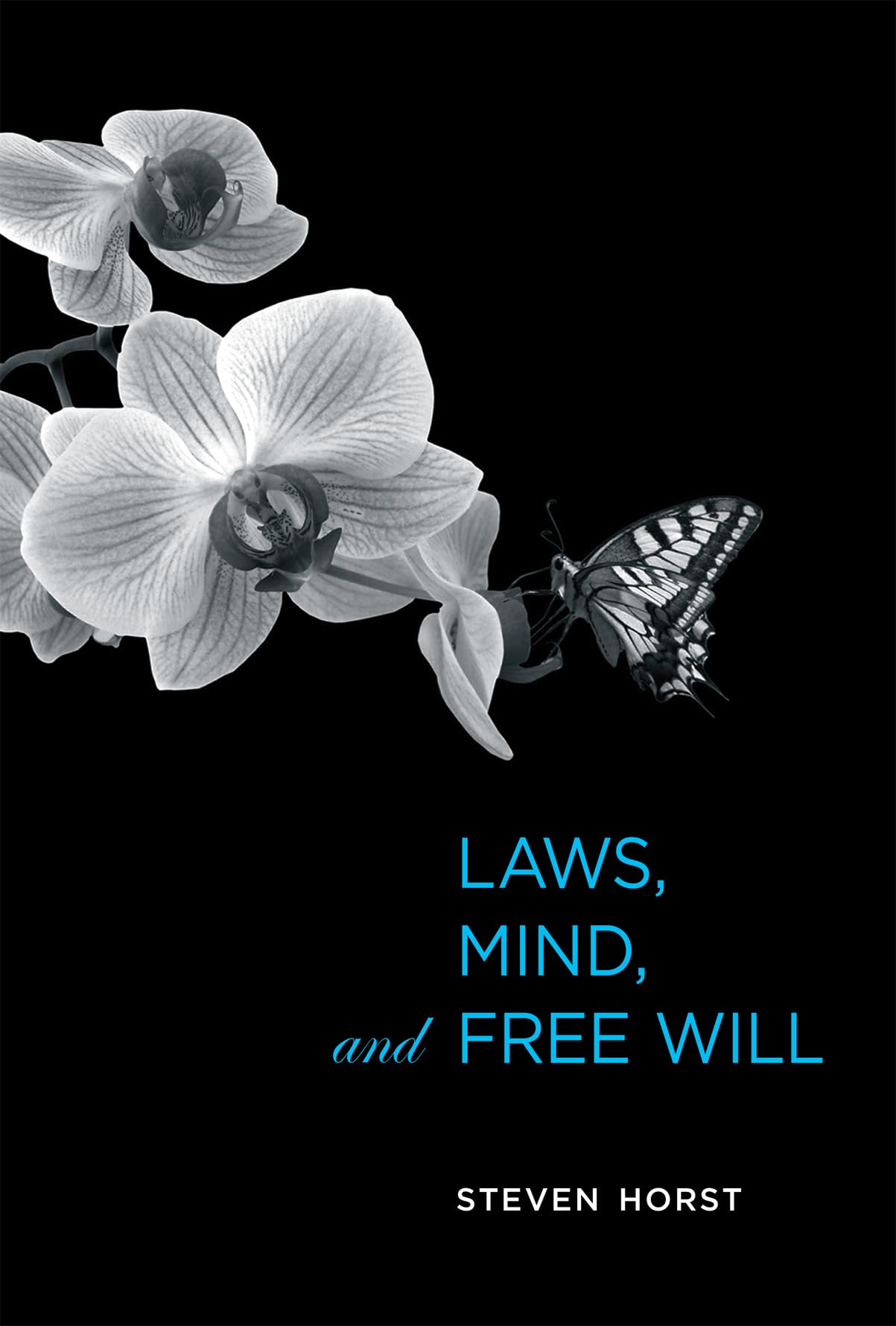
Title
Laws, Mind, And Free Will (Life And Mind: Philosophical Issues In Biology And Psychology (Hardcover))
Sold by Ergodebooks, an authorized reseller.
Returns accepted within 30 days | support@ergodebooks.com
Shipping Information
- Free Standard Shipping — United States only
- Processing Time: 3–5 business days
- Estimated Delivery: 6–10 business days after dispatch
- Double-boxed, fully insured & discreetly packaged
- Tracking number sent via email once dispatched
Returns & Refund
Returns accepted within 30 days of delivery.
Damaged or Defective Item
Free return shipping + replacement or full refund
Wrong Item Received
Free return shipping + replacement or full refund
Change of Mind
Return shipping at customer's expense · 25% restocking fee applies
Payment Option

An Account Of Scientific Laws That Vindicates The Status Of Psychological Laws And Shows Natural Laws To Be Compatible With Free Will.In Laws, Mind, And Free Will, Steven Horst Addresses The Apparent Dissonance Between The Picture Of The Natural World That Arises From The Sciences And Our Understanding Of Ourselves As Agents Who Think And Act. If The Mind And The World Are Entirely Governed By Natural Laws, There Seems To Be No Room Left For Free Will To Operate. Moreover, Although The Laws Of Physical Science Are Clear And Verifiable, The Sciences Of The Mind Seem To Yield Only Rough Generalizations Rather Than Universal Laws Of Nature. Horst Argues That These Two Familiar Problems In Philosophythe Apparent Tension Between Free Will And Natural Law And The Absence Of Strict Laws In The Sciences Of The Mindare Artifacts Of A Particular Philosophical Thesis About The Nature Of Laws: That Laws Make Claims About How Objects Actually Behave.Horst Argues Against This Empiricist Orthodoxy And Proposes An Alternative Account Of Lawsan Account Rooted In A Cognitivist Approach To Philosophy Of Science. Horst Argues That Once We Abandon The Empiricist Misunderstandings Of The Nature Of Laws There Is No Contrast Between Strict Laws And Generalizations About The Mind (Ceteris Paribus Laws, Laws Hedged By The Caveat Other Things Being Equal), And That A Commitment To Laws Is Compatible With A Commitment To The Existence Of Free Will. Horst'S Alternative Account, Which He Calls Cognitive Pluralism, Vindicates The Truth Of Psychological Laws And Resolves The Tension Between Human Freedom And The Sciences.
⚠️ WARNING (California Proposition 65):
This product may contain chemicals known to the State of California to cause cancer, birth defects, or other reproductive harm.
For more information, please visit www.P65Warnings.ca.gov.
- Q: What is the page count of 'Laws, Mind, and Free Will'? A: The book has two hundred seventy-seven pages. This length allows for an in-depth exploration of the philosophical issues discussed.
- Q: What are the dimensions of this hardcover book? A: The dimensions are six point thirty-one inches in length, zero point seventy-five inches in width, and nine point seventeen inches in height. These measurements make it a standard-sized hardcover for easy reading.
- Q: Who is the author of this book? A: The author is Steven Horst, who is affiliated with the Department of Philosophy. His expertise adds credibility to the philosophical discussions in the book.
- Q: How do I read 'Laws, Mind, and Free Will'? A: You can read it like any hardcover book, flipping through the pages from front to back. It's suitable for anyone interested in philosophy, psychology, or the sciences.
- Q: Is this book suitable for beginners in philosophy? A: Yes, it can be suitable for beginners. The author explains complex ideas in a way that is accessible, making it a good starting point.
- Q: What themes does the book cover? A: The book covers themes like free will, natural laws, and the relationship between mind and science. It provides a unique perspective on these philosophical issues.
- Q: How do I keep this book in good condition? A: To maintain its condition, store it upright on a shelf, away from direct sunlight and moisture. Avoid placing heavy objects on top to prevent damage.
- Q: Is there a warranty for this book? A: No, there is typically no warranty for books. However, if it arrives damaged, you may be able to return it for a replacement.
- Q: What if the book arrives damaged? A: If the book arrives damaged, you should contact the seller immediately for assistance with a return or replacement. Most sellers have a return policy in place.
- Q: Can I find similar books on free will and psychology? A: Yes, there are many books in the same genre that explore free will and psychology. Look for titles under Consciousness & Thought for related themes.
- Q: What is the binding type of this book? A: The book is bound in hardcover. This type of binding provides durability and a more premium feel compared to paperback.
- Q: Is this book focused on empirical science? A: No, the book critiques Empiricist views and offers a philosophical perspective. It argues for a cognitive pluralism approach to understanding laws.
- Q: What audience is this book intended for? A: The book is intended for readers interested in philosophy, psychology, and the sciences. It's ideal for academics and enthusiasts alike.
- Q: Does the book provide case studies or examples? A: Yes, the book includes various examples and arguments to illustrate its philosophical points. This makes the complex theories more relatable.
- Q: Is the content appropriate for all ages? A: Yes, the content is appropriate for all ages, though it may be more suitable for mature readers due to its philosophical themes.
- Q: Where is this book published? A: The book is published by Bradford Book, an imprint of Random House Books for Young Readers. This publisher is known for quality publications in philosophy and psychology.