
Title
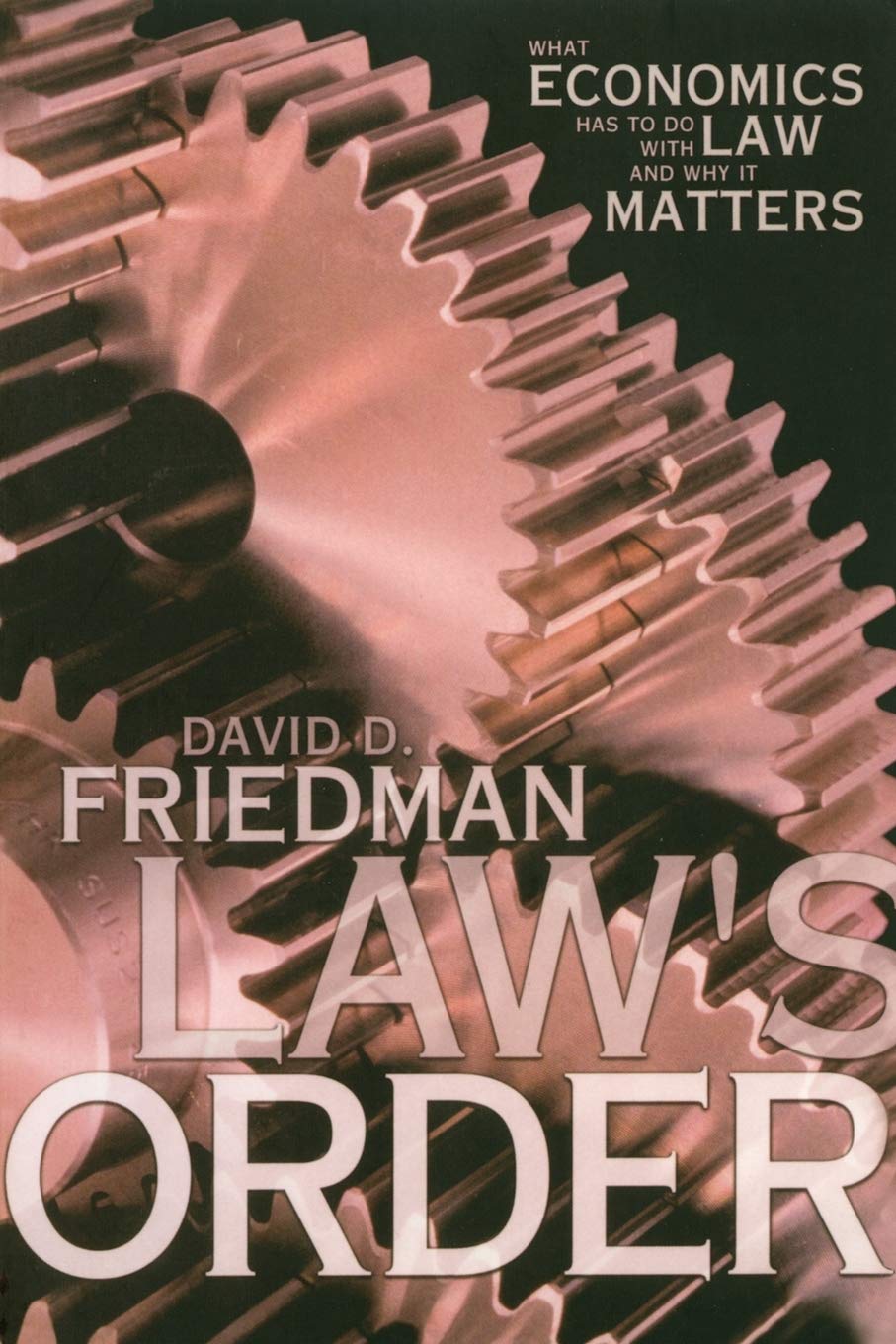
Law'S Order: What Economics Has To Do With Law And Why It Matters
Sold by Ergodebooks, an authorized reseller.
Returns accepted within 30 days | support@ergodebooks.com
Shipping Information
- Free Standard Shipping — United States only
- Processing Time: 3–5 business days
- Estimated Delivery: 6–10 business days after dispatch
- Double-boxed, fully insured & discreetly packaged
- Tracking number sent via email once dispatched
Returns & Refund
Returns accepted within 30 days of delivery.
Damaged or Defective Item
Free return shipping + replacement or full refund
Wrong Item Received
Free return shipping + replacement or full refund
Change of Mind
Return shipping at customer's expense · 25% restocking fee applies
Payment Option

What Does Economics Have To Do With Law? Suppose Legislators Propose That Armed Robbers Receive Life Imprisonment. Editorial Pages Applaud Them For Getting Tough On Crime. Constitutional Lawyers Raise The Issue Of Cruel And Unusual Punishment. Legal Philosophers Ponder Questions Of Justness. An Economist, On The Other Hand, Observes That Making The Punishment For Armed Robbery The Same As That For Murder Encourages Muggers To Kill Their Victims. This Is The Cuttothechase Quality That Makes Economics Not Only Applicable To The Interpretation Of Law, But Beneficial To Its Crafting.Drawing On Numerous Commonsense Examples, In Addition To His Extensive Knowledge Of Chicagoschool Economics, David D. Friedman Offers A Spirited Defense Of The Economic View Of Law. He Clarifies The Relationship Between Law And Economics In Clear Prose That Is Friendly To Students, Lawyers, And Lay Readers Without Sacrificing The Intellectual Heft Of The Ideas Presented. Friedman Is The Ideal Spokesman For An Approach To Law That Is Controversial Not Because It Overturns The Conclusions Of Traditional Legal Scholarsit Can Be Used To Advocate A Surprising Variety Of Political Positions, Including Both Sides Of Such Contentious Issues As Capital Punishmentbut Rather Because It Alters The Very Nature Of Their Arguments. For Example, Rather Than Viewing Landlordtenant Law As A Matter Of Favoring Landlords Over Tenants Or Tenants Over Landlords, An Economic Analysis Makes Clear That A Bad Law Injures Both Groups In The Long Run. And Unlike Traditional Legal Doctrines, Economics Offers A Unified Approach, One That Applies The Same Fundamental Ideas To Understand And Evaluate Legal Rules In Contract, Property, Crime, Tort, And Every Other Category Of Law, Whether In Modern Day America Or Other Times And Placesand Systems Of Nonlegal Rules, Such As Social Norms, As Well.This Book Will Undoubtedly Raise The Discourse On The Increasingly Important Topic Of The Economics Of Law, Giving Both Supporters And Critics Of The Economic Perspective A Place To Organize Their Ideas.
⚠️ WARNING (California Proposition 65):
This product may contain chemicals known to the State of California to cause cancer, birth defects, or other reproductive harm.
For more information, please visit www.P65Warnings.ca.gov.
- Q: What is the page count of this book? A: This book contains three hundred forty-four pages. It offers a comprehensive exploration of the relationship between law and economics.
- Q: What are the dimensions of this book? A: The book measures six inches in length, nine and a quarter inches in height, and three-quarters of an inch in width. These dimensions make it a convenient size for reading.
- Q: What type of binding does this book have? A: This book is available in paperback binding. This allows for flexibility in handling and reading.
- Q: How do I apply the concepts discussed in the book? A: To apply the concepts, consider how economic principles can influence legal decisions in real life. The author presents various examples to illustrate these applications.
- Q: Is this book suitable for beginners in law or economics? A: Yes, this book is suitable for beginners. It is written in clear prose that is accessible to students, lawyers, and lay readers.
- Q: What reading level is this book appropriate for? A: This book is appropriate for high school students and above. It contains complex ideas but is explained in an understandable manner.
- Q: How should I care for this paperback book? A: To care for this book, keep it in a dry place and avoid exposing it to direct sunlight. This will help preserve its condition over time.
- Q: Can this book be stored with other books? A: Yes, this book can be stored with other books. Ensure it is placed upright on a shelf to prevent bending or damage.
- Q: Is this book safe for all readers? A: Yes, this book is safe for all readers, as it does not contain adult content. Its focus is on law and economics.
- Q: What if I receive a damaged copy of the book? A: If you receive a damaged copy, you can return it for a replacement or refund. Check the return policy of the seller for specific instructions.
- Q: Are there any common issues with this book? A: Common issues may include printing errors or missing pages. If you encounter such problems, contact the seller or publisher for support.
- Q: How does this book compare to other law textbooks? A: This book offers a unique perspective by integrating economics into legal discussions. Unlike traditional law textbooks, it emphasizes economic reasoning.
- Q: Is this book useful for legal professionals? A: Yes, legal professionals can benefit from this book. It provides insights that can inform their practice and understanding of legal principles.
- Q: What themes are explored in this book? A: The book explores themes such as the intersection of law and economics, punishment, and the analysis of legal rules. These themes are relevant for modern legal discourse.
- Q: Can I recommend this book to my friends? A: Yes, you can recommend this book to friends interested in law or economics. Its engaging approach makes it a worthwhile read for a broad audience.