
Title
Lead Us Into Temptation
Sold by Ergodebooks, an authorized reseller.
Returns accepted within 30 days | support@ergodebooks.com
Shipping Information
- Free Standard Shipping — United States only
- Processing Time: 3–5 business days
- Estimated Delivery: 6–10 business days after dispatch
- Double-boxed, fully insured & discreetly packaged
- Tracking number sent via email once dispatched
Returns & Refund
Returns accepted within 30 days of delivery.
Damaged or Defective Item
Free return shipping + replacement or full refund
Wrong Item Received
Free return shipping + replacement or full refund
Change of Mind
Return shipping at customer's expense · 25% restocking fee applies
Payment Option

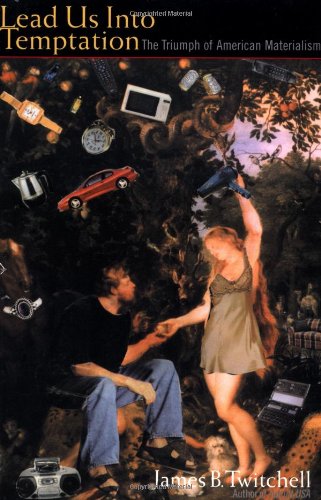
Coke adds life. Just do it. Yo quiero Taco Bell. We live in a commercial age, awash in a sea of brand names, logos, and advertising jinglesnot to mention commodities themselves. Are shoppers merely the unwitting stooges of the greedy producers who will stop at nothing to sell their wares? Are the producers' powers of persuasion so great that resistance is futile?James Twitchell counters this assumption of the used and abused consumer with a witty and unflinching look at commercial culture, starting from the simple observation that 'we are powerfully attracted to the world of goods (after all, we don't call them 'bads').' He contends that far from being forced upon us against our better judgment, 'consumerism is our better judgment.' Why? Because increasingly, storebought objects are what hold us together as a society, doing the work of 'birth, patina, pews, coats of arms, house, and social rank'previously done by religion and bloodline. We immediately understand the connotations of status and identity exemplified by the Nike swoosh, the Polo pony, the Guess? label, the DKNY logo. The commodity alone is not what we are after; rather, we actively and creatively want that logo and its significationthe social identity it bestows upon us. As Twitchell summarizes, 'Tell me what you buy, and I will tell what you are and who you want to be.'Using elements as disparate as the film The Jerk, French theorists, popular bumper stickers, and Money magazine to explore the nature and importance of advertising lingo, packaging, fashion, and 'The Meaning of Self,' Twitchell overturns one stodgy social myth after another. In the process he reveals the purchase and possession of things to be the selfidentifying acts of modern life. Not only does the car you drive tell others who you are, it lets you know as well. The consumption of goods, according to Twitchell, provides us with tangible everyday comforts and with crucial inner security in a seemingly faithless age. That we may find our sense of self through buying material objects is among the chief indictments of contemporary culture. Twitchell, however, sees the significance of shopping. 'There are no false needs.' We buy more than objects, we buy meaning. For many of us, especially in our youth, Things R Us.
⚠️ WARNING (California Proposition 65):
This product may contain chemicals known to the State of California to cause cancer, birth defects, or other reproductive harm.
For more information, please visit www.P65Warnings.ca.gov.