If you have any questions, you are always welcome to contact us. We'll get back to you as soon as possible, withing 24 hours on weekdays.
Customer service
All questions about your order, return and delivery must be sent to our customer service team by e-mail at yourstore@yourdomain.com
Sale & Press
If you are interested in selling our products, need more information about our brand or wish to make a collaboration, please contact us at press@yourdomain.com
Help
If you have any questions, you are always welcome to contact us. We'll get back to you as soon as possible, withing 24 hours on weekdays.
Customer service
All questions about your order, return and delivery must be sent to our customer service team by e-mail at yourstore@yourdomain.com
Sale & Press
If you are interested in selling our products, need more information about our brand or wish to make a collaboration, please contact us at press@yourdomain.com
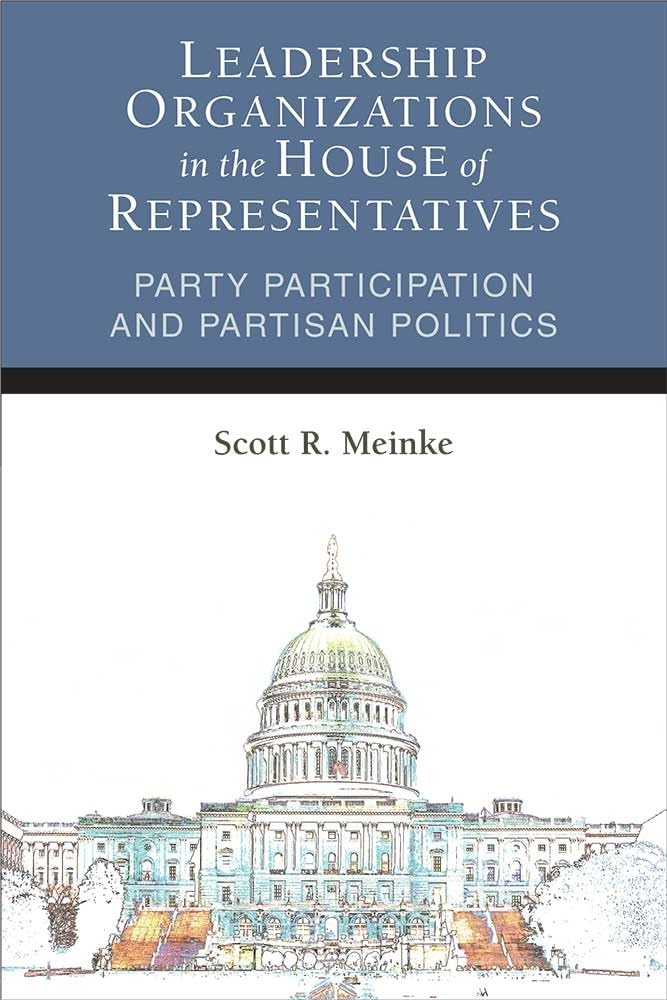
In recent Congresses, roughly half of the members of the U.S. House of Representatives served in whip organizations and on party committees. According to Scott R. Meinke, rising electoral competition and polarization over the past 40 years have altered the nature of party participation. In the 1970s and 1980s, the participation of a wide range of members was crucial to building consensus. Since then, organizations responsible for coordination in the party have become dominated by those who follow the party line. At the same time, key leaders in the House use participatory organizations less as forums for internal deliberations over policy and strategy than as channels for exchanging information with supporters outside Congress, and broadcasting sharply partisan campaign messages to the public.
⚠️ WARNING (California Proposition 65):
This product may contain chemicals known to the State of California to cause cancer,
birth defects, or other reproductive harm.
For MAP (Minimum Advertised Price) violations and Intellectual Property (IP) or Trademark concerns, please contact:
support@ergodebooks.com
⚠️ California Proposition 65 Warning: Some products sold on this website may expose you to chemicals known to the State of California to cause cancer, birth defects, or other reproductive harm. For more information, visit www.P65Warnings.ca.gov.