
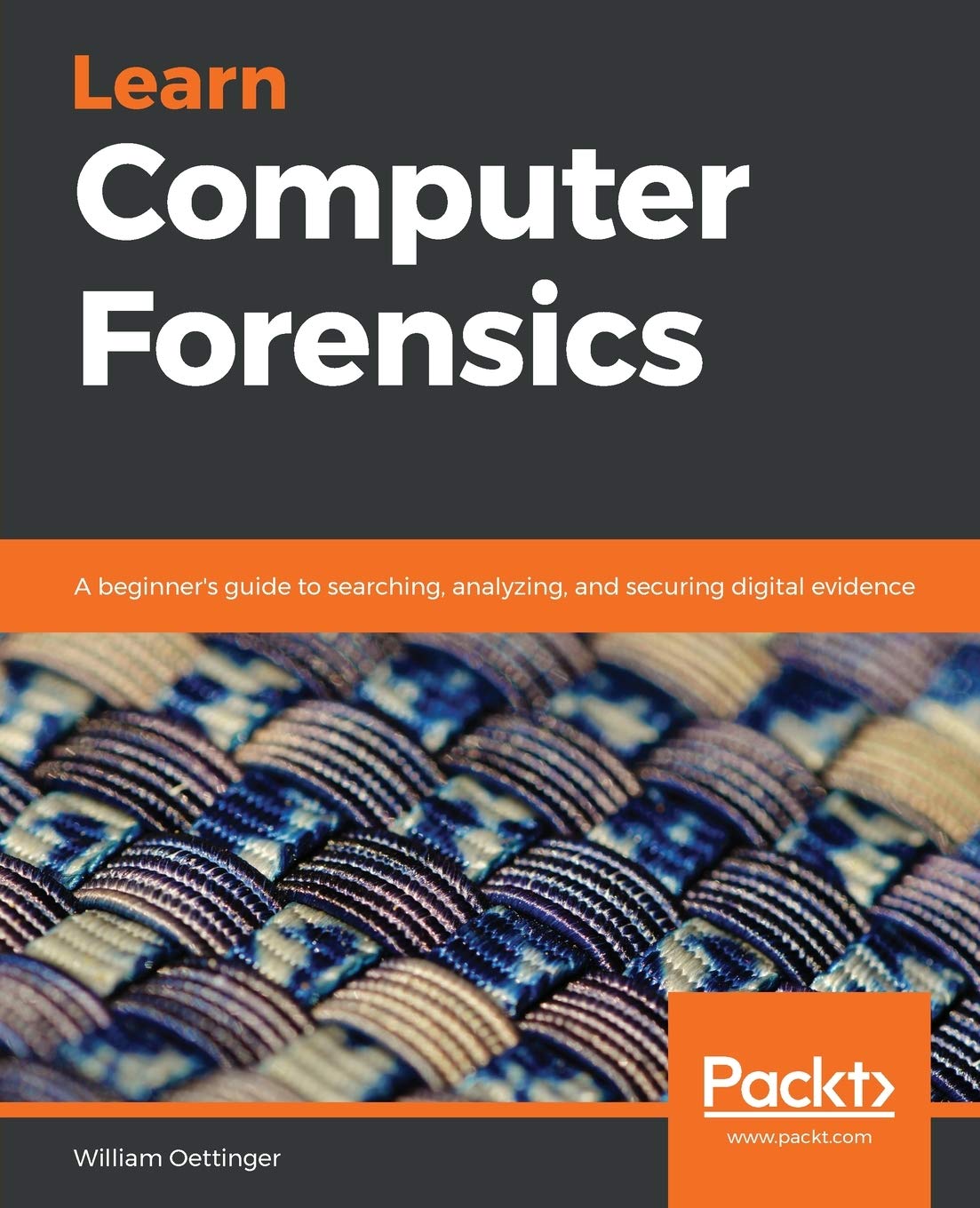
Title
Learn Computer Forensics: A beginner's guide to searching, analyzing, and securing digital evidence,Used
Sold by Ergodebooks, an authorized reseller.
Returns accepted within 30 days | support@ergodebooks.com
Shipping Information
- Free Standard Shipping — United States only
- Processing Time: 3–5 business days
- Estimated Delivery: 6–10 business days after dispatch
- Double-boxed, fully insured & discreetly packaged
- Tracking number sent via email once dispatched
Returns & Refund
Returns accepted within 30 days of delivery.
Damaged or Defective Item
Free return shipping + replacement or full refund
Wrong Item Received
Free return shipping + replacement or full refund
Change of Mind
Return shipping at customer's expense · 25% restocking fee applies
Payment Option

Get up and running with collecting evidence using forensics best practices to present your findings in judicial or administrative proceedings Key Features Learn the core techniques of computer forensics to acquire and secure digital evidence skillfully Conduct a digital forensic examination and document the digital evidence collected Perform a variety of Windows forensic investigations to analyze and overcome complex challenges Book DescriptionA computer forensics investigator must possess a variety of skills, including the ability to answer legal questions, gather and document evidence, and prepare for an investigation. This book will help you get up and running with using digital forensic tools and techniques to investigate cybercrimes successfully.Starting with an overview of forensics and all the open source and commercial tools needed to get the job done, you'll learn core forensic practices for searching databases and analyzing data over networks, personal devices, and web applications. You'll then learn how to acquire valuable information from different places, such as filesystems, emails, browser histories, and search queries, and capture data remotely. As you advance, this book will guide you through implementing forensic techniques on multiple platforms, such as Windows, Linux, and macOS, to demonstrate how to recover valuable information as evidence. Finally, you'll get to grips with presenting your findings efficiently in judicial or administrative proceedings.By the end of this book, you'll have developed a clear understanding of how to acquire, analyze, and present digital evidence like a proficient computer forensics investigator. What you will learn Understand investigative processes, the rules of evidence, and ethical guidelines Recognize and document different types of computer hardware Understand the boot process covering BIOS, UEFI, and the boot sequence Validate forensic hardware and software Discover the locations of common Windows artifacts Document your findings using technically correct terminology Who this book is forIf you're an IT beginner, student, or an investigator in the public or private sector this book is for you. This book will also help professionals and investigators who are new to incident response and digital forensics and interested in making a career in the cybersecurity domain. Individuals planning to pass the Certified Forensic Computer Examiner (CFCE) certification will also find this book useful. Table of Contents Types of ComputerBased Investigations The Forensic Analysis Process Acquisition of Evidence Computer Systems Computer Investigation Process Windows Artifact Analysis RAM Memory Forensic Analysis Email Forensics Investigation Techniques Internet Artifacts Report Writing Expert Witness Ethics
⚠️ WARNING (California Proposition 65):
This product may contain chemicals known to the State of California to cause cancer, birth defects, or other reproductive harm.
For more information, please visit www.P65Warnings.ca.gov.
- Q: What is the main focus of 'Learn Computer Forensics'? A: 'Learn Computer Forensics' primarily focuses on teaching beginners the essential techniques and best practices for collecting, analyzing, and securing digital evidence in various investigations.
- Q: Who is this book intended for? A: This book is intended for IT beginners, students, and investigators in both public and private sectors, as well as professionals new to incident response and digital forensics.
- Q: What skills will I gain from this book? A: Readers will gain skills in evidence collection, digital forensic examination, security system analysis, and presenting findings in judicial or administrative contexts.
- Q: What topics are covered in the book? A: The book covers investigative processes, rules of evidence, ethical guidelines, hardware recognition, boot processes, forensic documentation, and techniques for multiple operating systems.
- Q: Is prior experience required to understand this book? A: No prior experience is required; the book is designed for beginners and those new to computer forensics.
- Q: How many pages does the book have? A: 'Learn Computer Forensics' consists of 370 pages, providing comprehensive coverage of the subject matter.
- Q: What is the binding type of the book? A: The book is available in paperback binding, making it easy to handle and read.
- Q: When was this book published? A: 'Learn Computer Forensics' was published on April 24, 2020.
- Q: What will I learn about digital evidence? A: You will learn how to acquire, analyze, and present digital evidence effectively, ensuring compliance with legal and ethical standards.
- Q: Are there any tools or software recommended in the book? A: Yes, the book provides an overview of both open source and commercial tools essential for conducting digital forensic investigations.