
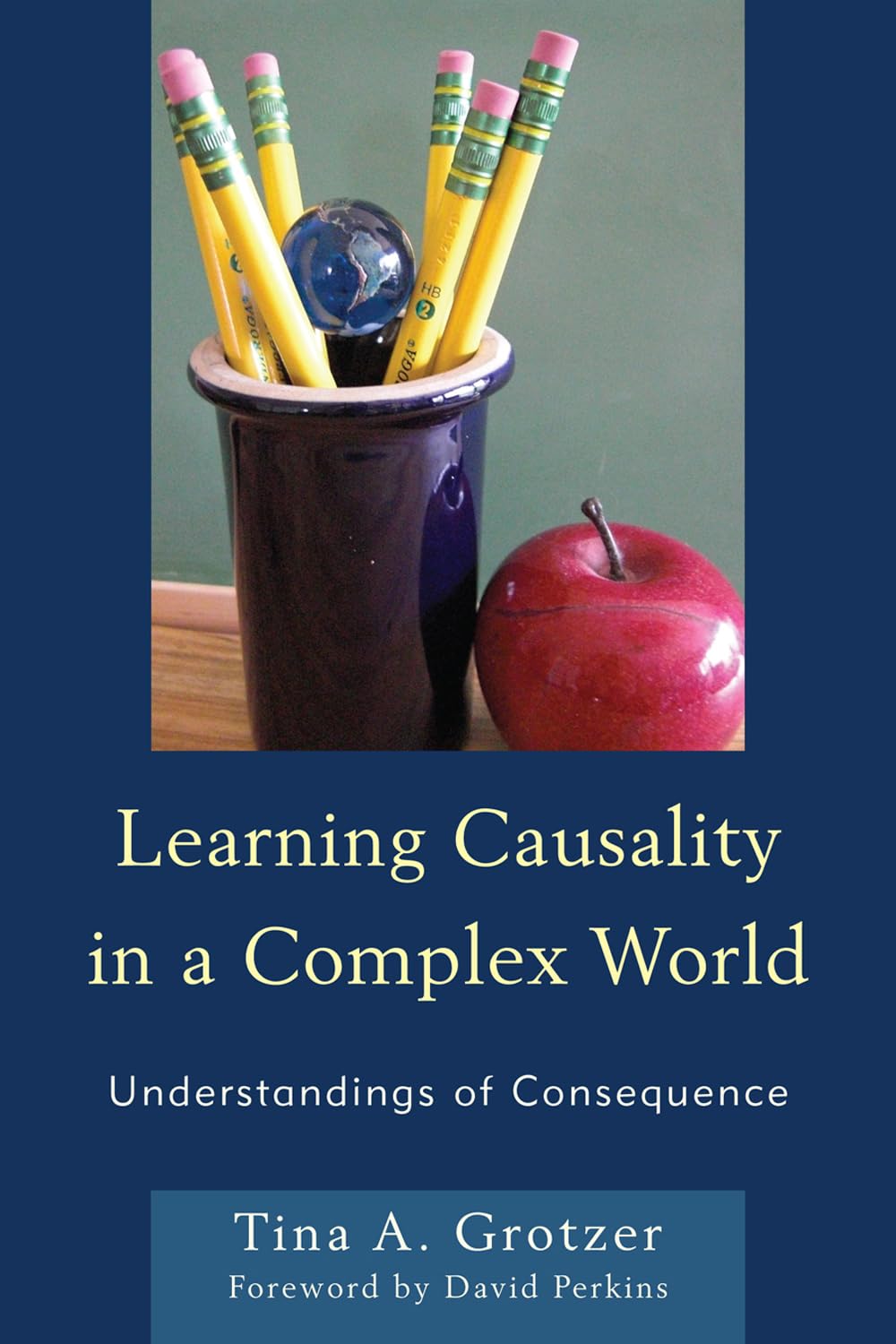
Title
Learning Causality in a Complex World: Understandings of Consequence,Used
Sold by Ergodebooks, an authorized reseller.
Returns accepted within 30 days | support@ergodebooks.com
Shipping Information
- Free Standard Shipping — United States only
- Processing Time: 3–5 business days
- Estimated Delivery: 6–10 business days after dispatch
- Double-boxed, fully insured & discreetly packaged
- Tracking number sent via email once dispatched
Returns & Refund
Returns accepted within 30 days of delivery.
Damaged or Defective Item
Free return shipping + replacement or full refund
Wrong Item Received
Free return shipping + replacement or full refund
Change of Mind
Return shipping at customer's expense · 25% restocking fee applies
Payment Option

What do childrens interactions on the playground have to do with foreign policy? How does science understanding in middle school relate to environmental disasters in third world countries? The causal patterns that we detect and how we act upon them pervade every aspect of our lives. These skills will only become more important in the future as our world becomes more global and more interconnected. Yet we arent very skilled at thinking about causality. Research shows that instead we rely on limiting default assumptions that can lead to poor choices in a complex world. What can we do about it? This book offers ways to become aware of these patterns and to reframe our thinking to become more effective learners and citizens of the world. Through examples and accessible explanations, it offers a causal curriculum to enable more effective learning so that we can put the power of better causal understanding to work for ourselves and the next generation for today and tomorrow.
⚠️ WARNING (California Proposition 65):
This product may contain chemicals known to the State of California to cause cancer, birth defects, or other reproductive harm.
For more information, please visit www.P65Warnings.ca.gov.
- Q: How many pages does this book have? A: This book has two hundred eight pages. It provides a comprehensive exploration of causality and its implications.
- Q: What is the binding type of this book? A: The binding type is paperback. This makes it lightweight and easy to handle for reading.
- Q: What are the dimensions of the book? A: The dimensions are six inches in length, zero point forty-seven inches in width, and nine point zero two inches in height.
- Q: Who is the author of this book? A: The author is Tina A. Grotzer. She is known for her work in education and understanding causality.
- Q: What genre does this book belong to? A: This book is categorized under epistemology. It delves into understanding knowledge and causality.
- Q: What is the primary focus of this book? A: The primary focus is on understanding causality in various contexts. It explores how we perceive and react to causal patterns.
- Q: How can I apply the concepts discussed in this book? A: You can apply the concepts by reframing your thinking and enhancing your understanding of causal relationships. This book provides practical examples for better learning.
- Q: Is this book suitable for beginners? A: Yes, this book is suitable for beginners. It offers accessible explanations and examples to help readers grasp complex ideas.
- Q: What age group is this book appropriate for? A: This book is appropriate for adults and older students. It addresses advanced concepts of causality that benefit mature readers.
- Q: How should I care for this book? A: To care for this book, keep it in a dry place and avoid exposure to direct sunlight. This will help maintain its condition.
- Q: Can this book be used in educational settings? A: Yes, this book can be used in educational settings. It serves as a resource for teaching about causality and critical thinking.
- Q: What if the book arrives damaged? A: If the book arrives damaged, you should contact the seller for a return or replacement. Most retailers offer customer support for such issues.
- Q: Is there a warranty for this book? A: No, there is typically no warranty for books. However, most sellers provide return policies if the book is defective.
- Q: Are there any additional resources with this book? A: This book does not include additional resources. However, it references concepts that can benefit from further research.
- Q: What makes this book different from others on causality? A: This book is different because it integrates real-world examples to illustrate complex causal patterns. It emphasizes practical applications in daily life.
- Q: Can this book help improve critical thinking skills? A: Yes, this book can help improve critical thinking skills. It encourages readers to analyze and understand causal relationships effectively.