
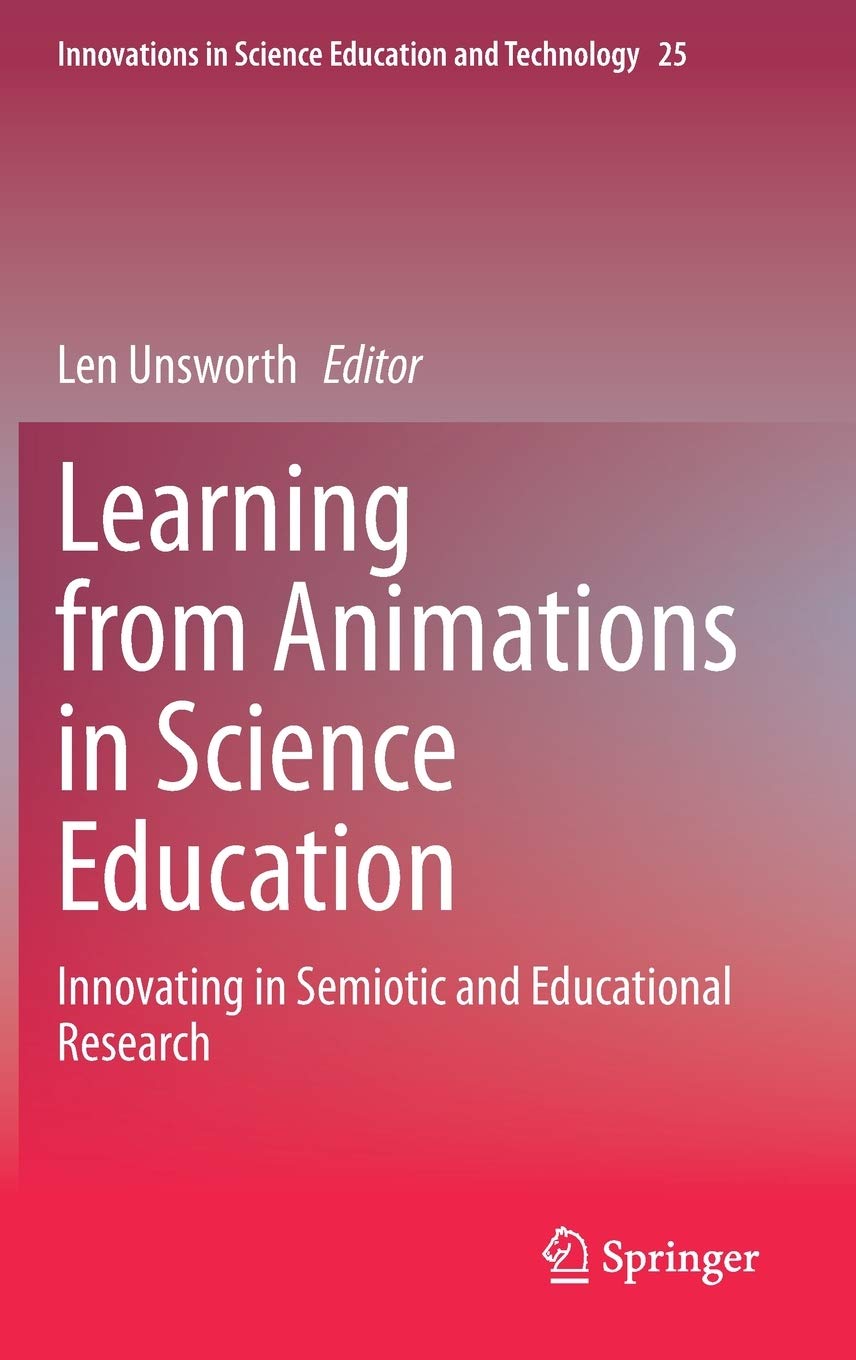
Title
Learning from Animations in Science Education: Innovating in Semiotic and Educational Research (Innovations in Science Education,Used
Sold by Ergodebooks, an authorized reseller.
Returns accepted within 30 days | support@ergodebooks.com
Shipping Information
- Free Standard Shipping — United States only
- Processing Time: 3–5 business days
- Estimated Delivery: 6–10 business days after dispatch
- Double-boxed, fully insured & discreetly packaged
- Tracking number sent via email once dispatched
Returns & Refund
Returns accepted within 30 days of delivery.
Damaged or Defective Item
Free return shipping + replacement or full refund
Wrong Item Received
Free return shipping + replacement or full refund
Change of Mind
Return shipping at customer's expense · 25% restocking fee applies
Payment Option

This book examines educational semiotics and the representation of knowledge in school science. It discusses the strategic integration of animation in science education. It explores how learning through the creation of science animations takes place, as well as how animation can be used in assessing students science learning.Science education animations are ubiquitous in a variety of different online sites, including perhaps the most popularly accessed YouTube site, and are also routinely included as digital augmentations to science textbooks. They are popular with students and teachers and are a prominent feature of contemporary science teaching. The proliferation of various kinds of science animations and the ready accessibility of sophisticated resources for creating them have emphasized the importance of research into various areas: the nature of the semiotic construction of knowledge in the animation design, the development of critical interpretation of available animations, the strategic selection and use of animations to optimize student learning, student creation of science animations, and using animation in assessing student science learning. This book brings together new developments in these research agendas to further multidisciplinary perspectives on research to enhance the design and pedagogic use of animation in school science education.Chapter 1 is available open access under a Creative Commons Attribution 4.0 International License via link.springer.com.
⚠️ WARNING (California Proposition 65):
This product may contain chemicals known to the State of California to cause cancer, birth defects, or other reproductive harm.
For more information, please visit www.P65Warnings.ca.gov.