
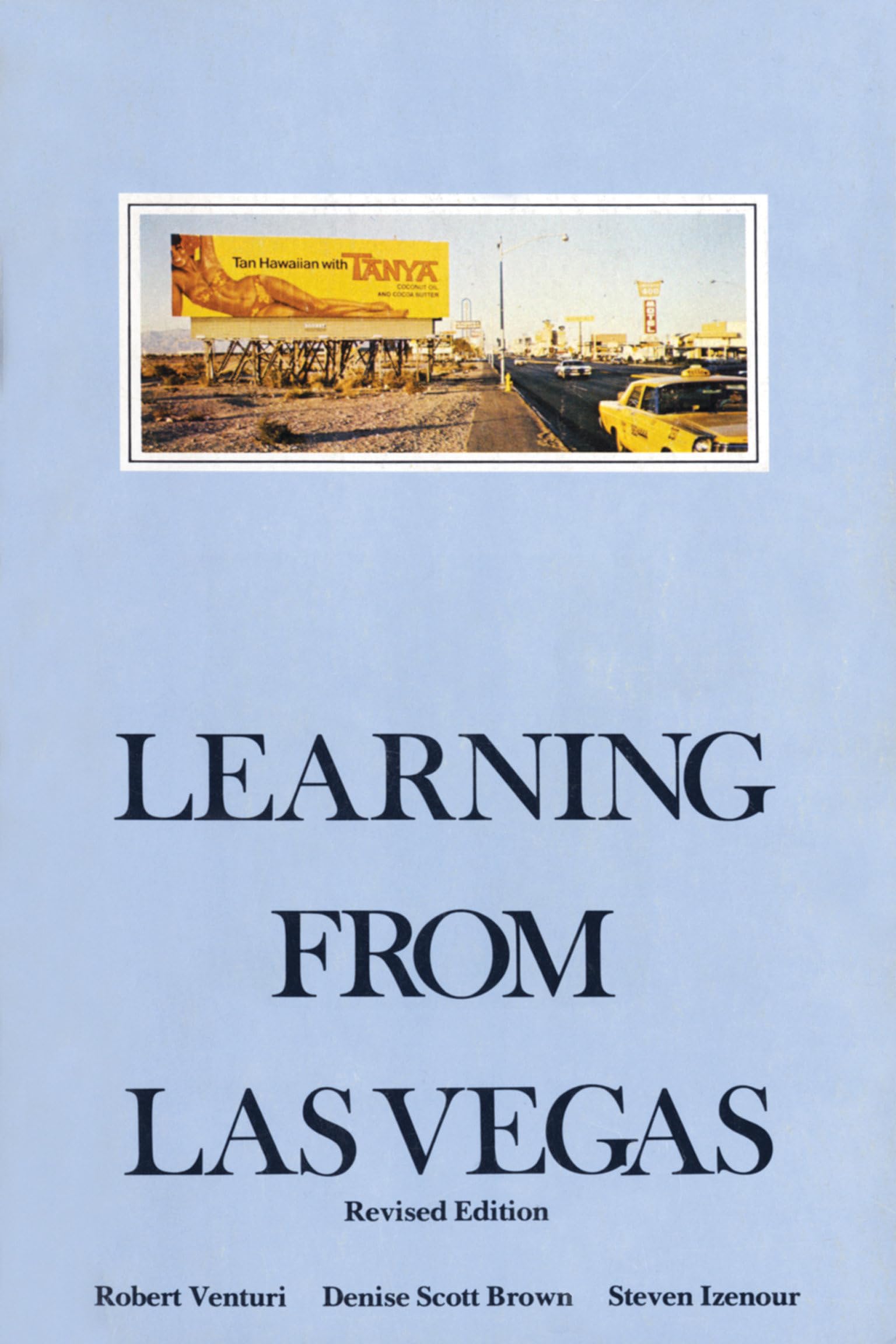
Title
Learning from Las Vegas Revised Edition: The Forgotten Symbolism of Architectural Form,New
Sold by Ergodebooks, an authorized reseller.
Returns accepted within 30 days | support@ergodebooks.com
Shipping Information
- Free Standard Shipping — United States only
- Processing Time: 3–5 business days
- Estimated Delivery: 6–10 business days after dispatch
- Double-boxed, fully insured & discreetly packaged
- Tracking number sent via email once dispatched
Returns & Refund
Returns accepted within 30 days of delivery.
Damaged or Defective Item
Free return shipping + replacement or full refund
Wrong Item Received
Free return shipping + replacement or full refund
Change of Mind
Return shipping at customer's expense · 25% restocking fee applies
Payment Option

Learning from Las Vegas created a healthy controversy on its appearance in 1972, calling for architects to be more receptive to the tastes and values of 'common' people and less immodest in their erections of 'heroic,' selfaggrandizing monuments.This revision includes the full texts of Part I of the original, on the Las Vegas strip, and Part II, 'Ugly and Ordinary Architecture, or the Decorated Shed,' a generalization from the findings of the first part on symbolism in architecture and the iconography of urban sprawl. (The final part of the first edition, on the architectural work of the firm Venturi and Rauch, is not included in the revision.) The new paperback edition has a smaller format, fewer pictures, and a considerably lower price than the original. There are an added preface by Scott Brown and a bibliography of writings by the members of Venturi and Rauch and about the firm's work.
⚠️ WARNING (California Proposition 65):
This product may contain chemicals known to the State of California to cause cancer, birth defects, or other reproductive harm.
For more information, please visit www.P65Warnings.ca.gov.
- Q: What are the dimensions of the book? A: The book measures eight point nine two inches in length, six point zero five inches in width, and zero point five three inches in height.
- Q: How many pages does the book have? A: The book contains one hundred ninety-two pages, providing ample content on architectural symbolism.
- Q: What type of binding does this book have? A: The book features a paperback binding, making it lightweight and easy to handle.
- Q: Who is the author of this book? A: The author of the book is Robert Venturi, a prominent figure in architectural theory.
- Q: What is the main theme of this book? A: The main theme revolves around architectural symbolism and the importance of everyday aesthetics in urban environments.
- Q: Is this book suitable for beginners in architecture? A: Yes, the book is suitable for beginners, as it discusses fundamental concepts in an accessible manner.
- Q: Can this book be used as a textbook for architecture courses? A: Yes, it can be used as a textbook, particularly for courses focused on architectural theory and symbolism.
- Q: What is the target audience for this book? A: The target audience includes students, educators, and anyone interested in architectural design and urban studies.
- Q: How should I store this book to keep it in good condition? A: Store the book upright in a cool, dry place to prevent warping and damage.
- Q: How do I clean the book if it gets dirty? A: To clean the book, gently wipe the cover with a soft, dry cloth to avoid damage.
- Q: Does this book contain illustrations or images? A: Yes, the book includes some images, though fewer than the original edition.
- Q: What is the difference between this edition and the original? A: This revised edition has a smaller format, fewer pictures, and a lower price compared to the original.
- Q: Is this book appropriate for children? A: While there are no explicit adult themes, it is aimed more at adults and older students interested in architecture.
- Q: Where is this book published? A: The book is published by The MIT Press, a reputable publisher in academic literature.
- Q: What additional content is included in the revised edition? A: The revised edition includes a new preface by Scott Brown and a bibliography of writings related to Venturi and Rauch.