
Title
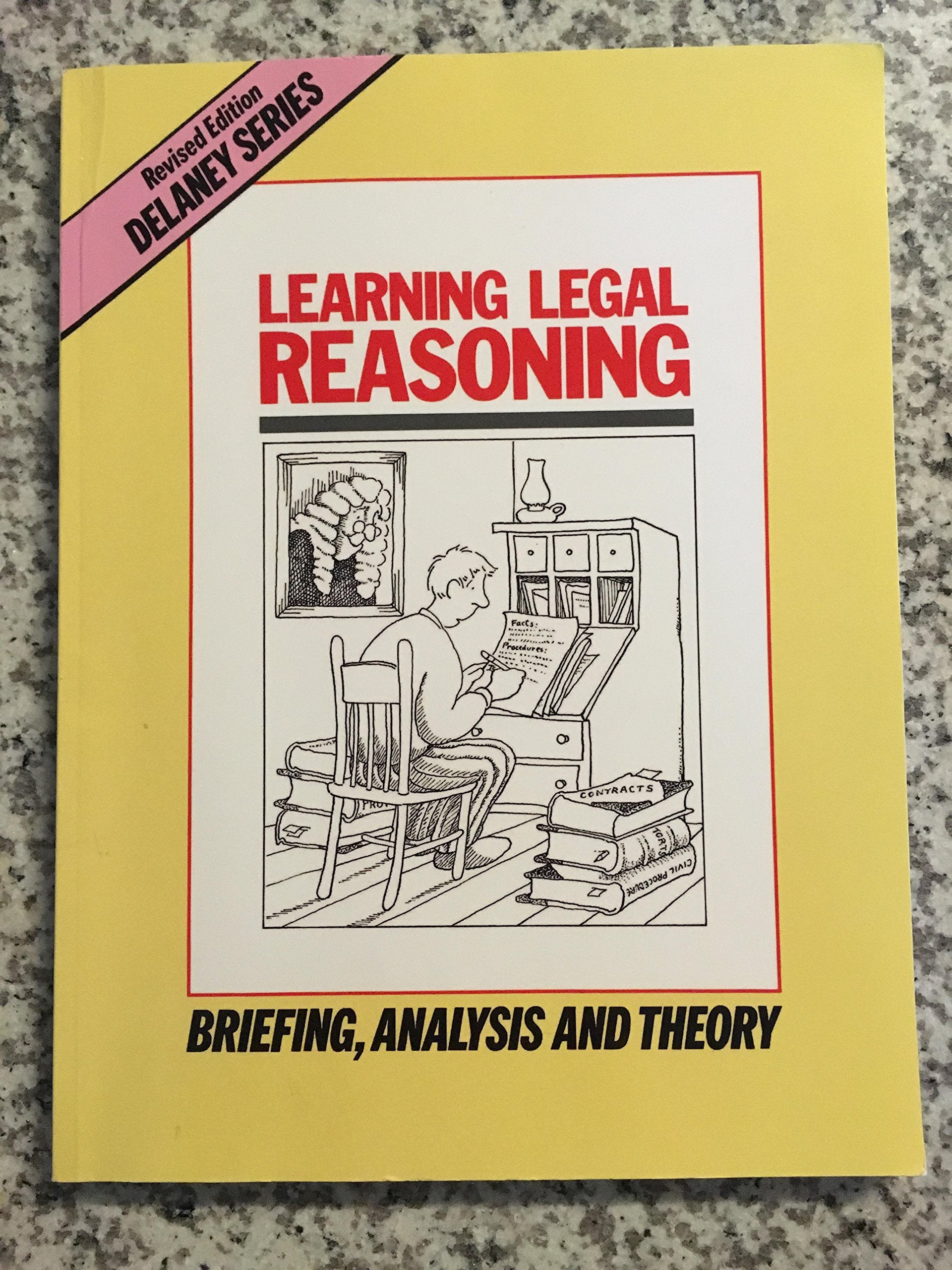
Learning Legal Reasoning: Briefing, Analysis And Theory (Delaney Series Book 1),New
Sold by Ergodebooks, an authorized reseller.
Returns accepted within 30 days | support@ergodebooks.com
Shipping Information
- Free Standard Shipping — United States only
- Processing Time: 3–5 business days
- Estimated Delivery: 6–10 business days after dispatch
- Double-boxed, fully insured & discreetly packaged
- Tracking number sent via email once dispatched
Returns & Refund
Returns accepted within 30 days of delivery.
Damaged or Defective Item
Free return shipping + replacement or full refund
Wrong Item Received
Free return shipping + replacement or full refund
Change of Mind
Return shipping at customer's expense · 25% restocking fee applies
Payment Option

This Widely Used Book In Many Printings Begins With Answers To Forty Commonly Asked Questions Of Firstyear Law Students. It Specifies A Sixstep Approach To Briefing A Case With Specific Guidelines For Accomplishing Each Step. The Process Of Briefing Cases Is Then Demonstrated With Excellent And Poor Briefs Of Increasing Complexity. Emphasis Is Placed Initially On The Techniques Of Briefing As An Introduction To The Learning Of Legal Reasoning, The First Priority Of The First Year Of Law School. In Addition, The Book Also Demonstrates The Relevance Of More Advanced Modes Of Legal Reasoning, Including Positivist, Pragmatic, Policy Oriented, Naturallaw And Other Perspectives Applied In Decoding And Understanding Cases. In Its Introduction Of Jurisprudential Perspectives, Learning Legal Reasoning Transcends The Typical Technical/Positivist Orientation Of Most Firstyear Materials.
⚠️ WARNING (California Proposition 65):
This product may contain chemicals known to the State of California to cause cancer, birth defects, or other reproductive harm.
For more information, please visit www.P65Warnings.ca.gov.
- Q: What is the binding type of this book? A: This book has a paperback binding. Paperback bindings are flexible and lightweight, making it easy to carry around.
- Q: How many pages are in 'Learning Legal Reasoning'? A: This book contains one hundred thirty-nine pages. The length provides a comprehensive overview without being overwhelming for first-year law students.
- Q: What are the dimensions of this book? A: The book measures eight and a half inches in length, eleven inches in height, and three-fourths of an inch in width. These dimensions make it a portable reference guide.
- Q: What is the main focus of this book? A: The main focus is on teaching legal reasoning through case briefing techniques. It helps first-year law students understand legal concepts effectively.
- Q: Who is the author of 'Learning Legal Reasoning'? A: The author is John Delaney. He is recognized for his contributions to legal education and the Delaney Series.
- Q: Is this book suitable for beginners? A: Yes, this book is designed for first-year law students. It introduces essential legal reasoning skills in an accessible manner.
- Q: How does this book help with case briefing? A: The book outlines a six-step approach to case briefing. It includes examples of both good and poor briefs to illustrate the techniques.
- Q: What advanced legal reasoning perspectives are covered? A: The book covers positivist, pragmatic, policy-oriented, and natural-law perspectives. These help students delve deeper into understanding legal cases.
- Q: Is this book used in law schools? A: Yes, this book is widely used in many law schools. It is considered a valuable resource for developing legal reasoning skills.
- Q: What condition is the used book in? A: The book is described as being in good condition. It is suitable for use without major defects.
- Q: Can this book be beneficial for self-study? A: Yes, it's beneficial for self-study. The structured approach makes it easy for individuals to learn legal reasoning independently.
- Q: What genre does 'Learning Legal Reasoning' belong to? A: This book belongs to the reference genre. It serves as a guide for legal education and reasoning.
- Q: Does this book include examples of legal briefs? A: Yes, it includes examples of both excellent and poor briefs. These examples help illustrate the principles of effective case briefing.
- Q: Is there an emphasis on specific legal techniques? A: Yes, the book emphasizes briefing techniques as an introduction to legal reasoning. This is crucial for first-year law students.
- Q: What makes this book different from other legal textbooks? A: This book transcends typical technical orientations by introducing various jurisprudential perspectives. It aims to broaden students' understanding of legal reasoning.
- Q: What is the target audience for this book? A: The target audience is first-year law students and anyone interested in learning legal reasoning. It is tailored to meet their educational needs.